• The Hidden Reason You Can't Stop Overthinking, People-Pleasing And Overworking with Dr Nicole LePera #664
    Jun 9 2026
    Why do we sometimes react in ways we don’t mean to? Why does criticism land so heavily when others can brush it off? And why, even when life looks good from the outside, do we feel stuck on the inside? This week’s guest offers a new perspective on all this – and an optimistic way forward. With nearly 10 million followers on Instagram as The Holistic Psychologist, Dr Nicole LePera has helped countless people see their lifelong patterns through a helpful new lens. She joins me to discuss her fantastic book, Reparenting the Inner Child: The New Science of Our Oldest Wounds and How to Heal Them. At the heart of our conversation is an important idea: we don’t see the world as it is, we see it through the state of our nervous system. Nicole highlights the signs that yours may be calling the shots, such as restlessness, numbness, disproportionate reactions and the constant need to be busy. And she explains how those patterns trace back to a part of us shaped long before we had the language for it: our inner child. We explore how childhood adaptations follow us into adulthood, often without us realising, shaping our relationships, our careers, our sensitivity to criticism, and our self-worth. Nicole walks us through some of the parent archetypes from her book. And we discuss the universal choice every child makes between authenticity and attachment (and what this costs us later). Importantly, this is never about blaming, parent or child – acceptance of the past (rather than approval or forgiveness) is how we begin to change. You’ll be fascinated to hear Nicole explain how trauma from generations before us may still be wired into our bodies, but we can break the cycle. We also discuss why conflict in relationships can be healthy, and why healing is a two-step process: becoming aware, and then making different choices. The best part? You’ll come away from this conversation with the tools for change. Nicole talks us through her practical strategies, including the conscious check-in, the three body anchors, bilateral stimulation, and getting to know yourself through simple, mindful moments. Whether you've spent years exploring attachment and inner-child work, or this is your first therapy session, I know you’ll find something here that stays with you. As Nicole says, healing isn’t about reaching an end point. It’s an ongoing process, available to all of us at any moment that we choose to join in. The Thrive Tour: Transform Your Health and Happiness, a live show: Book Your Tickets https://drchatterjee.com/live Thanks to our sponsors: https://dohealth.co/livemore https://thesleepreset.com/podcast https://hellolingo.com/livemore https://airbnb.co.uk/host Show notes https://drchatterjee.com/664 DISCLAIMER: The content in the podcast and on this webpage is not intended to be a substitute for professional medical advice, diagnosis, or treatment. Always seek the advice of your doctor or qualified healthcare provider. Never disregard professional medical advice or delay in seeking it because of something you have heard on the podcast or on my website.
    Show More Show Less
    2 hrs and 1 min
  • BITESIZE | 3 Hidden Causes of Low Energy (and What You Can Do About Them) | Dr Rangan Chatterjee #663
    Jun 4 2026
    Many of us assume low energy is simply a consequence of being busy or not getting enough sleep. But there can be other factors contributing to how we feel that often go unnoticed. I’ve decided to try something a little bit different as a Bitesize episode this week. I wanted to record a solo episode about the topic of energy because one of the most common things I hear from patients is that they feel exhausted or overwhelmed even when they seem to be getting enough sleep. So, in this episode, I share a few often overlooked reasons that can leave us feeling low in energy, along with some simple strategies that could quickly begin to help. Please note: these symptoms can also occur in a range of conditions, including depression, sleep apnoea, thyroid disorders and anaemia. If your symptoms persist, or if you have any concerns, it’s important to seek advice from a qualified healthcare professional. For Thrive Tour tickets and info visit: https://drchatterjee.com/live/ Join my 21-day energy reset: https://drchatterjee.com/reset Support the podcast and enjoy Ad-Free episodes. Try FREE for 7 days on Apple Podcasts ⁠⁠https://apple.co/feelbetterlivemore⁠⁠ For other podcast platforms go to ⁠⁠https://fblm.supercast.com. DISCLAIMER: The content in the podcast and on this webpage is not intended to constitute or be a substitute for professional medical advice, diagnosis, or treatment. Always seek the advice of your doctor or other qualified health care provider with any questions you may have regarding a medical condition. Never disregard professional medical advice or delay in seeking it because of something you have heard on the podcast or on my website.
    Show More Show Less
    14 mins
  • The Revolutionary Science Of Recovering From Chronic Pain, Fatigue, Anxiety & Depression with Dr Howard Schubiner #662
    Jun 2 2026
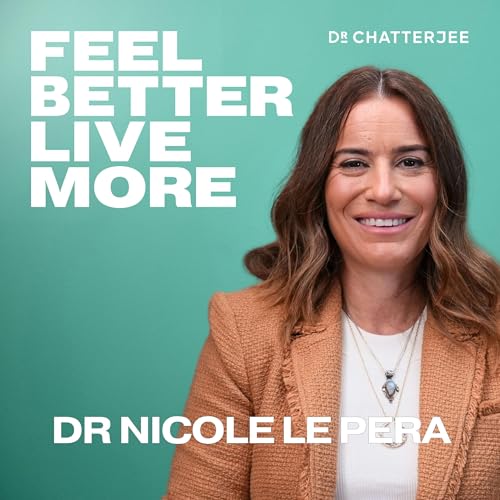
    Imagine being told for 25 years that your pain is incurable – then making a full recovery within six weeks. That’s exactly what happened to one of the case studies in this episode and his story is far from exceptional. Could it be that much of the chronic pain we accept in life isn’t evidence our body is broken, but a sign our brain is trying to protect us? My guest this week is Dr Howard Schubiner, one of the world’s leading experts in chronic pain and the mind-body interaction. He’s spent more than 20 years working wonders with people who’d been told their pain was untreatable. He’s published over 100 scientific papers, runs one of the most respected programmes of its kind in the US, and his new book, Unlearn Your Pain, is set to transform how we think about suffering. To kick off this game-changing conversation, Howard debunks some common beliefs around pain, including the assumption that an MRI scan will accurately diagnose back issues. We talk about why bulging discs, degeneration and other scary-sounding findings show up just as often in people who aren’t in pain. And why the language used in scan reports can sometimes do real harm. To explain this, Howard talks us through the difference between structural and neuroplastic pain. The key learning here? All pain is created by the brain, through something called predictive processing. In structural pain, there’s clear tissue damage so your brain creates pain to help you protect the area and seek help. In neuroplastic pain, there’s some sort of perceived danger but no real injury. Here’s what’s important: both types are real. You are feeling pain. The difference is in the treatment. For that, Howard shares his five-part framework for reversing neuroplastic pain – and it has nothing to do with painkillers. He also reveals how the same principles can be applied to tinnitus, dizziness, brain fog, long covid, IBS, anxiety, depression, fatigue and more. We talk childhood, the personality traits that subtly make us more vulnerable to neuroplastic symptoms, and why women are so often the ones carrying the weight. Whether you're living with a long-term condition yourself, supporting someone who is, or you’re simply curious about the communication pathways between our bodies and our brains, this is an episode you won’t want to miss. The Thrive Tour: Transform Your Health and Happiness, a live show: Book Your Tickets https://drchatterjee.com/live Thanks to our sponsors: https://airbnb.co.uk/host https://dohealth.co/livemore https://thewayapp.com/livemore https://drinkag1.com/livemore Show notes https://drchatterjee.com/662 DISCLAIMER: The content in the podcast and on this webpage is not intended to be a substitute for professional medical advice, diagnosis, or treatment. Always seek the advice of your doctor or qualified healthcare provider. Never disregard professional medical advice or delay in seeking it because of something you have heard on the podcast or on my website.
    Show More Show Less
    1 hr and 35 mins
  • BITESIZE | The 5 Minute Habits That Can Transform Your Health | Dr Rangan Chatterjee #661
    May 28 2026
    Why is it that so many of us find it hard to stick to a new diet or lifestyle plan? We all start off well enough – full of energy and optimism but then the novelty soon wears off and life gets in the way. After some time, we are right back where we first started. Feel Better Live More Bitesize is my weekly podcast for your mind, body, and heart. Each week I’ll be featuring inspirational stories and practical tips from some of my former guests. Today’s clip is from episode 92 of the podcast when my good friend, Dr Ayan Panja, put me in the hot seat. In this clip, we explore why lasting change doesn’t often come from huge life overhauls or extreme routines, but from small actions repeated consistently over time. We discuss why so many health plans fail, how 5 minute habits can create a powerful ripple effect throughout our lives, and why sustainable lifestyle change may be much simpler than we think. For Thrive Tour tickets and info visit: https://drchatterjee.com/live/ Show notes and the full podcast are available at drchatterjee.com/92 Support the podcast and enjoy Ad-Free episodes. Try FREE for 7 days on Apple Podcasts ⁠⁠https://apple.co/feelbetterlivemore⁠⁠ For other podcast platforms go to ⁠⁠https://fblm.supercast.com. DISCLAIMER: The content in the podcast and on this webpage is not intended to constitute or be a substitute for professional medical advice, diagnosis, or treatment. Always seek the advice of your doctor or other qualified health care provider with any questions you may have regarding a medical condition. Never disregard professional medical advice or delay in seeking it because of something you have heard on the podcast or on my website.
    Show More Show Less
    22 mins
  • The Life Changing Magic Of Walking & How To Do It Better with Dr Courtney Conley #660
    May 26 2026
    Most of us walk every day without really thinking about it – but this episode is guaranteed to change that. Because this simple, free, radical act is one of the most powerful things you can do for your body, your brain and your longevity. In this episode I’m joined by Dr Courtney Conley, for a conversation that will transform how you feel about your feet and how you use them. Courtney is a movement specialist who’s passionate about helping people move through life with strength, ease and confidence. She's co-author of the must-read new book, Walk: Your Life Depends On It, and this is her second appearance on the show, following one of our most listened-to episodes of the year. We begin by unpacking the 10,000 steps a day target – where it came from and what the research shows we really need (clue: it’s less than you think… but it matters way more than you think). We talk through the wealth of benefits walking brings, with Courtney explaining that wherever you are on the scale, adding just a thousand steps a day can lower your risk of dementia, depression and all-cause mortality. We cover chronic pain and why walking is more likely to help than hinder you. Courtney shares her practical cues for walking more efficiently, including rolling through your feet, walking tall and nasal breathing (try them as you listen and you’ll see why they work). And we discuss why strength and power are equally important components of fitness that we need to protect as we age. There’s also a wealth of information on foot issues from plantar fasciitis to Achilles’ pain, bunions and osteopenia. Plus Courtney’s how-to guide for transitioning from cushioned to functional or minimal footwear. Whether you currently walk a lot, a little, or somewhere in between, I think you'll come away from this conversation with a renewed appreciation for what your feet can do for you. All of us, whatever our age or starting point, can benefit from walking more or better – and this episode will help you do that, one step at a time. The Thrive Tour: Transform Your Health and Happiness, a live show: Book Your Tickets https://drchatterjee.com/live Thanks to our sponsors: https://drinkag1.com/livemore https://thewayapp.com/livemore Show notes https://drchatterjee.com/660 DISCLAIMER: The content in the podcast and on this webpage is not intended to be a substitute for professional medical advice, diagnosis, or treatment. Always seek the advice of your doctor or qualified healthcare provider. Never disregard professional medical advice or delay in seeking it because of something you have heard on the podcast or on my website.
    Show More Show Less
    2 hrs and 7 mins
  • BITESIZE | The Wealth Money Can’t Buy: How to Live a Happier, Richer and More Fulfilled Life | Robin Sharma #659
    May 21 2026
    In a world where we’re constantly bombarded with images of material success, it’s easy to fall into the trap of comparing ourselves to others and believing that more money means more happiness. But what if there’s more to wealth than just money? Today’s clip is from episode 471 of the podcast with best-selling author and one of the top leadership and personal mastery experts in the world, Robin Sharma. In this clip, Robin shares his perspective on why so many people may be chasing the wrong version of success, and what it truly means to live a rich life. We also discuss why traditional self-help approaches often fall short, particularly in the realm of personal growth and happiness, and how society’s obsession with hustle culture and toxic positivity has exacerbated the problem of burnout and dissatisfaction.His approach offers a much-needed alternative to the endless pursuit of material success, showing us how to create a life that’s ‘wealthy’ in all the ways that matter most. Thanks to our sponsor https://heights.com/livemore Show notes and the full podcast are available at drchatterjee.com/471 Support the podcast and enjoy Ad-Free episodes. Try FREE for 7 days on Apple Podcasts ⁠⁠https://apple.co/feelbetterlivemore⁠⁠ For other podcast platforms go to ⁠⁠https://fblm.supercast.com. DISCLAIMER: The content in the podcast and on this webpage is not intended to constitute or be a substitute for professional medical advice, diagnosis, or treatment. Always seek the advice of your doctor or other qualified health care provider with any questions you may have regarding a medical condition. Never disregard professional medical advice or delay in seeking it because of something you have heard on the podcast or on my website.
    Show More Show Less
    25 mins
  • The Simple Nutrient That Could Transform Your Gut Health, Brain Power & Longevity with Dr Emily Leeming #658
    May 19 2026
    The chances are, you’re one of the 96 percent who aren’t getting enough fibre. And I’m not talking a little bit off the mark. For most of us, our intake is seriously lacking. Why does that matter? Because given everything we now know about what fibre does for our gut, our brain, our metabolism, our mood, our weight and our long-term disease risk, it’s an easy fix that we’re missing. Joining me on the podcast is Dr Emily Leeming, a dietitian and researcher at King's College London, who’s spent years studying the relationship between what we eat and the health of our gut microbiome. Her new book, Fibre Power, makes the case – compellingly and practically – that fibre may be the most underrated nutrient in our diets. As a scientist, a clinician who works directly with patients, and a former chef, her advice is evidence-based yet grounded in what works in a real kitchen, for real people. In this episode we explore what fibre is, where it’s found, and why it’s so much more than a digestive aid. Emily explains how it feeds the trillions of microbes living in your gut, and why those microbes (and the compounds they produce) have a reach that extends to your immune system, your metabolism, your brain, your hormones, and your risk of serious disease. We look at the evidence linking fibre intake to lower rates of type 2 diabetes, heart disease, bowel cancer, and depression. Emily also shares findings from the major bowel-cancer study she’s running at King's, investigating why rates in the under-50s are on the rise. Crucially, our conversation is packed with actionable advice. I love Emily’s simple, memorable frameworks for building more fibre into your meals without overhauling your diet, spending more money, or filling yourself with gas! We also spend time on the people for whom blanket advice doesn't always apply, such as those with IBS, type 2 diabetes, people navigating the menopause or following certain diets. And Emily has solutions for every scenario. Fibre is so much more than a dull, functional food. It’s one of the most researched nutrients in existence. So whether you’ve never thought much about it, or you already know it matters but keep falling short, I think this episode will give you both the motivation and the tools to include more of it. Small shifts, made consistently, really do add up – and this conversation is an inspiring place to start. The Thrive Tour: Transform Your Health and Happiness, a live show: Book Your Tickets https://drchatterjee.com/live Thanks to our sponsors: https://thesleepreset.com/podcast https://dohealth.co/livemore https://exhalecoffee.com/livemore Show notes https://drchatterjee.com/658 DISCLAIMER: The content in the podcast and on this webpage is not intended to be a substitute for professional medical advice, diagnosis, or treatment. Always seek the advice of your doctor or qualified healthcare provider. Never disregard professional medical advice or delay in seeking it because of something you have heard on the podcast or on my website.
    Show More Show Less
    1 hr and 32 mins
  • BITESIZE | How Your Smartphone Is Changing Your Brain, Focus & Mental Health | Dr Anders Hansen #657
    May 14 2026
    A topic that I’m truly passionate about is the introduction of social media and smartphones into all aspects of our lives - changing the way we think, feel and connect with one another. Feel Better Live More Bitesize is my weekly podcast for your mind, body, and heart. Each week I’ll be featuring inspirational stories and practical tips from some of my former guests. Today’s clip is from episode 381 of the podcast with psychiatrist, globally renowned speaker, and best-selling author Dr Anders Hansen. In this clip, he explains how our attention has become one of the most valuable commodities in today’s world, why our devices are designed to keep us hooked, and he shares some simple ways we can begin to take back control and reconnect with what really matters. Thanks to our sponsor ⁠⁠⁠https://drinkag1.com/livemore Show notes and the full podcast are available at drchatterjee.com/381 Support the podcast and enjoy Ad-Free episodes. Try FREE for 7 days on Apple Podcasts ⁠⁠https://apple.co/feelbetterlivemore⁠⁠ For other podcast platforms go to ⁠⁠https://fblm.supercast.com. DISCLAIMER: The content in the podcast and on this webpage is not intended to constitute or be a substitute for professional medical advice, diagnosis, or treatment. Always seek the advice of your doctor or other qualified health care provider with any questions you may have regarding a medical condition. Never disregard professional medical advice or delay in seeking it because of something you have heard on the podcast or on my website.
    Show More Show Less
    19 mins