• The Unknown Changes You: Why Growth Requires Courage”
    May 10 2026

    Ep 148. Throughout life, we undertake journeys that challenge who we are and force us to grow beyond the limits of our current identity. Every meaningful endeavor—whether physical, emotional, intellectual, or spiritual—demands that we step into uncertainty and evolve through experience.

    Growth changes us.

    As we gain knowledge, endure hardship, and confront adversity, we become someone different from the person who first began the journey. Some experiences leave such a profound mark upon the mind, body, and spirit that we can never fully return to who we once were.

    This is the nature of transformation.

    But transformation is not always dramatic or heroic. Often, the greatest challenges are the quiet, repetitive struggles of everyday life: chronic stress, exhaustion, disappointment, uncertainty, financial pressure, emotional burden, and the relentless effort required simply to continue moving forward.

    Over time, these pressures can slowly wear away at identity.

    In the struggle to survive day by day, we risk losing connection to ourselves, our purpose, and the person we were meant to become.

    When faced with challenge, human beings often respond in one of three ways:

    • We retreat from the unknown
    • We confront the challenge directly
    • Or we engage it from fear, defensiveness, and self-preservation

    The unknown is uncomfortable because it threatens certainty. It asks us to release attachment to what is familiar and predictable. Sometimes, the fear of anticipated loss becomes so powerful that we choose the safety of stagnation rather than the risk of transformation.

    But growth has always required courage.

    Every meaningful evolution of self begins the moment we step beyond what is known. The unknown contains risk—but it also contains possibility, wisdom, strength, and expansion.

    This is where self-regulation, resilience, and deliberate action become essential.

    When we learn to regulate fear and uncertainty, we gain the ability to move forward despite discomfort. We become capable of transforming stress into growth, adversity into wisdom, and challenge into identity development.

    The path to becoming who you are meant to be is not found in avoiding difficulty.

    It is found in walking through it consciously.

    Embrace courage.
    Step into the unknown.
    Gain knowledge through experience.
    Become who you are capable of becoming.

    Take care. Walk well.

    Hey folks, let me know what you think about the Running Man Podcast. Let me know where you're from and how you are doing in your little part of the world!

    Support the show

    intro outro music for episodes 1 through 111 done by Jonathan Dominguez Rogue musician. He can be found on youtube at Lazyman2303.

    New musical intro and outro music created by Ed Fernandez guitarist extraordinaire. To get in contact with Ed please send me an email at runningmangetskillsproject@gmail.com and I will forward him the contact.

    Donations are not expected but most certainly appreciated. Any funds will go toward further development of the podcast for equipment as we we grow the podcast. Many thanks in advance.

    https://www.buzzsprout.com/2216464/support


    Show More Show Less
    25 mins
  • Think Clearly Under Pressure: The Skill Most People Never Train
    May 5 2026

    Ep 147. Everyday stress—and even minor challenges—can activate the body’s fight-or-flight response.

    The stressor does not have to be life-threatening for the nervous system to react as if it is. A deadline, a difficult conversation, a test, or social pressure can all trigger hypervigilance, activating neurological programs designed for survival.

    This is where the problem begins.

    When the brain perceives threat, it prioritizes speed over accuracy. The rational, thinking mind begins to go offline, and the body shifts into a survival state. Heart rate increases, attention narrows, and perception becomes simplified.

    In this state, we begin to think in black-and-white terms.

    Nuance disappears. Complexity is reduced. The gray areas that allow for balanced thinking and good decision-making fade away. What remains is a simplified, often distorted version of reality.

    This is why a non-threatening situation—like studying for an exam, preparing for a presentation, or navigating social interaction—can feel overwhelming, as if personal safety is at risk.

    And in that state, what we perceive often feels absolutely true.

    But it may not be accurate.

    This is one of the most critical insights in understanding stress:

    Under pressure, we are more likely to believe our perceptions—especially when they are least reliable.

    This is not a failure of intelligence.
    It is a function of physiology.

    Which is why self-regulation is a trainable skill—not a reaction we can rely on in the moment without practice.

    Telling yourself, “I’ll stay calm next time,” is not enough.
    Skill must be built before the stress arrives.

    By practicing breathing techniques, awareness training, and nervous system regulation during low-stakes moments, we create familiarity in the body. Over time, the nervous system learns that it can remain stable even when pressure increases.

    This allows us to:

    • Keep the rational mind online
    • Maintain perspective and nuance
    • Respond instead of react
    • Make better decisions under stress

    When practiced consistently, self-regulation becomes automatic.

    And that is where performance changes.

    Not when stress disappears—but when we can function effectively within it.

    Train in calm.
    Perform under pressure.

    Take care. Walk well.

    Hey folks, let me know what you think about the Running Man Podcast. Let me know where you're from and how you are doing in your little part of the world!

    Support the show

    intro outro music for episodes 1 through 111 done by Jonathan Dominguez Rogue musician. He can be found on youtube at Lazyman2303.

    New musical intro and outro music created by Ed Fernandez guitarist extraordinaire. To get in contact with Ed please send me an email at runningmangetskillsproject@gmail.com and I will forward him the contact.

    Donations are not expected but most certainly appreciated. Any funds will go toward further development of the podcast for equipment as we we grow the podcast. Many thanks in advance.

    https://www.buzzsprout.com/2216464/support


    Show More Show Less
    30 mins
  • Recovery Is a Skill: Why Rest Alone Won’t Fix Chronic Stress
    Apr 26 2026

    Ep 146. Recovery is one of the most important—and most neglected—skills in modern life.

    We live in a world of continuous, unrelenting stress. Unlike earlier human survival patterns, where fight-or-flight events were often acute and temporary, modern stress is chronic, repetitive, and constant. The threat is no longer a single event we escape from—it is the ongoing pressure of work, finances, responsibility, deadlines, social expectations, and the daily demands of simply trying to live well.

    Stress is no longer occasional.
    For many people, it has become the environment.

    Every time we step outside the front door of our homes, we enter a world that tests our adaptability. Physical demands, emotional tension, mental overload, and social pressures all compete for our energy. Work, family, obligation, and uncertainty create a continuous cycle of activation that can quietly erode our health if recovery is absent.

    This is why recovery is not a luxury—it is a biological necessity.

    We must choose to work.
    But in the same breath, we must choose to recover.

    True recovery is more than rest. It is the deliberate restoration of the nervous system. It is the return to the unstressed self—the version of us that is calm, clear, adaptable, and capable of genuine connection. Recovery is the rebuilding of a mind that can think clearly and a body that can exist at ease rather than in constant defense.

    Without recovery, stress becomes identity.

    Without recovery, tension becomes normal.

    Without recovery, survival mode begins to feel like personality.

    This is where self-regulation skills become powerful. Through breathwork, movement, sleep hygiene, mindfulness, nature exposure, and intentional downtime, we teach the body how to return to balance. Recovery is a practice—not an accident.

    The goal is not simply to survive stress.

    The goal is to repeatedly return to health.

    A relaxed mind is stronger than a constantly activated one.
    A regulated body performs better than a chronically exhausted one.
    Recovery is not weakness—it is strategic resilience.

    In a world built on pressure, recovery becomes an act of self-respect.

    Choose work.
    Choose health.
    Choose restoration.

    Recover yourself.

    Take care. Walk well.

    Hey folks, let me know what you think about the Running Man Podcast. Let me know where you're from and how you are doing in your little part of the world!

    Support the show

    intro outro music for episodes 1 through 111 done by Jonathan Dominguez Rogue musician. He can be found on youtube at Lazyman2303.

    New musical intro and outro music created by Ed Fernandez guitarist extraordinaire. To get in contact with Ed please send me an email at runningmangetskillsproject@gmail.com and I will forward him the contact.

    Donations are not expected but most certainly appreciated. Any funds will go toward further development of the podcast for equipment as we we grow the podcast. Many thanks in advance.

    https://www.buzzsprout.com/2216464/support


    Show More Show Less
    33 mins
  • The Illusion of Knowing: Why Stress Makes You Think You’re Right
    Apr 20 2026

    Ep 145. When we experience stress—whether from physical danger or social judgment—our sense of safety becomes compromised. The body responds immediately. Heart rate rises. Breathing shifts. Attention narrows. The nervous system moves into a heightened state designed to protect us.

    In these moments, something important happens:

    We feel pressure to figure things out quickly.

    Human beings are wired to resolve uncertainty. We seek answers, clarity, and predictable outcomes. This drive helps us survive—but under stress, it can also work against us.

    With limited information and elevated emotion, the mind begins to fill in the gaps.

    We start building narratives. We make assumptions. We interpret signals rapidly—and often incorrectly. The intensity of the feeling creates a powerful illusion:

    It feels true… so it must be true.

    This is the illusion of knowing.

    Under stress, confidence can appear quickly—but it is often built on emotional intensity rather than accurate perception. The brain prioritizes speed over precision, leading us to act on incomplete or distorted information. Decisions made in this state can feel certain—but may be fundamentally flawed.

    This is where many mistakes are made.

    Not because we lack intelligence—but because we are dysregulated.

    True confidence does not come from rushing to conclusions. It comes from self-regulation.

    When we learn to regulate the body—through breath control, awareness, and physiological grounding—we reduce the emotional intensity driving our perception. This creates space for clearer thinking, better judgment, and more accurate interpretation of what is actually happening.

    Instead of reacting to assumptions, we respond to reality.

    Instead of being driven by urgency, we operate with clarity.

    The difference is critical:

    Illusion of knowing = stress + assumption
    True confidence = regulation + awareness

    Mastering this distinction allows us to make better decisions, communicate more effectively, and maintain control—even in high-pressure environments.

    Slow the body. Clarify the mind. Choose the response.

    Take care. Walk well.

    Hey folks, let me know what you think about the Running Man Podcast. Let me know where you're from and how you are doing in your little part of the world!

    Support the show

    intro outro music for episodes 1 through 111 done by Jonathan Dominguez Rogue musician. He can be found on youtube at Lazyman2303.

    New musical intro and outro music created by Ed Fernandez guitarist extraordinaire. To get in contact with Ed please send me an email at runningmangetskillsproject@gmail.com and I will forward him the contact.

    Donations are not expected but most certainly appreciated. Any funds will go toward further development of the podcast for equipment as we we grow the podcast. Many thanks in advance.

    https://www.buzzsprout.com/2216464/support


    Show More Show Less
    27 mins
  • You React Before You Realize It: The Science of Split-Second Survival
    Apr 12 2026

    Ep 144. Nature is one of the most powerful teachers of human behavior. From the earliest stages of life, we learn one of the most important survival skills: recognizing boundaries. What is safe to approach? What signals danger? What requires distance, caution, or immediate action?

    These lessons form the foundation of how we navigate the world.

    At its highest level, self-regulation is a conscious process. It involves deliberate decision-making—choosing how to respond, how to act, and how to maintain control in a given situation. This is the domain of awareness, intention, and higher-order cognitive processing.

    But there is another level of self-regulation that operates far below conscious awareness.

    This deeper system is rooted in ancient neurological wiring, processing information in milliseconds—often before we are even aware that something has happened. Through fast visual and sensory pathways, the brain rapidly detects potential threats and initiates protective responses. This is the body’s built-in survival intelligence, designed to preserve life without waiting for conscious thought.

    In these moments, behavior is not chosen—it is triggered.

    And when survival is perceived to be at stake, these responses may not always appear socially appropriate. They are efficient, automatic, and focused on one objective: safety and self-preservation.

    This creates a critical challenge in modern life.

    We must learn to operate effectively in a world that requires both rapid instinctive response and refined social interaction.

    This is where deliberate self-regulation becomes essential.

    True mastery lies in bridging the gap between subconscious survival responses and conscious awareness. When we develop the ability to recognize early signals of stress, threat, or activation, we gain the opportunity to influence our response—rather than being controlled by it.

    This is the space where real skill is developed.

    The Running Man Self-Regulation Skills Model operates within this intersection—where milliseconds matter, where awareness meets reaction, and where individuals can train themselves to maintain control across a wide range of environments:

    • High-threat, high-stress situations
    • Dynamic interpersonal and social interactions
    • Everyday decision-making and performance settings

    By training both the conscious and subconscious layers of response, we build not only awareness—but adaptability, composure, and control.

    Self-regulation is not just about staying calm.
    It is about staying effective—no matter the environment.

    Train the body. Train the mind. Recognize the signal early.

    Take care. Walk well.

    Hey folks, let me know what you think about the Running Man Podcast. Let me know where you're from and how you are doing in your little part of the world!

    Support the show

    intro outro music for episodes 1 through 111 done by Jonathan Dominguez Rogue musician. He can be found on youtube at Lazyman2303.

    New musical intro and outro music created by Ed Fernandez guitarist extraordinaire. To get in contact with Ed please send me an email at runningmangetskillsproject@gmail.com and I will forward him the contact.

    Donations are not expected but most certainly appreciated. Any funds will go toward further development of the podcast for equipment as we we grow the podcast. Many thanks in advance.

    https://www.buzzsprout.com/2216464/support


    Show More Show Less
    30 mins
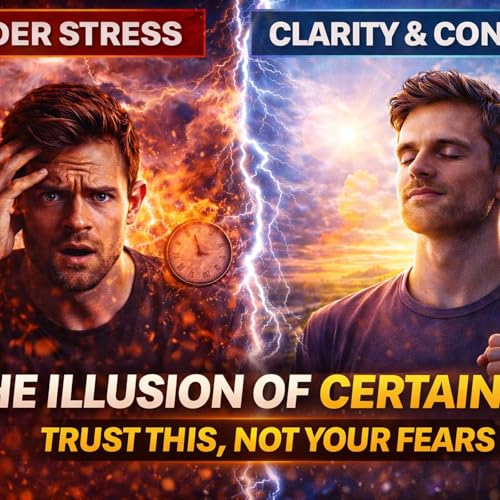
  • The Illusion of Certainty: Why You’re More Wrong Under Stress
    Apr 5 2026

    Ep 143. Certainty is one of the most appealing ideas in human psychology. It promises clarity, predictability, control, and confidence in outcomes. We are drawn to certainty because it feels safe—it reduces ambiguity and gives us the illusion that we can fully understand and control what comes next.

    But certainty, especially under stress, can become a dangerous illusion.

    When we are under pressure, fear, or sudden stress, the brain rapidly interprets incoming information to determine safety or threat. In these moments, emotions can amplify perception. What we feel can quickly become what we believe—and what we believe can feel absolutely certain, even when it is not accurate.

    This is where the myth of certainty emerges.

    Under stress, we are more likely to over-trust our interpretations, assume we are correct, and act on incomplete or distorted information. The nervous system prioritizes speed over accuracy, which means our conclusions may be fast—but not always reliable.

    In reality, life operates on a spectrum of probability, uncertainty, and possibility, not absolute certainty.

    Yet many people respond to uncertainty in one of two ways:

    Overconfidence — believing they are certain when they are not
    Over-preparation — attempting to eliminate all uncertainty before taking action

    This second pattern can lead to what might be called “preparation paralysis”—a state where fear of the unknown prevents forward movement. The mind exaggerates risk, amplifies worst-case scenarios, and creates a hyperbolic sense of danger that keeps us from acting.

    The result: hesitation, avoidance, and missed opportunity.

    This is where self-regulation skills become essential.

    Self-regulation allows us to remain centered, grounded, and rational—even in uncertain or high-pressure situations. By regulating the body through breath, awareness, and physiological control, we create space between stimulus and response. This space allows for clearer thinking, better decision-making, and more accurate interpretation of reality.

    Instead of reacting to fear, we begin to respond with clarity.

    Instead of seeking certainty, we learn to operate effectively within uncertainty.

    And that is where true confidence is built.

    Not in knowing everything—but in trusting our ability to navigate what we do not know.

    Certainty may feel powerful.
    But adaptability is what makes us effective.

    Train your awareness. Regulate your state. Act with clarity.

    Take care. Walk well.

    Hey folks, let me know what you think about the Running Man Podcast. Let me know where you're from and how you are doing in your little part of the world!

    Support the show

    intro outro music for episodes 1 through 111 done by Jonathan Dominguez Rogue musician. He can be found on youtube at Lazyman2303.

    New musical intro and outro music created by Ed Fernandez guitarist extraordinaire. To get in contact with Ed please send me an email at runningmangetskillsproject@gmail.com and I will forward him the contact.

    Donations are not expected but most certainly appreciated. Any funds will go toward further development of the podcast for equipment as we we grow the podcast. Many thanks in advance.

    https://www.buzzsprout.com/2216464/support


    Show More Show Less
    29 mins
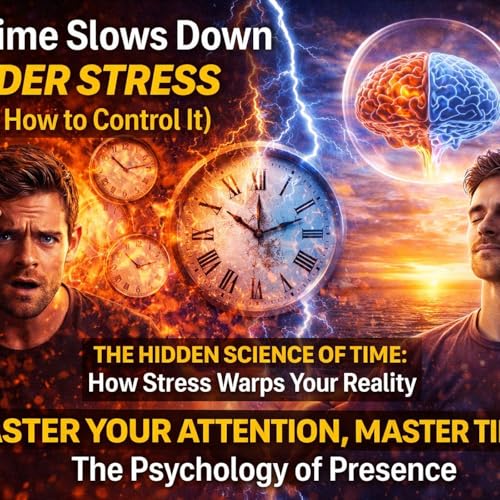
  • Why Time Slows Down Under Stress And How to Control It
    Mar 30 2026

    Ep 142. Under stress, the perception of time can shift dramatically. In moments of excitement or positive stress, time can feel fast, fluid, and fleeting. But in moments of fear, uncertainty, or shock, time can appear to slow down—or even feel like it stops entirely. This is not imagination. It is the nervous system adjusting perception in real time to help us survive and respond.

    The human brain is built for efficiency and prediction. Through pattern recognition, it constantly anticipates what will happen next in order to conserve energy and respond quickly to potential threats. This predictive nature allows us to move through life efficiently—but it also creates a hidden cost.

    We begin to live outside of the present moment.

    Our attention shifts toward the past—what has already happened—or toward the future—what we expect might happen. In doing so, we unintentionally sacrifice the richness and clarity of what is happening right now. The present moment becomes compressed, overlooked, or filtered through expectation and fear.

    Attention itself requires energy. And when that attention is constantly directed toward anticipated stress, danger, or uncertainty, it creates cognitive fatigue, emotional strain, and unnecessary tension in the nervous system.

    This is why self-regulation skills are essential.

    When we learn to regulate our physiological response to stress—through breath control, awareness, and intentional focus—we begin to reclaim our attention. We become more accurate in reading our environment. We respond earlier, more efficiently, and with less emotional cost.

    Instead of reacting to imagined threats, we begin to respond to reality.

    This shift allows us to move through life with greater clarity, reduced distress, and improved performance. It enhances our ability to stay present, conserve energy, and create higher-quality experiences in real time.

    And something important happens:

    When we improve the quality of our present moment, we naturally begin to build a more stable, more grounded, and more fulfilling future.

    Mastering time is not about controlling the clock—it is about mastering attention, perception, and response.

    Train your awareness. Regulate your state. Experience time fully.

    Walk well.

    Hey folks, let me know what you think about the Running Man Podcast. Let me know where you're from and how you are doing in your little part of the world!

    Support the show

    intro outro music for episodes 1 through 111 done by Jonathan Dominguez Rogue musician. He can be found on youtube at Lazyman2303.

    New musical intro and outro music created by Ed Fernandez guitarist extraordinaire. To get in contact with Ed please send me an email at runningmangetskillsproject@gmail.com and I will forward him the contact.

    Donations are not expected but most certainly appreciated. Any funds will go toward further development of the podcast for equipment as we we grow the podcast. Many thanks in advance.

    https://www.buzzsprout.com/2216464/support


    Show More Show Less
    27 mins
  • Is It Your Personality… or Just Stress? The Truth About Who You Are
    Mar 22 2026

    Ep 141. Personality is often treated as something fixed—an identity we carry and a label others use to define us in social life. In psychology, personality is commonly understood as the product of environment, upbringing, conditioning, and repeated exposure to life experiences.

    But what if much of what we call “personality” is not who we truly are?

    What if it is simply how we have learned to respond under stress?

    When stress—especially chronic stress—becomes a constant in our lives, it begins to shape our thoughts, emotions, and behaviors. Over time, repeated stress responses can become so familiar that we begin to identify with them:

    “I am anxious.”
    “I am angry.”
    “I am always tense.”
    “I am a worrier.”

    But neuroscience and biology tell a deeper story.

    Research shows that the brain is highly adaptable (neuroplasticity). Stress doesn’t just affect how we feel—it physically shapes neural pathways and reinforces patterns of reactivity. The more often we respond to stress in the same way, the more automatic that response becomes.

    This is where confusion happens.

    We begin to mistake stress reactivity for personality.

    In reality, many of these traits are not fixed identity—they are conditioned responses developed through repeated exposure to stress over time.

    The good news is that this process can be reversed.

    By practicing physiological self-regulation techniques—such as controlled breathing, body awareness, and nervous system regulation—we can begin to change how the body responds in real time. This is not just cognitive reframing or positive thinking. It is training the body itself to respond differently under pressure.

    With consistent practice, the nervous system becomes more familiar with calm, control, and stability—even in high-stress situations.

    And something powerful begins to happen:

    We shift from reaction to response.

    We begin to experience ourselves not as the stress patterns we’ve learned—but as the person beneath them.

    This is the difference between:
    “This is who I am”
    and
    “This is how I’ve been responding.”

    Through self-regulation, we reclaim authorship over our internal state. We rediscover clarity, presence, and a more authentic sense of self—one that is not defined by fear, anxiety, or chronic tension.

    Personality is not always permanent.
    Much of it is practice.

    And with new practice, new patterns—and a new experience of self—can emerge.

    Take care. Walk well.

    Hey folks, let me know what you think about the Running Man Podcast. Let me know where you're from and how you are doing in your little part of the world!

    Support the show

    intro outro music for episodes 1 through 111 done by Jonathan Dominguez Rogue musician. He can be found on youtube at Lazyman2303.

    New musical intro and outro music created by Ed Fernandez guitarist extraordinaire. To get in contact with Ed please send me an email at runningmangetskillsproject@gmail.com and I will forward him the contact.

    Donations are not expected but most certainly appreciated. Any funds will go toward further development of the podcast for equipment as we we grow the podcast. Many thanks in advance.

    https://www.buzzsprout.com/2216464/support


    Show More Show Less
    30 mins