• At The Wire, June 12, 2026
    Jun 13 2026
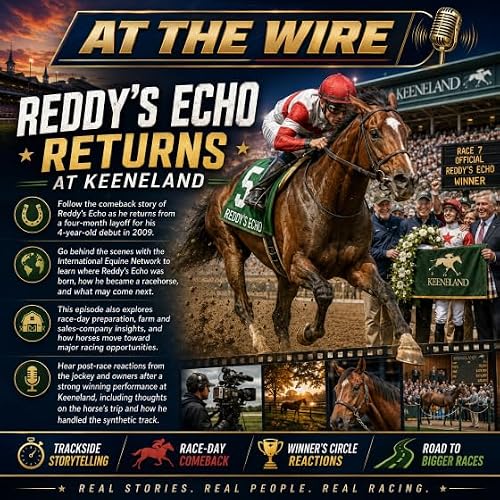
    At The Wire with Scott Miller Reddy's Echo Returns at Keeneland: A Racehorse Story from Trackside to the Winner's Circle A Racehorse Story Opens the Episode The episode begins with a lyrical theme about racing, memory, glory, and the spirit of the track. The introduction frames the program as a story-driven look at Reddy's Echo, a racehorse returning from a four-month layoff and making what the transcript presents as his four-year-old debut in 2009. The host explains that the goal is to learn where the horse came from, how he became a racehorse, and what his plans may be moving forward. Behind-the-Scenes Production of the Introduction A substantial early portion captures the host and production voice working through the on-camera introduction. The producer encourages the host to repeat lines, praises the improved delivery, and reassures him that the concept will work on camera. The exchange shows the program being shaped in real time, with the host refining the message that each racehorse has a unique story and that Reddy's Echo's story begins with the International Equine Network. Plans to Educate New Racing Fans The host describes a broader intention to help people understand the racing world beyond what they see during major events like the Derby. He discusses filming at Fasig-Tipton, explaining what a sales company does, talking about horses that graduate into higher-profile racing, and visiting farms during a time when young horses are visible. The purpose is to make horse racing more accessible to new fans by showing the path from farms and sales to major races. Trackside Activity and Race-Day Atmosphere The middle of the transcript contains substantial trackside background audio, much of it fragmented, hurried, or garbled by the automated transcription. Usable portions show people coordinating shots, watching movement around the track, reacting to the moment, and trying to capture useful lines or visuals. Several repeated automated loops were removed, while unresolved background audio was preserved as marked unclear material rather than rewritten into unsupported dialogue. Reddy's Echo's Race and Jockey Reaction After the race, the host interviews the jockey about Reddy's Echo's performance. The jockey says the horse ran very well, responded positively after the layoff, recovered after being pinched back, and handled the synthetic track nicely. He notes that the surface did not seem to hit the horse in the face as harshly and that Reddy's Echo appeared to travel over it well, presenting the race as a strong and encouraging return. Winner's Circle Reflections at Keeneland The closing interview takes place in the winner's circle at Keeneland with two owner or representative voices identified from the transcript as Kevin and Brian Solomon, though the exact names require verification. They describe relief after the win, especially given the pressure of being a favorite in a field with other capable horses. They reflect on the horse moving forward, the patience shown during the race, and the excitement of winning on a beautiful, packed day at Keeneland before the theme returns to close the episode.
    Show More Show Less
    29 mins
  • At The Wire, June 5, 2026
    Jun 6 2026
    At The Wire with Scott Miller Belmont Week, the Road Ahead, and the Business of Building a Racehorse Belmont Week Takes Center Stage The episode centers on the racing calendar surrounding Belmont, with the host emphasizing the excitement of Belmont week and the attention surrounding the race. He discusses the field size, the build-up from earlier Triple Crown events, and the challenge of getting horses prepared through the spring season. The host also notes that viewers can watch the race through Fox and through the program’s website, while framing Belmont as a major test for horses, owners, and trainers. The Difference Between Distances A major theme of the episode is the difference between training for a mile-and-a-quarter race and a mile-and-a-half race. The host explains that the distance change affects preparation, strategy, and how owners decide whether to continue forward with a horse. He suggests that this year’s distance makes the Belmont more manageable for some connections, while still leaving important questions about pace, stamina, and how individual horses will respond under pressure. Owners, Breeders, and Long-Term Decisions The host spends significant time discussing how owners and breeders think beyond a single race. He describes how some horses may be evaluated as future stallions, broodmares, or prospects for later races, and how the choice to continue racing often depends on bloodlines, money, pride, and long-term value. He also notes that owners must decide whether to aim for major races, seek easier spots, or preserve a horse’s future potential. The Road to Bigger Racing Goals The episode also looks ahead to the broader racing schedule after Belmont. The host refers to major races such as the Haskell, the Travers, and the Breeders’ Cup path, describing them as part of the larger strategic road for horses that continue beyond the Triple Crown season. He explains that trainers must study condition books, choose appropriate distances, and decide whether a horse should stay in the three-year-old division, face older horses, or shift to a different racing path. Tracks, Trainers, and the Business of Racing The host reflects on the role of trainers, jockeys, grooms, owners, and racetracks in keeping the industry moving. He emphasizes that trainers have difficult jobs because they must keep horses healthy, ready, and placed in the correct races. He also discusses modernized tracks, regional racing attractions, and the importance of making race venues appealing not just to bettors, but also to families and local communities. Horse Racing as a Family and Community Experience Toward the end of the episode, the host presents horse racing as more than a sport. He describes it as a family-centered experience tied to travel, local attractions, farms, beaches, parks, and community life. While some of the closing remarks are heavily garbled, the recoverable message is that racing requires planning, investment, and community connection, and that successful racing operations depend on more than simply sending a horse to the track.
    Show More Show Less
    33 mins
  • At The Wire, May 22, 2026
    May 22 2026
    At The Wire with Scott Miller Racing Toward the Future: Two-Year-Old Prospects, Fan-Friendly Tracks, and the Horse Industry’s Next Season A Season Turns Toward the Next Derby The host opens by reflecting on the recently completed Kentucky Derby trail and the dispersed preparation of this year’s contenders, noting that horses trained in many different regions and weather conditions. He argues that weather, location, stall availability, and individual training decisions all affect a horse’s path through the season. With the first half of the racing year closing, his attention shifts to upcoming summer meets and the beginning of the long development cycle for future Derby prospects. Two-Year-Old Races and Building a Horse’s Value A central theme of the episode is the importance of summer two-year-old racing at venues such as Saratoga, Del Mar, and other major tracks. The host describes these races as the foundation for future Derby and Breeders’ Cup campaigns and says owners increasingly want horses to build a strong résumé for breeding value, not merely earn purse money. He emphasizes that a meaningful maiden win or stakes performance can establish a young horse’s value and reputation. Praising Horse-First Training Decisions The host highlights a female trainer whose name is unclear in the automated transcript, praising her path through the horse business and her decision to protect her Derby-winning horse by bypassing a subsequent race after assessing the horse’s condition. He argues that trainers who space races carefully and prioritize soundness will reduce injuries and allow horses to race longer. In his view, the sport is returning to an older, more patient style of preparation, with sufficient recovery time between starts. Racetracks as Welcoming Family Destinations The episode broadens from racing strategy to the public experience of the sport. The host praises tracks that are becoming more welcoming to families through food, children’s activities, photo opportunities, giveaways, education, and improved facilities. He cites major racetracks and equestrian destinations as examples of venues that can bring new fans into the horse world while also supporting local businesses through tourism, food, retail, and travel spending. Learning About Horses Up Close The host encourages listeners to attend horse shows, sales, training centers, and barns so they can see horses being groomed, shod, saddled, trained, and cared for. He discusses his plan for a new website that will teach people about horse care and transportation, drawing on his childhood experience of reading about horses before seeing the work firsthand. He also invites visitors to Sunshine Meadows, where he says families can watch harness horses train, meet horse people, and become more personally connected to the animals. Tradition, Travel, Ownership, and the Future of the Sport In the closing portion, the host presents horse racing and equestrian life as a family-oriented culture built around tradition, travel, and accessible participation. He references the Triple Crown, Saratoga, Colonial Downs, Tryon, major equestrian facilities, and fractional horse ownership as different ways newcomers can engage with the sport. He concludes that track renovations, fan-friendly planning, and the coming two-year-old season provide reasons for optimism as racing begins its next cycle toward the Derby.
    Show More Show Less
    32 mins
  • At The Wire, May 8, 2026
    May 9 2026
    32 mins
  • At The Wire, May 1, 2026
    May 2 2026
    30 mins
  • At The Wire, April 24, 2026
    Apr 25 2026
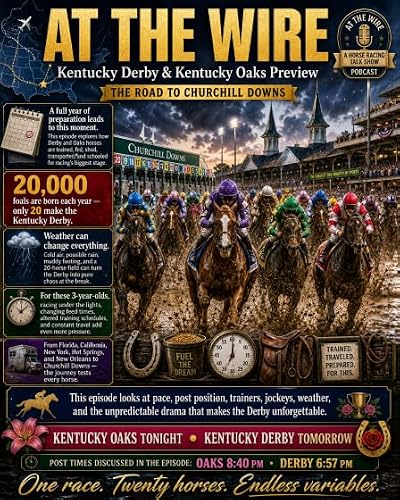
    At The Wire with Scott Miller Chasing the Roses: The Road to the 152nd Kentucky Derby At The Wire: 152nd Kentucky Derby #Derby2026 Comprehensive Analysis of the Road to Churchill Downs & Triple Crown Strategy Race Purse & Odds $5.0MTotal Prize 20 / 20,000 — Only 0.1% of foals qualify for the starting gate. Key Milestones Post Position Draw April 25 Kentucky Oaks May 1 152nd Derby Post May 2, 6:57 PM Derby Week Events PM Opening Night Racing under the lights; official kickoff. PK The Oaks (Pink Day) 3-year-old fillies & Breast Cancer Awareness. TH Thirby The local's tradition; avoiding the tourist rush. The Triple Crown Path Kentucky Derby 1.25 miles. The "Point System" hurdle. Preakness Stakes 4 weeks later. The value-add race. Belmont Stakes 1.5 miles. A "different training regime." #WeatherFactor #ToddPletcher #ChurchillDowns #EquineAthletes #DerbyPrep21 Source: International Equine Network (msmequine.com) "Creatures of habit on the road to glory." This episode of At The Wire provides a comprehensive look at the final preparations for the 2026 Kentucky Derby. It explores the rigorous qualification process, the psychological and environmental factors affecting elite thoroughbreds, and the full schedule of festivities leading up to the "Greatest Two Minutes in Sports." The Road to the Starting Gate The journey to the Kentucky Derby is a grueling selection process where only 20 horses emerge from an annual crop of approximately 20,000 foals. Owners and trainers must strategically navigate a nationwide point system, competing in key races across Arkansas, Louisiana, New York, and California. This "Derby Trail" requires a delicate balance: earning enough points to qualify without overworking the horse before the main event. Training environments play a crucial role; while Florida-based operations benefit from consistent weather, other regions often face disruptions like the recent lightning delays in Hot Springs, which can break a horse's habit-driven routine. 🏇 Derby Week 2026 Highlights April 25: Official Post Position Draw & Opening Night April 28-30: Champions Day & "Thirby" (Local's Day) May 1: Kentucky Oaks & PINK Tradition (Breast Cancer Awareness) May 2: The 152nd Kentucky Derby Psychological Dynamics and the Triple Crown Strategy As Derby Week approaches, the atmosphere in the barns at Churchill Downs becomes electric. Horses, being highly sensitive creatures, often mirror the tension and excitement of their grooms, jockeys, and trainers. Beyond the Derby, elite teams are already calculating moves for the Triple Crown. This involves planning for the Preakness Stakes just four weeks later and the grueling 1.5-mile Belmont Stakes. Trainers face immense pressure from owners to maintain a "winning resume" for future breeding prospects, even when the physical toll on a three-year-old horse can be "wicked scary". Beyond the Racetrack: Equine Versatility The narrative of the thoroughbred extends past the finish line, as illustrated by the story of "Collins." After a successful racing career that included a rare victory against older horses in a 1.5-mile handicap, Collins transitioned into a second career in steeplechase and foxhunting. This highlights the "creature of habit" nature of horses; many elite athletes require constant activity and purpose even after retiring from the flat track. RACE PURSE & DETAILS $5.0M Total Prize Pool $3.1M Winner's Share • Post Time: 6:57 PM ET (May 2nd) • Broadcast: Peacock, MSNBC, IEN, MSN Equine Key Data The Field: 20 horses selected from 20,000 annual foals. Prize Money: 5milliontotalpurse,with$5 million total purse, with $3.1 million guaranteed to the winner. Broadcast Schedule: Undercard coverage begins at 12:00 PM ET; Derby post time is set for 6:57 PM ET. Preparation: 21 prep races are tracked leading up to the event, starting as early as the previous September. To-Do / Next Steps Follow the official post-position condition draw this Saturday, April 25th, 2026. Visit msmequine.com to watch the "Morning Works" show and live race coverage. Check local listings for equine events, horse shows, or tack shops in your area to engage with the sport. Watch the "Dawn at the Downs" and "Kentucky Burgoo" segments on the International Equine Network for cultural insights. Conclusion The 152nd Kentucky Derby is more than a race; it is the culmination of a year-long strategic journey involving precise training, environmental adaptation, and high-stakes management. Whether through the $5 million purse or the deep-rooted traditions like the PINK walk, the event remains a pinnacle of equine excellence and community celebration.
    Show More Show Less
    31 mins
  • At The Wire, April 17, 2026
    Apr 18 2026
    At The Wire with Scott Miller At The Wire: Countdown to the 152nd Kentucky Derby At The Wire: 152nd Kentucky Derby Road to Churchill Downs: Contenders, Traditions, and Global Equine Logistics #Derby2026 Countdown 15 Days Field Size 20 Horses Record Sale $6.0M Farm Output 24 Sent 🏆Top 5 Contenders (IEN Rating) 1. Commandment Brad Cox / Flavin Pratt 2. Further Ado Brad Cox / Ira Ortiz 3. Renegade Todd Pletcher (Solid) 4. So Happy Mark White / Mike Smith *Note: International threat Wonder dean (Japan) also in the field. 📅 Schedule Apr 25 Opening Night (Under Lights) May 01 Kentucky Oaks (Pink Tradition) May 02 152nd Kentucky Derby 🛠️ Behind the Scenes Blacksmith Insights Hallway Feed Logistics Tack Shop Essentials Horse Transport (Vans/Planes) 🏇 Traditions & Lifestyle Triple Crown Traditions: A new documentary & cook-off contest featuring Derby menus, Maryland crabs, and Kentucky BBQ. Host: Scott Muller | International Equine Network (IEN) Broadcast Date: April 17, 2026 This broadcast, hosted by Scott Muller from Delray Beach, Florida, serves as a comprehensive preview of the upcoming 152nd Kentucky Derby. The program explores the intricate logistics of the equine industry—from specialized blacksmithing and nutrition to high-stakes auctions—while profiling the top contenders for the 2026 "Run for the Roses." Detailed Insights into the Equine World The Road to Churchill Downs With the Kentucky Derby only two weeks away, the industry is shifting its focus to Louisville for a series of high-profile events. Derby Week officially begins on April 25th with "Opening Night" under the lights, followed by specialized days such as "Champions Day," which focuses on elite breeding and statistics. A significant highlight is the Kentucky Oaks on May 1st, which features top three-year-old fillies and maintains a "pink tradition" to support breast cancer survivors. The week is designed to be accessible to the public, offering everything from fashion shows to community-themed days like "Thurby". 🏇 2026 Derby Week Schedule APRIL 25Opening Night MAY 1Kentucky Oaks MAY 2The Derby Celebrating the 152nd "Run for the Roses" at Churchill Downs. Behind-the-Scenes Logistics and Horse Care The broadcast highlights the essential but often overlooked roles that keep the racing industry moving. This includes the work of blacksmiths who must choose specific shoes based on track conditions (dry, muddy, or "in-between") and specialized nutritionists like Hallway Feed, who ship custom blends globally. Additionally, the "tack shop" is described as the grocery store for horses, providing everything from shampoos and vitamins to saddles and bridles. Transporting these elite athletes is equally complex, involving coordinated fleets of vans and planes moving horses between Florida, Kentucky, and New York. High-Stakes Auctions and Breeding The financial scale of the industry is underscored by recent sales at Keeneland and Ocala. A two-year-old horse recently sold for $6 million based on bloodline and conformation, while a brood mare named Puka fetched $5 million. However, the host notes that a high price tag does not guarantee success on the track, citing examples of expensive purchases that failed to meet expectations. The upcoming Friday night sale at Keeneland remains a major draw for fans and investors alike. 🏆 Top 5 Contenders 1. Commandment: Trained by Brad Cox; won the Fountain of Youth. 2. Further Ado: Powerhouse from Brad Cox; has track experience. 3. Renegade: Todd Pletcher trainee; Arkansas Derby winner. 4. So Happy: The "West Coast's best hope" with Mike Smith. 5. Poll Forth: Strong distance runner; Jeff Ruby Stakes winner. Evaluating the 2026 Field The 2026 Derby is described as "wide open," with a 20-horse field that presents a unique challenge for young colts unaccustomed to such large groups. The leaderboard is currently topped by a trio of elite colts, including Commandment (trained by Brad Cox) and Renegade (trained by Todd Pletcher). Other notable entries include So Happy, representing the West Coast's best chance, and Wonderdean, a strong international contender from Japan. Factors such as weather and gate position are expected to play a decisive role in the final outcome. Key Data Event: 152nd Kentucky Derby. Field Size: 20 horses. Recent Top Sale: $6,000,000 for a two-year-old colt. Countdown: 15 days, 3 hours, 2 minutes as of the broadcast. To-Do / Next Steps Visit msmequine.com or the International Equine Network to view the full roster of 24 horses heading to Churchill Downs. Watch the "Morning Works" live show from Churchill Downs at 6:45 AM tomorrow morning. Attend the Keeneland Sale next Friday night to watch elite horses go through the auction room. Check the Churchill Downs official menu on the IEN website for Derby party inspiration. Follow the "Triple Crown Traditions" documentary series featuring the upcoming jockey/trainer cook-off. Conclusion The 152nd Kentucky Derby promises to be an ...
    Show More Show Less
    32 mins
  • At The Wire, April 10, 2026
    Apr 11 2026
    At The Wire with Scott Miller Road to the 2026 Kentucky Derby: Insights from "At The Wire" AT THE WIRE: DERBY 2026 Expert Insights from International Equine HQ | Host: Scott Miller Live from Delray Beach Countdown 22d 03h Until Kentucky Derby Field Size 20 Horses Top qualifiers only 🏆Derby Standings (Points) 1. Commandment150 pts / $943k 2. Further AdooCox Stable 3. RenegadePletcher Stable 4. So HappyNewcomer Tactical "Derby Crunch" The 3/8ths Pole: The "crucial point" where positioning determines the finish. Weather Factor: Mud/rain concerns; training conditions vary by state. Shipping Stress: Van vs. Flight impact on horse temperament. Injury Risk: 3-4 horses already skipping due to bone/foot bruises. Upcoming Calendar APR 25 Post Position Draw (2-3 PM ET) - Live on msmequine.com APR 27 Dawn at the Downs - Tickets from $76; backside tours. DAILY Morning Works - Live streaming starting 7:00 AM. #KentuckyDerby #TripleCrown #ChurchillDowns Est. Reading: 4 mins In this episode of At The Wire, host Scott Miller provides an expert preview of the upcoming 2026 Kentucky Derby. From the International Equine headquarters in Delray Beach, Miller discusses the wide-open nature of this year’s field, the strategic pressures facing trainers, and the logistical challenges of preparing elite athletes for the most exciting two minutes in sports. Detailed Summary The Wide-Open Field and Environmental Challenges The 2026 Kentucky Derby field is characterized by a lack of a clear standout, making it a race where "anybody could win." Unlike previous years, many early favorites have struggled or faced injuries, leaving the top 20 spots in a state of flux as the three-week countdown begins. Beyond the competition, weather remains a primary concern for trainers. With horses currently training in diverse climates like Santa Anita, Hot Springs, and Florida, the transition to potentially muddy or humid conditions at Churchill Downs can significantly impact performance. Shipping logistics, whether by plane or van, add another layer of stress that can upset a horse's temperament just before the "derby crunch". 🏇 2026 Derby Countdown 22 Days : 03 Hours : 25 Minutes The field is wide open with no dominant favorites. Watch for late-breaking injuries and "bone bruises" that may shift the top 20 rankings in the coming days. Race Strategy and the 3/8 Pole Navigating a 20-horse field requires immense tactical discipline from both jockeys and trainers. Miller emphasizes that the first stretch and the initial turn are chaotic, but the "crucial point" occurs at the three-eighths pole. This is where jockeys must commit to their lane—whether on the rail, in the middle, or the outside—to avoid getting trapped behind tiring horses "backing up" into the field. Miller advocates for a hands-off training philosophy once the race begins, trusting the jockey's instincts to handle the "keys" to the horse rather than over-managing the strategy from the sidelines. Strategic Management and Breeding Resumes For many owners and trainers, the Derby is not the only goal. Strategic decisions are often made to skip the Derby in favor of the Preakness or the Travers Stakes at Saratoga to build a stronger "breeding resume" for stallions. Winning a Grade 1 race like the Travers can sometimes be more valuable for a horse's long-term career than a poor showing in a crowded Derby field. This year, several horses from the Blue Grass Stakes are expected to bypass Churchill Downs to focus on the Preakness or the Pat Day Mile. Top Contenders & Standings Horse Trainer Points/Status Commandment Brad Cox 150 Pts ($943k) Further Adoo Brad Cox Top 5 Contender Renegade Todd Pletcher #3 Spot Incredible Riley Mott Rising Talent Fan Experience and Local Events Churchill Downs is preparing for a massive influx of 150,000 fans. Key events include the "Dawn at the Downs," where fans can watch morning works and tour the backside of the track. Miller also highlights the Kentucky Derby Post Position Draw, which serves as the official kickoff for the Derby week festivities, including the riverboat races and the Kentucky Food Festival. Key Data Commandment: Current leader with 150 points and $943,000 in earnings. Dawn at the Downs: Tickets start at $76 and go on sale Monday, April 27. Madam Secretary: Running in the 3rd race at Keeneland this Sunday; purse is $120,000. Derby Draw: Scheduled for Saturday, April 25, from 2:00 PM to 3:00 PM ET. To-Do / Next Steps Watch morning works live on msmequine.com starting next weekend at approximately 7:00 AM. Tune in to the Post Position Draw on April 25 at 2:00 PM ET via the website. Purchase Dawn at the Downs tickets starting Monday, April 27, if planning to attend. Follow Madam Secretary's race at Keeneland this Sunday (Race 3, Horse #3). Check local equine events by Googling area codes for trail rides or horse shows. Conclusion As the "Derby fever" sets in, the focus shifts from long-term training to the fine-tuning of elite ...
    Show More Show Less
    30 mins