At The Wire cover art

At The Wire

At The Wire

By: Scott Miller
Listen for free

Talkshow RSS©2005-2026 BBS Network, Inc.
Episodes
  • At The Wire, June 12, 2026
    Jun 13 2026
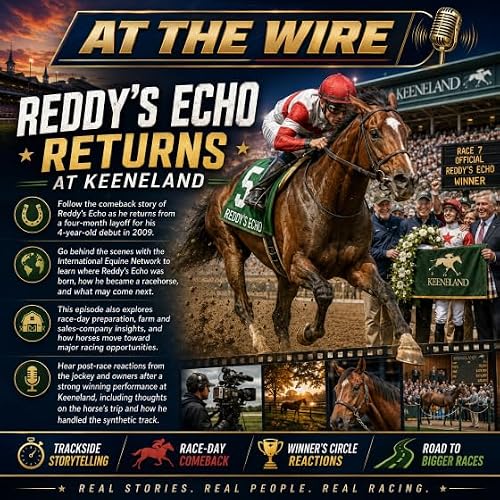
    At The Wire with Scott Miller Reddy's Echo Returns at Keeneland: A Racehorse Story from Trackside to the Winner's Circle A Racehorse Story Opens the Episode The episode begins with a lyrical theme about racing, memory, glory, and the spirit of the track. The introduction frames the program as a story-driven look at Reddy's Echo, a racehorse returning from a four-month layoff and making what the transcript presents as his four-year-old debut in 2009. The host explains that the goal is to learn where the horse came from, how he became a racehorse, and what his plans may be moving forward. Behind-the-Scenes Production of the Introduction A substantial early portion captures the host and production voice working through the on-camera introduction. The producer encourages the host to repeat lines, praises the improved delivery, and reassures him that the concept will work on camera. The exchange shows the program being shaped in real time, with the host refining the message that each racehorse has a unique story and that Reddy's Echo's story begins with the International Equine Network. Plans to Educate New Racing Fans The host describes a broader intention to help people understand the racing world beyond what they see during major events like the Derby. He discusses filming at Fasig-Tipton, explaining what a sales company does, talking about horses that graduate into higher-profile racing, and visiting farms during a time when young horses are visible. The purpose is to make horse racing more accessible to new fans by showing the path from farms and sales to major races. Trackside Activity and Race-Day Atmosphere The middle of the transcript contains substantial trackside background audio, much of it fragmented, hurried, or garbled by the automated transcription. Usable portions show people coordinating shots, watching movement around the track, reacting to the moment, and trying to capture useful lines or visuals. Several repeated automated loops were removed, while unresolved background audio was preserved as marked unclear material rather than rewritten into unsupported dialogue. Reddy's Echo's Race and Jockey Reaction After the race, the host interviews the jockey about Reddy's Echo's performance. The jockey says the horse ran very well, responded positively after the layoff, recovered after being pinched back, and handled the synthetic track nicely. He notes that the surface did not seem to hit the horse in the face as harshly and that Reddy's Echo appeared to travel over it well, presenting the race as a strong and encouraging return. Winner's Circle Reflections at Keeneland The closing interview takes place in the winner's circle at Keeneland with two owner or representative voices identified from the transcript as Kevin and Brian Solomon, though the exact names require verification. They describe relief after the win, especially given the pressure of being a favorite in a field with other capable horses. They reflect on the horse moving forward, the patience shown during the race, and the excitement of winning on a beautiful, packed day at Keeneland before the theme returns to close the episode.
    Show More Show Less
    29 mins
  • At The Wire, June 5, 2026
    Jun 6 2026
    At The Wire with Scott Miller Belmont Week, the Road Ahead, and the Business of Building a Racehorse Belmont Week Takes Center Stage The episode centers on the racing calendar surrounding Belmont, with the host emphasizing the excitement of Belmont week and the attention surrounding the race. He discusses the field size, the build-up from earlier Triple Crown events, and the challenge of getting horses prepared through the spring season. The host also notes that viewers can watch the race through Fox and through the program’s website, while framing Belmont as a major test for horses, owners, and trainers. The Difference Between Distances A major theme of the episode is the difference between training for a mile-and-a-quarter race and a mile-and-a-half race. The host explains that the distance change affects preparation, strategy, and how owners decide whether to continue forward with a horse. He suggests that this year’s distance makes the Belmont more manageable for some connections, while still leaving important questions about pace, stamina, and how individual horses will respond under pressure. Owners, Breeders, and Long-Term Decisions The host spends significant time discussing how owners and breeders think beyond a single race. He describes how some horses may be evaluated as future stallions, broodmares, or prospects for later races, and how the choice to continue racing often depends on bloodlines, money, pride, and long-term value. He also notes that owners must decide whether to aim for major races, seek easier spots, or preserve a horse’s future potential. The Road to Bigger Racing Goals The episode also looks ahead to the broader racing schedule after Belmont. The host refers to major races such as the Haskell, the Travers, and the Breeders’ Cup path, describing them as part of the larger strategic road for horses that continue beyond the Triple Crown season. He explains that trainers must study condition books, choose appropriate distances, and decide whether a horse should stay in the three-year-old division, face older horses, or shift to a different racing path. Tracks, Trainers, and the Business of Racing The host reflects on the role of trainers, jockeys, grooms, owners, and racetracks in keeping the industry moving. He emphasizes that trainers have difficult jobs because they must keep horses healthy, ready, and placed in the correct races. He also discusses modernized tracks, regional racing attractions, and the importance of making race venues appealing not just to bettors, but also to families and local communities. Horse Racing as a Family and Community Experience Toward the end of the episode, the host presents horse racing as more than a sport. He describes it as a family-centered experience tied to travel, local attractions, farms, beaches, parks, and community life. While some of the closing remarks are heavily garbled, the recoverable message is that racing requires planning, investment, and community connection, and that successful racing operations depend on more than simply sending a horse to the track.
    Show More Show Less
    33 mins
  • At The Wire, May 22, 2026
    May 22 2026
    At The Wire with Scott Miller Racing Toward the Future: Two-Year-Old Prospects, Fan-Friendly Tracks, and the Horse Industry’s Next Season A Season Turns Toward the Next Derby The host opens by reflecting on the recently completed Kentucky Derby trail and the dispersed preparation of this year’s contenders, noting that horses trained in many different regions and weather conditions. He argues that weather, location, stall availability, and individual training decisions all affect a horse’s path through the season. With the first half of the racing year closing, his attention shifts to upcoming summer meets and the beginning of the long development cycle for future Derby prospects. Two-Year-Old Races and Building a Horse’s Value A central theme of the episode is the importance of summer two-year-old racing at venues such as Saratoga, Del Mar, and other major tracks. The host describes these races as the foundation for future Derby and Breeders’ Cup campaigns and says owners increasingly want horses to build a strong résumé for breeding value, not merely earn purse money. He emphasizes that a meaningful maiden win or stakes performance can establish a young horse’s value and reputation. Praising Horse-First Training Decisions The host highlights a female trainer whose name is unclear in the automated transcript, praising her path through the horse business and her decision to protect her Derby-winning horse by bypassing a subsequent race after assessing the horse’s condition. He argues that trainers who space races carefully and prioritize soundness will reduce injuries and allow horses to race longer. In his view, the sport is returning to an older, more patient style of preparation, with sufficient recovery time between starts. Racetracks as Welcoming Family Destinations The episode broadens from racing strategy to the public experience of the sport. The host praises tracks that are becoming more welcoming to families through food, children’s activities, photo opportunities, giveaways, education, and improved facilities. He cites major racetracks and equestrian destinations as examples of venues that can bring new fans into the horse world while also supporting local businesses through tourism, food, retail, and travel spending. Learning About Horses Up Close The host encourages listeners to attend horse shows, sales, training centers, and barns so they can see horses being groomed, shod, saddled, trained, and cared for. He discusses his plan for a new website that will teach people about horse care and transportation, drawing on his childhood experience of reading about horses before seeing the work firsthand. He also invites visitors to Sunshine Meadows, where he says families can watch harness horses train, meet horse people, and become more personally connected to the animals. Tradition, Travel, Ownership, and the Future of the Sport In the closing portion, the host presents horse racing and equestrian life as a family-oriented culture built around tradition, travel, and accessible participation. He references the Triple Crown, Saratoga, Colonial Downs, Tryon, major equestrian facilities, and fractional horse ownership as different ways newcomers can engage with the sport. He concludes that track renovations, fan-friendly planning, and the coming two-year-old season provide reasons for optimism as racing begins its next cycle toward the Derby.
    Show More Show Less
    32 mins
adbl_web_anon_alc_button_suppression_t1
No reviews yet