• Move That Dang Rock
    Jun 2 2026
    What’s holding you back?Is it what they did? Is it some failing from years ago? Or is it what somebody said that shook you?I am a cross between the “name it and claim it” generation and the put-a-root-and-an-evil-eye-on-it people. But somewhere between faith and magic, between action and waiting, there’s something we are doing wrong.Move That Dang Rock: What’s Really Holding You Back?This weekend, I found myself in a room with thousands of Black women readers. The ladies had traveled across the country to buy books from Black authors, meet their favorite writers, and celebrate stories that center Black love, Black joy, and Black hope.It was the second Black Romance Book Fest.What amazes me most is that this gathering started as the dream of one indie author, Lauren Lacey. She imagined a place that would become a pilgrimage site for readers seeking stories where melanated heroes and heroines got happy endings.The publishing industry told her it couldn’t be done.Some said no one would come.Others suggested this was a pipe dream. Still others questioned if this market existed.Many stayed quiet, sneering that she’d soon learn that Black readers didn’t matter enough to build something big.Lauren didn’t listen.She didn’t waste her energy arguing with people who couldn’t see her vision. She didn’t spend years waiting for permission. She simply started building.Today, the Black Romance Book Fest is one of the largest gatherings of Black readers in the country. Thousands of readers fill these rooms. Authors sold books. Friendships were formed or renewed. Community became stronger.All because one person refused to let doubt become destiny.Now, some people might ask, “Why create something separate? Aren’t there already plenty of book festivals?”Let me explain it this way.Have you ever ordered a burger and specifically asked for no onions and no pickles?The waiter brings out lunch, but the pickle and onions are still there.You’re hungry, so you try to make it work, ripping off the pickle and onions. The burger is good. The meat is flavorful. The cheese is perfect, but the juice of the pickle, the tang of the onion are still there. Every few bites, you hit a pickle. The taste of onion coats the tongue. You spend the whole meal navigating around something that wasn’t made with you in mind.That’s what many spaces can feel like.There are wonderful book events all over the country, and I love attending them. I love meeting all readers. I love introducing people to stories about powerful women and expansive histories.But at Black Romance Book Fest, I don’t have to navigate around the pickles.I don’t have to explain myself.I don’t have to wonder if I belong.I can simply exist.I can let my hair down. I code-switch for fun, not survival.I am fully seen.And that kind of belonging matters.One thing I love about the Laurens of the world. They don’t understand the word “impossible.”Tell them something has never been done, and they immediately start figuring out how to do it.They challenge systems.They move fast.They focus. They win.Can you focus? Are you so accustomed to disappointment that you can’t imagine success?Are you frozen by a past failure? Are you haunted by a dream that didn’t work out the first time?Have you convinced yourself that your best efforts will never be enough?Are you quietly quitting on yourself?Maybe you’ve wanted to write a book for years and just couldn’t pull it together.I meet people all the time who tell me they want to write a book. Then I see them years later, and they still want to write a book.Wanting is not writing.One hundred words a day—about ten sentences—creates more than 30,000 words in a year. That’s a novella.The problem isn’t always talent.Sometimes the problem is fear, fear wrapped up in perfectionism.What’s the rock sitting in the middle of your path? What’s the thing you’ve been walking around, staring at, complaining about, but never moved?Are you waiting for the perfect moment?Sometimes the problem is us.In my life, I’ve let fear silence me.I’ve kept my head down when I should have spoken up. I’ve worried about criticism instead of focusing on purpose.But there comes a point when you have to rise.There comes a point when you have to look fear in the eye and move anyway.And if you fail? At least you failed swinging.So here are three questions to ask yourself when you’re trying to figure out what’s holding you back.First: What do I truly want?· Not what other people want for me.· Not what looks practical.· What do I actually want?Second: What am I afraid of?· Failure?· Success?· Criticism?· Disappointment?Name it, but don’t claim it.Third: What’s one thing I can do today? Just one thing.Not next year.Not someday.Today.Dreams aren’t built in giant leaps but by daily steps taken. So start, start today.Along the way, encourage somebody else.Support people who are trying.Celebrate effort.Point ...
    Show More Show Less
    12 mins
  • Sorry for Slavery. Checks for Criminals.
    May 26 2026
    While criminals get rich, a holy man said sorry. - The pope apologized for the Catholic Church’s role in slavery. Five hundred and seventy-four years after popes authorized the enslavement of Africans, the Vatican finally admits its complicity.So I’m asking. What does an apology mean when violent offenders and felons get reparations? I’m thinking this might be the first receipt in a long-overdue accounting.Today, Pope Leo XIV used his first encyclical, Magnifica Humanitas — “Magnificent Humanity” — to apologize for the Catholic Church’s role in legitimizing slavery.I don’t know if y’all understand how big of a deal that is.According to the Associated Press, this is the first time a pope has publicly acknowledged and apologized for the role that past popes themselves played in giving European sovereigns authority to subjugate and enslave non-Christians.That is huge.But at the same time?It is still just words.So today, I’m going to give you a little history — and some math.In every book I write that involves the Caribbean, one of the most disconcerting things I find is that the Catholic Church was complicit in the moral sin of enslavement.I am a woman of faith (or, as Ellen, my daughter, says, Non-denominational with Baptist leanings).My faith grounds me. It’s my identity. It has sustained me in some of my darkest hours.But when I do research and see enslaved people working in horrible conditions for priests, ministers, missionaries, and all the Catholic orders, I have to sit with that contradiction.Can you imagine spreading the good news of a Savior while returning to camp to beat and punish someone because the law said you were allowed to own them? Can you imagine preaching salvation while denying someone else’s humanity?Today I ask: what matters more — the apology, or the 574-year delay?In 1452, Pope Nicholas V issued Dum Diversas, authorizing the Portuguese crown to conquer, subjugate, and enslave non-Christians in Africa. The AP reports that this gave permission to “reduce their persons to perpetual slavery.”That was 574 years ago.Five hundred and seventy-four years is a long time to wait for someone to say, “We were wrong.” So yes, give some credit to Pope Leo.He’s American. He is from Chicago. His family tree includes both enslaved people and enslavers. Maybe all of that matters. Maybe that’s why he could step up and say wrong is wrong, even if his own hands were never on the master’s whip.That means something.But it does not mean everything.Because apologies without repair are just public relations.So let’s talk numbers.In 1838, the Maryland Province of the Society of Jesus — the Jesuits — sold 272 enslaved people to two Louisiana planters for $115,000.That gives us a benchmark:$115,000 divided by 272 people equals $422.79 per enslaved person in 1838 dollars.Historian Andrew Dial estimates that they held more than 20,000 people in bondage by the mid-eighteenth century.So let’s calculate from there.If 20,000 enslaved people were valued at the Georgetown benchmark:20,000 × $422.79 = $8.46 million in 1838 dollars. $296–338 millionBut Jesuits are just one order of the Catholic Church, if you add the Franciscans, Dominicans, Capuchins, missions, universities, and the plantation systems throughout Brazil, Haiti, Cuba, Louisiana, and the French Caribbean, you can increase that number to 100,000 - 400,000 enslaved people.The value rises from $296 Million to as high as $5 billion in today’s dollars.That is the math.Now let’s widen the lens.The Trans-Atlantic Slave Trade Database estimates about 12.5 million Africans were transported across the Atlantic slave trade.Using the same Georgetown benchmark:12.5 million × $422.79 = $5.285 billion in 1838 dollars.In today’s dollars, that is roughly: $185 billion to $211 billion.And that is still only the body-price.· Not labor.· Not land.· Not sugar.· Not cotton.· Not tobacco.· Not banks.· Not insurance.· Not universities.· Not inherited wealth.· Not compound interest.· Just the sale value of humans.Well, Vanessa, I’m not Catholic. I figured you’d remember that. Let’s bring this home to the United States.Historians generally estimate that about 388,000 Africans were directly imported into what became the United States. By 1860, the enslaved population had grown to nearly 4 million people through forced reproduction and hereditary slavery.Using the Georgetown benchmark:4,000,000 × $422.79 = $1.691 billion in 1838 dollars.Converted today: $59 billion to $68 billion.Now, if you divided that across roughly 49 million Black Americans today, that would be about: $1,200 to $1,388 per person.And somebody will say, “See, that’s not that much. Get over it.”They would be right about the number, because it is too small. It only values enslaved people as property. It does not include what was stolen from them and their descendants.It does not include:* 250 years of unpaid labor,* lost wages,*...
    Show More Show Less
    15 mins
  • They Photoshopped Her Black
    May 19 2026
    I almost got canceled over a book cover I didn’t create and fought against. But strangely enough, that disaster became part of a much bigger conversation about who gets represented in historical romance.My first book was traditionally published. Books two through sixteen—independently published.And the reason for going Indie after landing an agent was simple: at the time, there was this deeply toxic idea in publishing that stories centered on Black women in history—especially in the Regency and Georgian eras—didn’t have an audience.Publishers didn’t understand the history and how diverse it is. And worse, they underestimated readers. They didn’t think you were interested.So my agent and I parted ways, and I decided to prove there was a market for these books.And y’all showed up.Especially those of you who’ve been here since the beginning. You built this career with me. You bought the books, reviewed the books, recommended the books, argued for these heroines and these histories before the industry ever wanted to them to exist.Eventually, traditional publishers circled back. They wanted proposals, manuscripts, meetings. And I ultimately signed with Entangled Publishing in 2017.The Bittersweet Bride was my return to traditional publishing after years away.Now, if you think authors have control over their covers, let me lovingly disillusion you.Unless you’re a massive bestseller or have enough marketplace leverage to force approvals, you often don’t have much say at all. And at that point—In traditional publishing’s eyes, I was basically starting over. I had independent success, but not traditional “credibility.”So the cover came in.And you guys…it was digital blackface.The art department had apparently searched the internet trying to find a Black woman in Regency clothing and decided the solution was to take a White model and darken her skin in Photoshop.That was the cover for my seventeenth book.I told them, people could tell and that she looked ashy. Everyone knows Black women use lotion. That is my humor in a difficult situation. But despite my objections, that was the direction they chose.Then the internet detectives got involved. Folks on what is now X found the original image of the model and placed it beside the published cover. The outrage exploded.People were furious—and rightfully so. But a lot of folks also assumed I had approved it. Some came directly for me. And because my name was on that book, I stood there and took it.But I didn’t make that cover. I protested it. I lost the fight. And in traditional publishing, sometimes that happens—you lose the fight.Now to the publisher’s credit, once they realized how serious the backlash was, things changed. Suddenly I was included in cover discussions. Eventually they started working with the graphic artists who had designed many of my indie covers.The one benefit was the larger conversation became:Why is there such a lack of diverse historical stock photography?Why were publishers struggling to find Black models in period dress? Why weren’t there archives, databases, and photo shoots representing different skin tones, body types, cultures, and histories?People pushed hard for change.And like many things in publishing and media… some progress happened, a lot did not.A few companies stepped up. A few photographers expanded their collections. But a lot of the industry stayed status quo because the demand for diverse historical imagery was still considered “niche.”Fast forward to today.I’m scrolling through Instagram and I get a comment from the actual model whose photos were used for the cover of A Deal at Dawn.And y’all—I screamed for joy.This is book number thirty. Thirty.And this time, there’s a real Black woman on the cover portraying Katherine Wilcox, the eldest Wilcox sister, Lady Hampton. She’s elegant, beautiful, luminous—everything Katherine should be.And for me, it felt like a full-circle moment.My reentry into traditional publishing came with a cover disaster and now, years later, I have a cover miracle. My publisher Kensington Publishing Corp. found authentic imagery featuring a real Black model for my historical romance cover.That matters.Recently, I went on Threads and asked other authors how they’re navigating this issue now. Some shared resources for diverse stock photography. Some said they’re still struggling. Others have moved toward illustrated covers—what some folks dismissively call “cartoon covers.”But honestly? I love illustrated covers.Illustration allows artists to create a vision that includes everyone. You aren’t limited by the stock that exists. When I’ve had illustrated covers—let’s just say the difference in sales and wide appeal is apparent. It’s hard to accept that people look at pretty cover with a Black Regency Heroine and say it’s not for them.But things are better. Cover artists may still have to build composites from multiple ...
    Show More Show Less
    13 mins
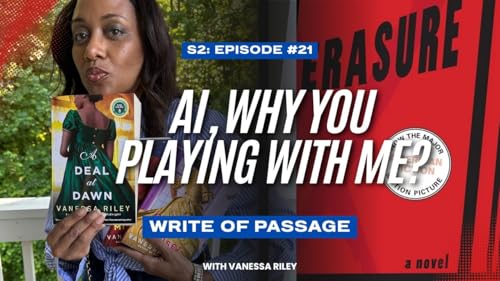
  • AI, Why You Playing With Me?
    May 12 2026
    History teaches us many things. One of them is this: if there is a way for a scammer to scam, they will do it. My inbox fills daily with AI-generated emails faker than a three-dollar bill. Why are we so desperate for engagement we fall for or create AI spam?AI, Why You Playing With Me?Spam, Scams, and the Death of Real ConversationHi, my name is Vanessa Riley. I write historical fiction, historical mystery, and historical romance. I spend my days researching forgotten histories, wrestling with plot twists, and trying to give humanity back to people history often ignored. I love my work. Truly.But apparently, according to my inbox, I also spend my days fielding an avalanche of AI-generated nonsense.Listen, marketers of the world, if you are going to use AI to write emails, could you at least read through what it spits out before you hit send?Every morning I open my inbox like Laura Croft entering a cursed temple. Traps are everywhere. Fake refunds. Fake podcast pitches. Fake collaboration requests. SEO “experts” promising to optimize books they clearly know nothing about. And every one of them begins with some robotic compliment so painfully generic I can practically hear the ChatGPT loading wheel spinning in the background.“I admire the emotional depth of your work…”“The authenticity of your storytelling…”“We noticed a visibility gap…”No, you didn’t. AI noticed a keyword.And here’s the thing: if you can use AI to generate an email, couldn’t you also use it to figure out whether a book is traditionally published?Couldn’t you ask the bot:“What it mean if a book is published by HarperCollins?”Or:“Hey chat, does the author control Amazon optimization for traditionally published books?”Let me save everyone some time: I do not control Goodreads optimization. I do not control Amazon metadata. I do not secretly run SEO campaigns out of my kitchen while baking biscuits and revising chapters.If you want to spam someone about algorithms and discoverability, send those emails to HarperCollins, William Morrow, Bethany House, Kensington, Penguin Random House, Entangled, Macmillan—send it to them. They’re getting a cut of this AI-fueled stolen books economy. I’m sure they have more resources to wade through ill-conceived emails.And the emails themselves? Oh, they are spectacularly bad.One message asked if I accepted guest editorial contributions on my website because they create “high-quality, informative articles written with readers in mind.”Nothing in the robotic cadence , gives me any confidence that you could write a grocery list.My website gets real traffic from real readers. I’m not handing access over so some AI-generated backlink farm can attach itself to my work.Marketers and hooligans work harder. Work smarter.Then there are the straight up scams.The fake refund notices are annoying. Like who doesn’t know they are due for a refund?“Your Refund Has Been Scheduled.”Scheduled for what? Emotional damage? Bankruptcy?They’re hoping somebody panics enough to call the number, click the link, or chase money they never expected in the first place. And honestly, in this economy, maybe they think authors are desperate enough to fall for it.And let me be honest: authors are working very hard in difficult times. The rumors you are hearing are true. Every advance for level playing fields have been stripped like section 2 of the voting rights act.Like women right now in the workforce, Women authors are hard hit. Especially women writing history people want erased. Especially women writing love stories about people some want to dismiss. Especially writers creating stories centered around people with melanin that didn’t come from a spray tan.The algorithms that are sending us spam are the same ones helping to propagate misinformation, misogyny, and mistrust.That’s reality.Hey, everyone is entitled to their tastes, opinions, and preferences. Fine. Love what you love.But what I’m asking is to please stop using AI to force your way into spaces you clearly know nothing about and are just trying to pilfer my time, money, or sanity.Here’s a hint for my fellow authors and author advocates ( alive or AI):Don’t ask to appear on podcasts you’ve never listened to.Don’t pitch movies that have nothing to do with my audience.Don’t ask for access to my readers when a simple Google search would tell you our values are not aligned.These AI pitches are bad. It’s obvious that they’ve never read a page of my work or listened to a single episode of my podcast.As what I jokingly call a “D-level celebrity,” I receive endless requests to promote products, feature guests, collaborate on content, and invite strangers into my personal creative space. They want access to you. They want our time together. It’s precious what we have. I honor and treasure it.For the record: my podcast is not an interview show.It’s Vanessa’s weekly rant about life, publishing, ...
    Show More Show Less
    13 mins
  • America Is Being Judged—and We are Not Ready.
    May 5 2026
    Take a moment and sit with this:A country can be both powerful and fragile at the same time.We can be proud—and still be in the wrong.And right now, we’re standing in the middle of a reckoning.The question isn’t why anymore… It’s what we do next.There’s a hard truth we don’t want to acknowledge. We are here because of apathy, arrogance, and anger.And three things can be true at once.First, the reckoning—the judgment on America—can be deserved. Our standing in the world, the fall from once being revered to a joke, is deserved. Our actions have impacted for the worse, the world economy.Second, there are a lot of people getting caught in the gears of that reckoning.And third, plain and simple, ain’t nobody got time for this kind of suffering.So the real questions of why we are here are over. It’s time to focus on how we set things right.I’m not here to say “I told you so.” That’s easy, and it doesn’t solve anything. But I do want to ground us in a quick lesson.People died fighting for civil rights. Not centuries ago—less than seventy years. There are people caught in pictures screaming at little children, threatening violence because a child wants an education. Less than seventy years, they can still be alive. Their children who grew up with hate are still here, still carrying the hate. But now they are screamers, politicians, footstools in the patriarchy. Heck, they might be leading it.The Voting Rights Act passed in 1965. So let’s round up, seventy years is supposed to make up for 400 years of slavery?According to the Equal Justice Initiative (EJI) at least 4,400 lynchings of Black Americans occurred between 1877 and 1950.The Southern Poverty Law Center and other National Archives, Civil Rights Movement records, estimate 60+ people were killed in direct civil rights–related violence between 1960 and 1965.We know the famous names:Medgar Evers (1963)Herbert Lee (1961)James Chaney, Andrew Goodman, and Michael Schwerner (1964)Jimmie Lee Jackson (1965)Viola Liuzzo (1965)Addie Mae Collins, Denise McNair, Carole Robertson, and Cynthia WesleyThey were between 11 and 14 years old, killed in the 16th Street Baptist Church bombing.When I research and one of those photos comes up, you know the ones with hordes of adults screaming and wishing harm on babies like Ruby Bridges.I see eyes glazed over with hate, mouths open, screaming curse words, and words at children integrating schools. But I’m supposed to believe that these hateful people’s children and grandchildren miraculously have no more prejudice…you know, the prejudice that forced us to legislate decency and morality.That these people in my neighborhood, near my child and other brown and Black children, have evolved.The past isn’t gone. It’s merely buried. When no one is watching, hate has a way of rising back up.Far too many of us got comfortable. We lived in neighborhoods that looked integrated on the surface. We worshipped in spaces where anyone could walk in. We shopped, ate, worked, and convinced ourselves that access meant equity—that if you were qualified, you could get the job; if you worked hard, you’d be fine.That comfort made us forget the stakes.We can’t be forgetful when others are already standing in unemployment lines. Some are choosing between medicine and groceries. Others were already relying on food banks just to make it through the week.And now, more people are feeling that edge. Seventeen thousand people just lost their job as jet fuel prices spike. We had an economy that, for a moment, felt like it was rebounding—strong, even enviable. But instability, policy choices, and global tensions have brought us to a place where the cost of living is climbing fast. Safety nets are thinning. Healthcare is slipping out of reach for far too many.There’s a widening gap between those who are managing and those who are barely holding on.Yes—if you have a roof over your head, a working car, food in your fridge—you’re not doing so badly.But that’s not the whole picture. It can’t be. Some folks are:One paycheck away. One emergency away. One layoff away from disaster.If you’re listening to this essay—on a podcast app, on Substack, anywhere—you have a degree of privilege.Use that guilt. Bear our responsibility in this mess.We were, at one point, moving—slowly, imperfectly—toward a more perfect union.Then fear crept in.Fear that equality meant loss. Fear that if everyone has a seat at the table, some people wouldn’t feel special anymore. And that fear dressed itself up in many forms—sexism, misogyny, exclusion, resentment, and yes, good old-fashioned racism.You can’t put that genie back in the bottle. There’s no Superman coming to spin the world backward so we undo everything and make better choices.This is the burden—and the beauty—of a fragile democracy.We get to choose. Even when we choose poorly.So now we’re here, in this moment, asking ourselves:What else are we ...
    Show More Show Less
    14 mins
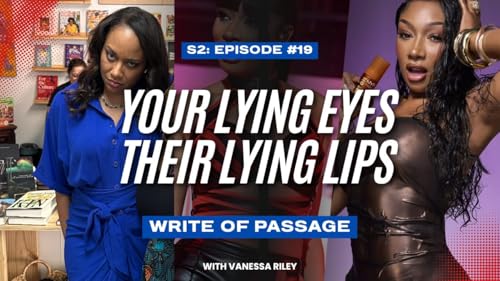
  • Your Lying Eyes, Their Lying Lips
    Apr 28 2026
    What happens when you can’t trust your own eyes?In a world of deepfakes and media spin—from Meghan, Duchess of Sussex to Megan Thee Stallion to the White House Correspondents Dinner—the real question isn’t what’s true… it’s why we don’t care anymore.We are living in a moment when the old question—what is truth? —is being asked again.—has become the question of the moment. Aren’t you tired of relative half-truths?In an era defined by dishonest politicians, fragmented media ecosystems, and an internet that resembles a lawless western, the ability to trust what we see and hear is gone. The phrase “who are you going to believe, me or your lying eyes?”—popularized in Duck Soup—has shifted from comedy into cultural diagnosis. It was satire, people. Now it feels like instruction.At the center of this crisis is the mistrust of visual evidence itself. A recent controversy involving Meghan, Duchess of Sussex, illustrates the problem. A report from The Daily Beast, a source I relied upon in the 2010s, included a video clip on April 23, 2026, that critics argue appeared slowed down or altered to make the Duchess seem robotic—supporting a narrative that she, a woman of color, a Black woman, is difficult to work with. Observers suggested the footage has been misleadingly edited or even AI-manipulated.This incident is not isolated; it exists within a broader pattern of fabricated or distorted media. The point is not merely whether a clip was altered, but how easily perception can be engineered. Biased people want angry or disillusioned eyeballs.More manipulation is on the way, fueled by the rapid rise of deepfake technology. According to data from the Global Cyber Alliance and others, the number of deepfake files online is projected to have grown from 500,000 in 2023 to 8 million by the end of 2025—that’s an annual increase of 900%.The average American now encounters approximately 2.6 deepfakes per day, with younger adults seeing even more. And our human ability to detect these falsehoods is surprisingly low: studies show our ability to detect deepfakes is below 25%, which is worse than flipping a coin.The consequences extend beyond embarrassment or celebrity gossip. Deepfake-driven fraud caused an estimated $547 million in losses in just the first half of 2025, and AI-enabled fraud could reach $40 billion in the United States by 2027. Our midterm elections are in trouble. Seventy-eight deepfake election manipulations were discovered in 2024 alone. This is a growing threat to democratic processes.Yet, if this past weekend is any indication, we have a worse threat: apathy. Over the weekend of April 25–26, 2026, two major events unfolded: a security incident at the White House Correspondents’ Dinner and the highly publicized breakup between Megan Thee Stallion and Klay Thompson. The former, involving a reported shooting and evacuation of the president, should have dominated national concern. Instead, the latter—a celebrity breakup fueled by allegations of infidelity—captured social media attention, with search interest spiking over 800%. Lord knows I have seen as many think-pieces on male-female relationships as I’ve seen screeds saying the correspondents’ dinner was fake.It is a shame that political events are now filtered through suspicion, conspiracy, and fatigue. When reports emerged of a potential assassination attempt, many didn’t ask what happened but whether the attack was staged. Questions about security lapses—how an armed individual could approach so closely—become entangled with blatant distrust in institutions and others using the event to get a ballroom built. Cynicism ran rampant.Cynicism and para-social relationships make celebrity narratives feel more immediate, and perhaps more “real.” But these narratives take hold by performance and perception.In Lyin’ Eyes by the Eagles, we were told to: “You can’t hide your lyin’ eyes.” In 2000, the denial anthem “It Wasn’t Me” by Shaggy fed the growing, complicit beast.“Never admit to a word when she sayAnd if she claim, ah, you tell her, “Baby, no way”…But she caught me on the counter (It wasn’t me)Saw me kissin’ on the sofa (It wasn’t me)I even had her in the shower (It wasn’t me)She even caught me on camera (It wasn’t me)...”The deeper issue is not simply that misinformation exists, but that our collective response is to believe the lies or not care about what’s right or wrong, and to spread the wrong.We no longer fully trust our eyes.But we also lack the will to interrogate what we see. Facts have become negotiable, subject to “both-sides” framing that equates evidence with opinion and treats the right as equally wrong. This erosion of journalistic standards undermines personal judgment and public discourse.Honesty, we must begin at the top.Political leaders who lie and distort reality set the tone for our society.When “truth” becomes a strategic tool ...
    Show More Show Less
    12 mins
  • Abused, Black, and Beautiful
    Apr 21 2026
    As a nerd, I love patterns. I’m trained to find patterns. But today there is one I don’t want to see. There’s a pattern—and it is costing Black women their lives. Not just in the streets, but in their homes… in their relationships… even in childbirth.This is a pattern we can no longer pretend we don’t see.There is a pattern emerging—no, not emerging, persisting—and it is costing Black women their lives.We cannot keep calling these stories “isolated incidents.” We cannot keep lowering our voices when the truth demands a roar. What we are witnessing is a crisis: intimate partner violence against Black women, compounded by a maternal health system that too often fails them at their most vulnerable. Love should not be lethal. Pregnancy should not be a death sentence. And yet, for far too many Black women, both are becoming dangerous terrain.In April 2026 alone, we’ve lost:• Dr. Cerina Wanzer Fairfax, a 49-year-old dentist and mother, killed on April 16 by her estranged husband in an apparent murder-suicide.• Nancy Metayer Bowen, Vice Mayor of Coral Springs, found dead on April 1; her husband was charged with premeditated murder.• Pastor Tammy McCollum, 58, killed on April 6 in her North Carolina home by her husband.• Ashly “Ashlee Jenae” Robinson, 31, a content creator who died under suspicious circumstances on April 9 while traveling with her fiancé after documented domestic conflict.• Qualeshia “Saditty” Barnes, 36, a pregnant Detroit rapper, shot and killed in Atlanta on April 8, reportedly by her boyfriend.• Davonta Curtis, 31, a Black trans woman beaten to death on April 8 by her boyfriend.• Barbara Deer, 51, an educator killed on April 15 in a murder-suicide.• Ashanti Allen, 23, eight months pregnant, murdered before she could bring life into the world.Say their names. Hold them in your mouth. Refuse to let their stories be reduced to footnotes beneath the names of the men who killed them.Because that is what often happens—we learn more about the killers than the women whose lives were stolen.This is not a coincidence. This is not rare. This is systemic, cultural, and deeply rooted.According to the Institute for Women’s Policy Research, more than 40% of Black women will experience domestic violence in their lifetime, compared to 31.5% of women overall. The National Center for Victims of Crime reports that 53.8% of Black women experience psychological abuse, and 41.2% experience physical abuse. These are not small numbers. These are not anomalies. These are patterns.Let me repeat: 32% of all women experience domestic violence. 40% of all Black women experience this violence. This should not be.Violence against women begins early.Teen dating violence already lays the groundwork. Data from Basile et al. (2020) shows that about 8% of high school students experience physical dating violence, with girls disproportionately affected—9% of girls versus 7% of boys. Sexual violence is even more skewed: 13% of girls compared to 4% of boys. These are children learning, too soon, that love can hurt.Then comes adulthood. Then comes partnership. Then, for many, comes pregnancy.And pregnancy—what should be a sacred, supported, protected time—becomes one of the most dangerous periods in a Black woman’s life.The Centers for Disease Control and Prevention (CDC) reports that in 2023, Black women experienced 50.3 maternal deaths per 100,000 live births, compared to 14.5 for White women. That is more than three times higher. The Kaiser Family Foundation (KFF) confirms this disparity persists across income and education levels. This is not about individual choices. This is about systemic failure.Even more devastating: over 80% of pregnancy-related deaths are preventable.Preventable.Let that word sit with you.Black women are dying not because we don’t know how to save them—but because we are not saving them.Structural racism, provider bias, unequal access to care, and the chronic stress of navigating a world that devalues Black womanhood all contribute. Black women are more likely to be ignored when they report symptoms, more likely to have their pain dismissed, and more likely to receive delayed or inadequate care.When you layer that on top of intimate partner violence, the risk multiplies.What is this pattern telling Black women?Work. Survive. Endure. But do not expect to be protected. Do not expect to be safe in love. Do not expect to be heard in pain.Is that the message?Because if it is, then we must reject it—loudly, collectively, and without apology.I am one of the lucky ones.I have a loving husband. I was supported. When complications arose during my pregnancy—when my daughter Ellen’s heart rate dropped in half with every push—my doctors and nurses listened. They acted. They ordered an emergency C-section. They saved her life. They saved mine.My daughter is alive and thriving today because I was heard.But I should not be the exception.My story ...
    Show More Show Less
    18 mins
  • You, Me, and Pausing the Routine
    Apr 14 2026
    Listen… when a workaholic like me leaves the house for something that isn’t work—you should probably pay attention.Because this week, I broke my routine… and ended up in Tuscany.For this week’s rite of passage essay, I decided to do something a little different—I actually did something fun.Now, I know I’m a workaholic. I freely admit that. If I’m not writing a book, I’m reading one, or thinking about the next book I’m going to write or read. But sometimes, you have to step outside of that box—and I did just that. I went to see a movie.Yes, me. Outside the house. In a theater. Not waiting for it to stream.That alone is a huge deal.Don’t get me wrong—I love my streaming platforms. I enjoy sitting comfortably at home (or in my office), pausing for snack breaks, rewinding scenes, all of that. But this time, I made the effort to go out.I was in Detroit after a wonderful event at the Detroit Public Library speaking about Fire Sword and Sea. To give myself some downtime, I treated myself to some incredible fried chicken at The Fixin’s Soul Kitchen and then headed over to Emagine Theatres.And that’s where I saw You, me, and Tuscany.It was adorable.If you’re looking for a movie the whole family can enjoy—something that will genuinely make you laugh out loud—this is it. It reminded me of classic romantic comedies like When Harry Met Sally and While You Were Sleeping. Just warm, charming, and full of heart.First, the scenery. Absolutely stunning. It took me right back to Florence and made me want to book another trip immediately.Second, the comedy. This is a true romcom, with impeccable timing. Regé-Jean Page and Halle Bailey were genuinely funny and had real chemistry. I know some people questioned that—but it works. Watching them fall in love was sweet, playful, and engaging.The film hits all the romcom beats: the antics, the meet-cute, the charming side characters, even the tourists wandering through vineyards offering hilarious commentary. And yes, there’s the wisecracking best friend with solid advice. I would’ve loved a bit more of her, but as a writer, I understand the realities of cutting for time.Everything you expect when you hear “Tuscany”—the food, the views, the romance—is there. It’s aspirational. It’s soft-life energy. It’s a vacation on screen.Now, I know some people take issue with seeing two Black leads in a romantic comedy. To that, I say: get a hold of yourself. There are still countless films that don’t center that experience.Others have criticized the screenplay for not being written by a Black writer. But once you understand how difficult it is to get anything financed and produced in Hollywood, you learn to appreciate what does get made—especially when it honors the culture with care. And this film does: silk sleep bonnets, braids, edges, reverence to mama and family, lush wardrobes, cars, and, vineyards.It’s lovely, heartfelt, and absolutely rewatchable. I hope it becomes a classic.As for critics like Variety saying it was “missing spice”—let’s be clear. Regé-Jean Page starring in Bridgerton is one thing. This is not that.And if you were expecting that level of “spice” from someone who also starred in The Little Mermaid… did you get it there? Did you expect it here?Exactly.This is a romantic comedy. Think again about films like You’ve Got Mail—there’s very little “spice.” What you get instead is witty dialogue, heartfelt moments, and those unforgettable, adorable meet-cutes.That’s the point.If you want something with more action—go read one of my books.More steam, go read some of my friends’ books.Trust me—we’ve got plenty of spice or action or laugh out loud humor 😉. So step out of your routine—you, me, Tuscany let’s go.This week’s book list includes:One for Artemis: The Kiss Countdown by Etta Easton – A down-on-her-luck event planner enters a fake relationship with a charming astronaut for practical reasons, only to discover their chemistry might be worth risking everything for real love.By the Book by Jasmine Guillory – A frustrated young publishing assistant travels to coax a reclusive author into finishing his manuscript, but as they connect, both must confront their personal and professional uncertainties—and the unexpected spark growing between them.For those stuck on hockey here’s: Hearts on the Fly by Toni Shiloh – After a career-ending injury forces a hockey player to rethink his future, an unlikely friendship blooms with his ex’s sister.A Deal at Dawn coming June 31, 2026 - The Duke of Torrance and Lady Hampton have to find new spouses, and definitely not each other, not again.Not a romcom but the 4th book in the Lady Worthing Mystery Series releases Sept 1, 2026 -it has humor, happenstance, some shocks, and murder.Consider purchasing these books plus Fire Sword and Sea from The Book Worm Bookstore or from one of my partners in the fight, bookstores large and ...
    Show More Show Less
    9 mins