Episodes

  • Anand Pandian Asks What Stands Between Us — And What Could Bring Us Together
    Apr 7 2026
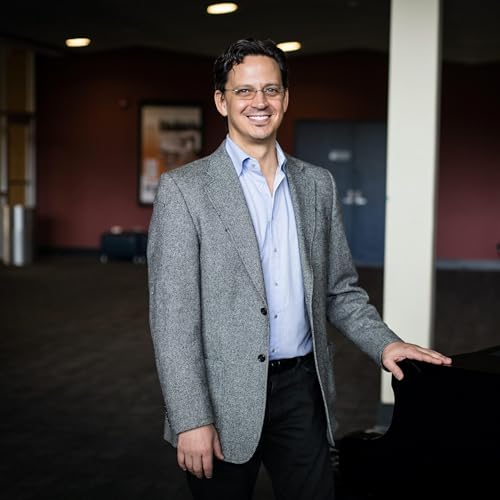
    Anthropologist Anand Pandian joins me to explore the everyday walls—physical, social, and mental—that shape modern American life. Drawing from his book, Something Between Us, he explains how the boundaries built into our homes, cars, and information sources make it harder to imagine living in community with people who might think differently or come from another place. We talk about what it takes to lower those barriers and create better ways to coexist. Anand also reflects on Ayya’s Accounts: A Ledger of Hope in Modern India, his book about his family's ancestral homeland told through his grandfather’s harrowing refugee journey. We revisit Amherst, where he didn't study anthropology but where he definitely got the bug. He also fondly remembers the rooftop “beach” at Valentine, the professors who shaped him, and the unexpected ways and timing that our intellectual callings announce themselves. We close with thoughts about the world the next generations will inherit, the ecological futures he’s working to imagine, and the advice he won’t give his teenagers. To get in touch, email him at pandian@jhu.edu. You'll find his books on Amazon and other booksellers, , and you also can visit his website: https://anand.studio/.
    Show More Show Less
    49 mins
  • Aaron Carroll Explains How Questioning The System Became His Life’s Work
    Mar 31 2026
    Aaron Carroll has spent his entire life following the instincts Amherst sharpened, especially the belief that learning never really stops. In this conversation, he traces the path from his first‑floor Morrow dorm room (where Bruno's pizza arrived through the window) to a career shaped by a liberal arts way of thinking. Aaron talks about the moment in residency when he nearly left medicine and how questioning assumptions became the through‑line of his work. We explore how the habits he built at Amherst show up everywhere: in the way he communicates complex ideas, in his drive to understand systems and symptoms, and in his commitment to helping others make sense of a messy world. Today, as CEO of AcademyHealth, Aaron continues to work at the intersection of evidence, public understanding, and policy. At its core, this is a story about how a liberal‑arts education can shape a life by teaching someone how to think, how to listen, and how to keep asking better questions. Aaron's professional contact information is publicly available. Listeners can also find him easily on social platforms and through his published work online.
    Show More Show Less
    52 mins
  • Geoff Klein Reflects On The Choices And Chances That Shaped His Path
    Mar 10 2026
    Fans of the pod will know how often my college classmates’ lives have unfolded in ways none of us could have predicted back in the mid‑1990s. Geoff Klein is a perfect example of that non‑linearity. After Amherst, he nearly landed at Leo Burnett before being told (accurately) that he seemed more interested in film than advertising. That observation set off a chain of reinventions: working for Seth Godin in New York, heading to Temple Law without any intention of practicing, and ultimately moving to Los Angeles to work in the story department at major studios like Paramount and MGM. Just when it looked like he’d found his lane, life shifted again. Geoff married a woman from Manchester, England, moved overseas, worked in real estate, and eventually returned to Philadelphia. Today he teaches at Temple and Wharton, runs a story‑driven branding practice, speaks professionally, and helps organizations adopt AI in ways that keep people at the center. Through every pivot runs a consistent worldview: humans are wired for connection and stories are how we make sense of our lives. You can email Geoff at geoffrey@ninedotsmedia.com.
    Show More Show Less
    47 mins
  • Russ Hanser Seized Opportunity Where – And When – Law And Tech Collided
    Feb 24 2026
    Russ Hanser arrived at Amherst as a self-described nerd with big ambitions: maybe law, maybe journalism, maybe even director of the CIA. His liberal arts education sharpened his thinking and ultimately launched him into a career shaping telecommunications and technology policy at the highest levels. Today, Russ serves as Senior Vice President, General Counsel, and Chief Legal Officer of NCTA – The Internet & Television Association. In this episode, he reflects on how early interests in politics and computers converged into a career navigating spectrum policy, AI governance, broadband access, and the future of connectivity. He also speaks candidly about carving out space to support not-for-profit organizations and navigating fatherhood through a divorce. Highlights: How a high school computer nerd became a leader in tech policy, and the role of both skill and fortuity played in that outcome The policy debates shaping AI and why he’s an AI optimist The life challenges that redefined him as a father Why liberal arts thinking still matters in a tech-driven world Russ also nominates the next classmates he’d like me to interview. If you’d like to connect with Russ, you can reach him at: rphanser@gmail.com.
    Show More Show Less
    1 hr and 3 mins
  • Elizabeth Doyle Shows How An Amherst Degree Can Lead Somewhere Beautifully Unexpected
    Feb 17 2026
    Elizabeth Doyle is one of the proprietors of Doyle & Doyle, a purveyor of antique and vintage jewelry based in New York City. We talk about her wonderfully serendipitous path from Amherst College to the Gemological Institute of America, and then into building a jewelry business that has now spanned decades. Her journey is a delightful example of the good things that can happen from saying 'yes,' learning by doing, and staying open to whatever unfolds. Elizabeth also gives a window into what makes her so good at her work. It's so liberal arts. She knows the chemistry, histories, and stories of the objects she sells. She also has what it takes to guide couples from engagement ring decisions to helping them celebrate life's most memorable milestones. Highlights: Why selling engagement rings can feel like providing couples therapy How Elizabeth went from pre-med to geology to gemology Her leap into entrepreneurship, starting from nothing, learning on the fly, and the early lesson of “don’t spread yourself too thin” Why it's a really bad idea to serve red wine during a store opening Visit https://doyledoyle.com and email Elizabeth at elizabeth@doyledoyle.com.
    Show More Show Less
    56 mins
  • John Haskell Chose Russia, And One Forged Signature Changed Everything
    Feb 10 2026
    John Haskell has spent over 20 years living in Russia, a decision that began as a calculated professional bet in the post-Soviet 1990s and became, almost accidentally, a permanent life. John walks us through what it has meant to build a family, a business, and a sense of home in a place most Americans only know through headlines, and why the reality on the ground often looks very different from what we imagine from afar. We talk about the moment that anchored him there: a near-surreal episode involving forged documents, vanished partners, and a company secretly sold out from under him. Out of that chaos came an improbable outcome: John salvaged thousands of acres of farmland and eventually built a cattle operation that he still operates to this day. Along the way, he offers rare, thoughtful context about personal safety, perceived risk, and what daily life in Russia actually feels like for an American who has chosen to stay. John also reflects on the enduring value of a liberal arts education—especially language learning—as preparation for an uncertain future. Highlights include: What it’s really like to live in Russia as an American during decades of political and social upheaval How a near-fraud and forged signature unexpectedly rooted John there Why perceived danger and lived security often don’t line up The long-term value of language learning and a liberal arts toolkit The Amherst classmates he wants me to interview next. Email John at johnhhaskell@gmail.com or find him on Facebook. Big thanks to Evan Wollen for nominating John.
    Show More Show Less
    1 hr and 20 mins
  • Ricky Quinones Has A Grammy, And Yet Still Approaches Music With Humility
    Feb 3 2026
    Ricky Quinones has spent his life exploring and expressing music across genres, geographies, and stages, from Amherst to New York, including Broadway, and Grammy-winning collaborations. Ricky opens up about his musical evolution, the artists who shaped him, and why the blues remains the emotional and structural foundation of everything he plays (and, surprisingly, what he sometimes hears in the music of JS Bach). We talk about the lessons learned from proximity to greatness, playing alongside artists like Stevie Wonder, Alicia Keys, and India.Arie (with whom he won a Grammy). Ricky reflects candidly on what it takes to sustain a career in one of the most competitive and uncertain of professions, and why preparation and empathy matter more than virtuosity alone. He also revisits his Amherst years, a time he describes as creatively fertile but emotionally difficult, when music became something deeply personal and stabilizing. Today, Ricky continues to evolve as a musician and as a mentor and substitute teacher in Queens, finding new ways to keep his creative cup full while giving back. Highlights: Why the blues serves as Ricky’s musical “mother tongue” across genres What he has learned by watching and working alongside legendary collaborators The keys to sustaining a long career in professional music The classmate he wants me to interview next Email Ricky at rickyqmusic1@gmail.com. Big thanks to David Young for nominating Ricky.
    Show More Show Less
    51 mins
  • Sonia Nagorski Reads Earth’s Past To Help Predict And Improve Its Future
    Jan 27 2026
    As a very amateur geologist, I've been looking forward to catching up with Sonia Nagorski ever since my podcast project started. That's because she's a geologist whose work focuses on understanding Earth’s history and what it can tell us about the world we humans are shaping today. Perhaps not surprisingly, she and I share a sense of wonder about the mind-bending qualities of Earth time and the pleasures of connecting to the geology right under our feet. We talk about her two decades living and teaching in Alaska, the sense of community that comes from life at the edge of wilderness, and her recent move to the University of Colorado Boulder. Along the way, Sonia explains how geology provides essential context for understanding topics that go beyond geology, and why learning to notice and name the landscape around us can deepen both curiosity and responsibility. Highlights: Why geology is best understood as history told on Earth’s timescale What living in Alaska taught her about community, resilience, and connection to place Simple ways to build curiosity about the geology all around us The three Amherst classmates she wants me to interview next You can email her at sonianagorski@gmail.com. Also, check out the Rockd app to learn about the geology in your neck of the woods. Big thanks to Deb Thalheimer Long for nominating Sonia.
    Show More Show Less
    44 mins