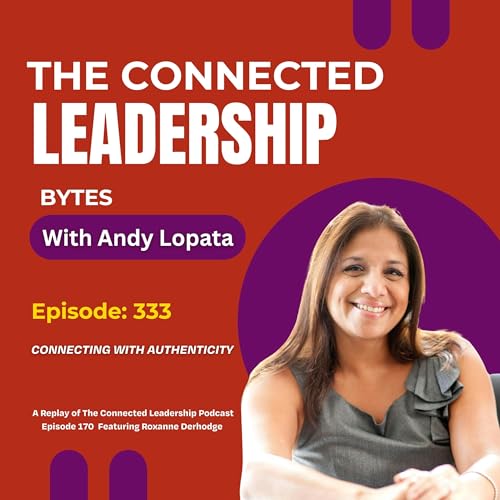
• Connecting With Authenticity with Roxanne Derhodge
    May 18 2026
    Connecting With Authenticity With Roxanne Derhodge We hear the word "authenticity" constantly in leadership circles, but what does it actually mean beyond just "removing the mask"? In this thought-provoking episode from the archive, Andy Lopata explores a radically different definition of authenticity with psychotherapist and author Roxanne Derhodge. Roxanne reveals that true authenticity doesn’t start with how you interact with others; it starts with how well you know yourself when no one else is looking. She argues that the ability to handle conflict, disagree agreeably, and navigate "hot button" topics without losing your cool is actually the highest form of authentic leadership. Discover why being authentic isn't an excuse for oversharing, how to strike the crucial balance between professional decorum and human connection and why the most powerful leadership test is how you treat people when nobody is watching. What You Will Learn From This Episode The Pillow Test: The ultimate test of authenticity isn't how you behave on a stage, but whether you are "good on the inside" when you lay your head on the pillow at night. The Hidden Source of Conflict: Why your visceral reaction to a difficult colleague often has more to do with your own unresolved internal triggers than with their actual behavior. The "Verbal Diarrhea" Trap: Why bringing your "whole self" to work does not mean oversharing, and how to maintain the vital filter of professional appropriateness. The Consistency Check: How to spot an inauthentic leader by watching for a disparity between their "networking persona" and their true social behavior. The Power of Small Disclosures: How sharing small, tactical "bits and bytes" of your personal life can destratify a team and make you a more approachable leader during times of crisis. Actionable Insights Audit Your Inner Triggers: Before you can authentically connect with someone who holds an opposing view, you must understand your own reactions. The next time a conversation triggers a fight-or-flight response, calm yourself so you can listen to understand, not just to respond. Share the "Micro-Personal": You don't have to share every failure or crisis to be vulnerable. By sharing small, appropriate glimpses of your life outside of work—a story about a hobby or a weekend challenge with a child, reminds your team that you are human, making you more approachable when real business problems arise. The "Off-Record" Balance: To be an authentic leader, you must balance holding your team accountable with being a safe harbor. Ensure you hold their feet to the fire for performance metrics, but intentionally create a separate, off-the-record space where they can connect with you as a person when they need support. SELECTED LINKS FROM THE EPISODE Connect with Andy Lopata: Website | Instagram | LinkedIn | X/Twitter | YouTube Connect with Roxanne Derhodge : Website |LinkedIn | The Financial Times Guide to Mentoring Episode 170 Featuring Roxanne Derhodge
    Show More Show Less
    24 mins
  • Are You Running on Empty? Navigating the Burnout Trap Dr. Amy Bradley and Dr. Katherine Semler
    May 11 2026
    Does your daily schedule look like a solid wall of back-to-back video calls? Do you find yourself constantly saying, "I just have to get through this week"? If so, you might be driving straight toward burnout. In this vital archive episode of The Connected Leadership Bytes, Andy Lopata sits down with leadership experts Dr. Amy Bradley and Dr. Katherine Semler to explore the hidden mechanics of exhaustion. Both women share their personal "wake-up calls"—from the realisation of spending nine consecutive days trapped on Zoom to a jarring moment of clarity standing outside in the freezing cold. This conversation moves beyond the typical advice of "taking a break." Amy and Katherine explain why the most passionate, high-achieving perfectionists are actually the most at risk. They break down the toxic extremes of workplace culture—those that stigmatise stress and those that glorify it—and reveal why a leader's empathy is the ultimate firewall against employee burnout. If you want to protect your team (and yourself) from running on empty, this episode is essential listening. What You Will Learn From This Episode The Passion Paradox: Why being deeply passionate about your work and unable to say "no" to interesting projects is a fast track to exhaustion. The Isolation of the "Eggshell" Approach: Why being too careful with your language around struggling colleagues can accidentally isolate them further. The End of the Buffer Zone: How the shift to virtual meetings destroyed the natural "commute cushion" between tasks, creating relentless cognitive strain. Actionable Insights Stop Asking "How Are You?": Ditch the throwaway greeting. Instead, use specific, questions like, "How are you coping with [Specific Project]?" or "Is there anything I can do to lighten your load today?" This proves you are genuinely listening and opens the door for real answers. Audit Your Diary for White Space: Immediately evaluate your calendar. If you have back-to-back calls booked for hours on end, break the pattern. Force 5-to-10-minute buffers into your schedule to step away from your desk, get fresh air, and reset your brain. SELECTED LINKS FROM THE EPISODE Connect with Andy Lopata: Website | Instagram | LinkedIn | X/Twitter | YouTube Connect with Dr Amy Bradley: Website |LinkedIn | Connect with Dr Katherine Semler: Website |LinkedIn | The Financial Times Guide to Mentoring Episode 169 Featuring Dr Amy Bradley and Dr Katherine Semler
    Show More Show Less
    22 mins
  • The Power of In-Person Connection with Gary Gamp
    May 4 2026
    In a business world dominated by back-to-back screen time, have we forgotten the profound impact of physical presence? In this thought-provoking episode, Andy Lopata talks to seasoned change leader and executive coach Gary Gamp to explore why getting out from behind the screen—and out of the formal boardroom—can dramatically alter the trajectory of your professional relationships. Andy and Gary debate the nuances of virtual vs. physical trust-building, exploring everything from dating app dynamics to the tragic loss of organic "small talk" in the Zoom era. They discuss the psychology of changing your physical environment and how to balance the massive time pressures of modern leadership with the undeniable ROI of breaking bread together. Whether it's a walk around a lake, a coffee date, or a "Netwalk," this episode will challenge you to rethink your calendar and reclaim the power of presence. About Our Guest:Gary Gamp is a change leader, an in-demand executive coach, and the co-host of the excellent Company Doctor podcast (where Andy himself has been a recurring guest!). Gary specialises in helping leaders navigate complex business transformations and believes strongly in the power of authentic, human-to-human connection to drive business results. What we discussed in this episode: Are your hyper-efficient virtual meetings actually killing your relationships? Discover the crucial "transitional small talk" we've lost in the era of Zoom, and why the question "Where are you going next?" matters more than you think. Could avoiding direct eye contact make you a better communicator? Unpack the fascinating "car windshield" psychological theory and learn why walking side-by-side often unlocks much deeper honesty than staring at a screen. Who is "Mr. Gamp" and why does he disappear outside the office? Find out why taking your colleagues or clients out of their formal corporate environment completely shifts the power dynamic. Do you know how to "code" your professional network? Learn Gary's brilliant system for strategically deciding whether a contact gets a coffee, a breakfast, a lunch, or a dinner invitation to maximize both time and relationship value. What exactly is a "Netwalk" and why should you try one this week? Explore this innovative new trend that is replacing stuffy hotel lobby networking with fresh air, community brainstorming, and authentic connection. Resources Mentioned in this Episode: Podcast: The Company Doctor Podcast (Hosted by Gary Gamp and George Clode) Colleagues Mentioned: Dr. Ruth Gotian, Ben Brabin (Community Builder / Netwalks), Jeremy Nicholas. SELECTED LINKS FROM THE EPISODE Connect with Andy Lopata: Website | Instagram | LinkedIn | X/Twitter | YouTube Connect with Gary Gamp: Website |LinkedIn | The Financial Times Guide to Mentoring
    Show More Show Less
    32 mins
  • From Full-Time to Fulfilled: The Secret to Jumping Ship with Matt Crabtree
    Apr 27 2026
    Are you tired of the corporate grind but terrified to leave the "security" of a full-time salary? You aren’t alone. In this high-impact archive episode of Connected Leadership Bytes, Andy Lopata sits down with Matt Crabtree—the man who meets CEOs and shows them how to successfully jump ship. Matt shares the raw, honest truth about his transition from a senior role at Barclays to building a multi-million-pound consultancy. Forget what you think you know about "entrepreneurial risk." Matt argues that having 18 clients is actually safer than having one boss who can make you redundant on a whim. We examine the "unemployable" mindset, why you don't need a massive network to start, and the exact "If I did, would you?" conversation that validates your business idea before you even resign. If you’ve ever dreamed of being your own boss but felt held back by fear, this is the blueprint you need to move from full-time to fulfilled. Stop being a "minister without portfolio" and start building a legacy on your own terms. What You Will Learn From This Episode The "If I Did, Would You?" Script: The specific conversation you must have with 20 people to determine if your idea is a goldmine or a "lunatic" move. The "Non-Job" Catalyst: How a six-month stint as a "minister without portfolio" at a major bank became the ultimate laboratory for self-employment. The "Unemployable" Badge of Honor: Why making yourself impossible to hire by anyone else is actually the ultimate career liberation. Scaffolding vs. Sabotage: Why internal corporate mentors often have an "axe to grind" and where to find the unvarnished truth instead. Actionable Insights Conduct the "Sunday Paper" Test: Pay attention to which section of the news you read first. If you aren't naturally obsessed with the business pages and organisational drama, consultancy isn't for you. You must be a "geek for business" to thrive outside the corporate structure. Inventory Your "Hardcore Seven": You don't need a gigantic network to start. Identify the seven "founder customers" or core contacts who would vouch for your reputation. Focus on the quality of these relationships and the "ripple effect" of their referrals rather than trying to meet thousands of strangers. Establish a Financial and Relational Runway: Don't leap without a "war chest." Ensure you have a financial cushion (6–12 months of expenses) to avoid the "smell of desperation." Combine this with an 18-month pre-launch plan to ensure your first invoice is ready to be sent before your final day in the office. SELECTED LINKS FROM THE EPISODE Connect with Andy Lopata: Website | Instagram | LinkedIn | X/Twitter | YouTube Connect with Matt Crabtree: Website |LinkedIn | The Financial Times Guide to Mentoring Episode 142 Featuring Matt Crabtree
    Show More Show Less
    23 mins
  • Happiness Makes Money: The Real Secret to Employee Engagement with Scott Friedman & Paul ter Wal
    Apr 20 2026
    Is your leadership style costing you a fortune? In this high-energy episode from the archive, Andy Lopata revisits a global conversation with employee engagement specialists Scott Friedman and Paul ter Wal. They challenge the outdated "command and control" hierarchy, replacing it with a radical yet profitable philosophy: Happiness makes money. Engagement isn't just a corporate program or a ping-pong table in the breakroom—it is a two-way street built on a foundation of absolute trust. You’ll hear Scott share a powerful technique for setting the intention from day one by asking new hires to agree that this will be the “best job they’ve ever had.” Meanwhile, Paul breaks down why leaders should stop standing on top of their teams and start standing behind them. From the "I Test" of inclusive language, to the scientific reason you should never lead more than 20 people if you actually want to listen, this episode is a masterclass in modern leadership. Discover how to turn "quiet quitting" into high-performance engagement by shifting your mindset from controlling behavior to facilitating success. What You Will Learn in this episode: The "Best Job Ever" Contract: What is the specific agreement you should make with every new hire before they even start? The 20-Person Rule: Why does science say a leader's effectiveness drops off a cliff when managing a team larger than 20? Hiring for Purpose: Why is the new generation of talent running away from high salaries and toward this one specific cultural trait? The "I Test" Reveal: How can a simple word count of your latest speech or email prove your leadership style is alienating your team? Leading from Behind: What is the one question a leader should ask every day to guarantee the best results from their professionals? Actionable Insights: Shift from Controller to Facilitator: Stop telling your team how to behave and start asking, "What do you need from me to be the best?" This simple shift in perspective moves the leader from a "checker of boxes" to a supporter of professionals. Define Your "Non-Negotiables": Don't let your core values be "lip service" buried on a website. Identify 5–10 written ground rules for behavior and accountability, and model them daily. If the leadership doesn't model the values, the team will never live them. Schedule "Unagenda'd" Listening: Multitasking is a myth. To build trust, you must sit down, drink a cup of coffee, and listen without an agenda. In a hybrid or remote world, this means creating intentional spaces—like "open cafes"—where people can connect as humans, not just as employees. SELECTED LINKS FROM THE EPISODE Connect with Andy Lopata: Website | Instagram | LinkedIn | X/Twitter | YouTube Connect with Scott Friedman: Website |LinkedIn | Connect with Paul ter Wal: Website The Financial Times Guide to Mentoring Episode 166 Featuring Scott Friedman & Paul Ter Wal
    Show More Show Less
    24 mins
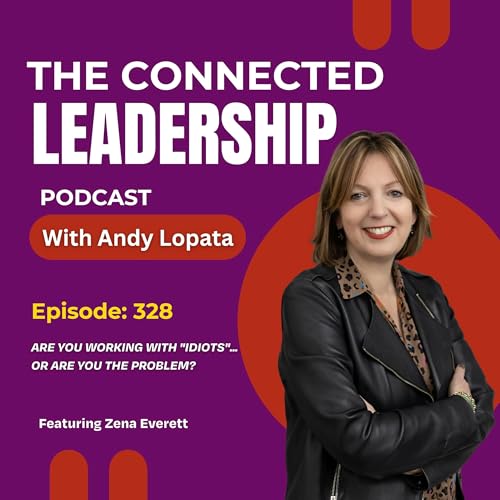
  • Are You Working With "Idiots"... Or Are YOU The Problem? with Zena Everett
    Apr 13 2026
    We all have that one co-worker. The one who microwaves smoked mackerel in the breakroom, doesn’t pull their weight on group projects, or simply drives you up the wall. It’s easy to look around the office (or the Zoom screen) and think, "I am surrounded by idiots." But before you vent to your work bestie... what if they aren't the problem? What if the real issue is the environment? Or worse... what if the problem is you? This week on The Connected Leadership Podcast, Andy Lopata welcomes back international leadership coach, in-demand speaker, and returning guest Zena Everett. Zena is the author of Mind Flip, the award-winning The Crazy Busy Cure, and her brand-new, hilariously relatable survival guide, Badly Behaved People: How to Work with Idiots. Originally a recruitment entrepreneur, she has an MSc in Career Management and Coaching, alongside postgraduate qualifications in psychological coaching and leadership from MIT. She has coached on the Executive MBA Programme at Oxford University’s Saïd Business School and is a member of the Associate Faculty at Henley Business School. Today, she runs a global coaching practice dedicated to replacing bad behavior and crazy busyness with productive, thriving, and profitable team relationships. Bringing her signature blend of evidence-based insights and highly entertaining truths to the table, Zena helps Andy unpack his own workplace behavior from his early career. Together, they dismantle everything we think we know about "bad behavior" at work. From the rise of the "accidental manager" to the silent damage of crazy-busy work cultures, this episode is a masterclass in turning workplace frustration into friction-free collaboration. Whether you manage a global remote team, you’re navigating the tricky waters of Gen Z vs. older generations, or you just want to know how to politely tell someone to stop playing their TikToks out loud on the train—this episode is for you. What we discussed in this episode: Are you trying so hard not to be a toxic boss that you’ve accidentally become a "Mama Bear" manager? Discover why overly nurturing leadership is actually setting your team up for failure—and the one boundary you need to set tomorrow morning. There is a specific, old-school workplace dynamic that dictates whether a Gen Z employee quits after 2 years or stays for 5. Remote work killed the watercooler, but did it also kill your team’s best ideas? Find out how hybrid work is quietly breeding transactional relationships, and the brilliant, non-digital strategy one executive uses to get the magic back. Learn why we've lost our social awareness, and the exact script to use to confront micro-aggressions without making things awkward. Learn the brutal—but necessary—questions you must ask yourself to find out if your lack of communication is secretly breeding the exact bad behavior you hate. SELECTED LINKS FROM THE EPISODE Connect with Andy Lopata: Website | Instagram | LinkedIn | X/Twitter | YouTube Connect with Zena Everett: Website |LinkedIn | The Financial Times Guide to Mentoring Badly Behaved People: How to deal with idiots at work
    Show More Show Less
    43 mins
  • Character Over Ability: Lessons from the Red Arrows with Dan Lowes
    Apr 6 2026
    What does it take to lead a team where the margin for error is measured in centimeters and the consequences of a mistake are devastating? In this high-flying episode from the archive, Andy Lopata sits down with Dan Lowes, a former RAF fighter pilot and Executive Officer of the world-renowned Red Arrows. Dan pulls back the curtain on what it really takes to build and maintain an elite, high-performance team that must perform flawlessly under extreme pressure. Forget the myth of the "best" individual performers. Dan reveals that the Red Arrows aren’t necessarily the nine best pilots in the RAF—they are the nine best teammates. They explore the rigorous selection process, the mindset required to stay motivated when you’re a "super-sub" waiting for your moment, and why a world-class team delivers the exact same level of excellence for a village fete as they do for a Royal flypast. This is a masterclass in trust, character, and the pursuit of excellence for any leader looking to elevate their team. What you will learn from this episode The Baseline Performance Trap: Why technical skill is only the "entry fee" and why character is the real differentiator in elite teams. The "Super-Sub" Mindset: How to maintain peak motivation and stay at the top of your game when your primary mission isn't called upon. Consistency of Excellence: Why the Red Arrows fly with the same precision over a local cricket match as they do over Buckingham Palace—and why your business should too. Rebuilding a Winning Team Every Year: The secret to replacing 33% of your team annually while remaining the best in the world. Actionable Insights Hire for Character Once the Baseline is Met: In your recruitment, establish a non-negotiable baseline for technical ability. Once a candidate crosses that line, stop looking at their skills and start looking at their character. Ask yourself: "Are they the best teammate for the existing group?" Conduct "Village Fete" Audits: Look at your smallest clients or least visible projects. Are you giving them the same "smoke plan and formation" as your biggest VIP accounts? True excellence is a habit of consistency, not a reaction to the size of the audience. Encourage "Situational Awareness" Training: Just as pilots think 100 miles ahead of the jet, encourage your team to look "up the road." Help them recognise patterns and develop the calmness that comes from experience, moving from reactive fire-fighting to proactive situational management. SELECTED LINKS FROM THE EPISODE Connect with Andy Lopata: Website | Instagram | LinkedIn | X/Twitter | YouTube Connect with Dan Lowes: Instagram |LinkedIn | The Financial Times Guide to Mentoring Episode 165 Featuring Dan Lowes
    Show More Show Less
    24 mins
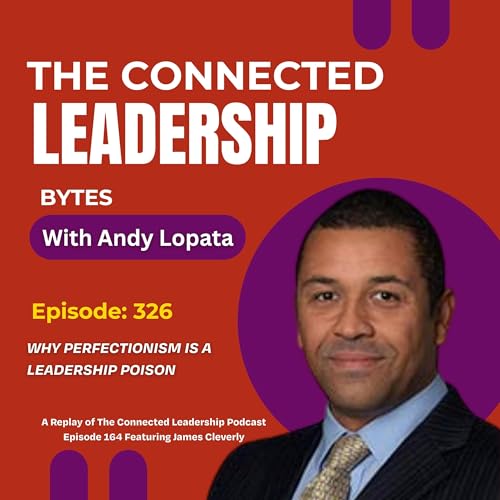
  • Why Perfectionism is a Leadership Problem with James Cleverly
    Mar 30 2026
    Is admitting a mistake a sign of weakness or a leadership superpower? In this episode of Connected Leadership Bytes, Andy Lopata reaches into the archive to share a fascinating conversation with James Cleverly MP. Cleverly explores the "artificiality" of politics—a world where a simple "I’ll check those figures and get back to you" can be framed as a lack of credibility, and any change of course is branded a " U-turn." Drawing from his background in the military and business, he contrasts these rigid expectations with other industries where making mistakes is seen as a vital part of the evolutionary process. James discusses the anatomy of a political car crash, to reveal how "clever people in closed rooms" accidentally create echo chambers. Discover why leaders often fail to press the "stop button" even when they see a disaster coming, and learn how to balance the need for speed with the vital necessity of a "periodic sanity check." What you will learn in this episode 1. The Pivot vs. The Scandal: Why is a "course correction" celebrated in startups but punished in leadership—and how is this mindset stifling your team’s growth? 2. The "Clever People" Trap: How small, high-performing teams accidentally "plug themselves into the matrix" and ignore the elephant in the room. 3. The Anatomy of a Car Crash: Discover the five or six specific points in every decision where a simple intervention could have prevented total failure. 4. The Aeronautical Safety Lesson: Why adding too many "safety valves" to your leadership process might actually make your organisation too heavy to fly. 5. The Art of "Rolling the Pitch": Why you should never present a solution until you have achieved a collective agreement on the parameters of the problem. Actionable Insights 1. Schedule a "Sanity Check": To avoid echo chambers, ensure that your decision-making process includes an explicit phase where the team must "unplug from the matrix" and seek a blunt, external perspective. Ask: "Am I the only one who thinks this is bonkers?" 2. Reward the "Stop Button": Build a culture where team members feel empowered to pause a process if a fact or figure "doesn't feel right." In high-stakes environments, the confidence to intervene is more valuable than the speed of implementation. 3. Frame Mistakes with the 80/10/10 Rule: When correcting a policy or project, frame it logically: "80% is working brilliantly, 10% is adequate, and 10% needs adjustment." This shifts the narrative from a "failure" to a pragmatic optimisation. Connect with Andy Lopata: Website | Instagram | LinkedIn | X/Twitter | YouTube Connect with James Cleverly: Website |LinkedIn | The Financial Times Guide to Mentoring Episode 164 Featuring James Cleverly
    Show More Show Less
    21 mins