• Can Your Dreams Predict Your Future_ Sleep Science
    May 14 2026
    You dream of a car crash. The next day, you narrowly avoid one. You dream of an old friend. They call you out of the blue. Coincidence? Or is your brain connecting dots that your waking mind cannot see?

    In this episode, I explore the science of precognitive dreaming. While no credible study has proven that dreams can predict the future, research suggests that your subconscious notices patterns your conscious mind misses. Your brain processes 11 million bits of information per second while awake, but you are only aware of about 50 bits. The rest is stored in your subconscious and may surface during dreams as hunches, warnings, or insights that feel prophetic.

    Deja vu, the eerie feeling that you have experienced a moment before, may be a glitch in your brain's memory processing rather than proof of precognition. But dreams that seem to predict the future remain unexplained by current science. The leading theory is that your brain is not predicting the future. It is calculating probabilities based on past patterns so accurately that the result feels like magic.

    Turn down the lights, put on your headphones, and press play because your dreams are not prophecies. But they might be smarter than you think.
    Show More Show Less
    1 hr and 19 mins
  • What Happens To Your Heart When You Don_t Sleep_ Sleepy Science Facts To Fall Asleep To
    May 14 2026
    One sleepless night raises your blood pressure. One week of bad sleep increases inflammation throughout your body. Chronic insomnia triples your risk of heart attack. Your heart does not need motivation. It needs rest.

    In this episode, I share research-backed facts about sleep and cardiovascular health designed to be interesting enough to listen to but calm enough to fall asleep to. Did you know that during deep sleep, your heart rate drops by 20 to 30 percent, giving your cardiovascular system a nightly vacation? Or that shift workers have a 40 percent higher risk of heart disease because their sleep cycles are permanently disrupted? Or that napping more than 60 minutes during the day increases your risk of heart disease by 34 percent, suggesting that daytime sleepiness is a symptom of underlying problems, not a solution?

    This episode is structured as a gentle bedtime companion. No sudden volume changes. No jarring sound effects. Just quiet narration and the slow drift into sleep while your heart finally gets the break it deserves.

    Turn down the lights, put on your headphones, and press play because your heart is counting on you to close your eyes.
    Show More Show Less
    1 hr and 32 mins
  • How Healing Begins in the Mind Peaceful Psychology for Deep Sleep
    Apr 16 2026
    The body heals when you rest. The mind heals when you stop resisting. Real recovery is not about fighting your thoughts. It is about creating a space where they can settle on their own.

    In this episode, I explore how modern psychology understands the connection between sleep and mental healing. During deep sleep, your brain clears metabolic waste, including the proteins linked to Alzheimer's disease. During REM sleep, your brain processes emotional memories, reducing their intensity. Without enough sleep, trauma becomes harder to heal. Anxiety becomes harder to manage. Depression becomes harder to treat.

    This episode is designed to be played as you fall asleep. The narration is calm and reassuring. The pacing is slow and gentle. The content is not intended to instruct but to accompany you into rest. You do not need to do anything. You do not need to change anything. You just need to let your brain do what it evolved to do: heal while you sleep.

    Turn down the lights, put on your headphones, and press play because the first step to healing is not action. It is rest.
    Show More Show Less
    1 hr and 57 mins
  • Why Do You Struggle to Sleep _ Sleep Science
    May 14 2026
    You are exhausted. You close your eyes. And instead of sleep, your brain serves up a highlight reel of your worst moments from the past decade. This is not a moral failure. It is a biological mismatch between ancient wiring and modern life.

    Your brain evolved to stay alert in the presence of threats. In the savanna, that threat was a predator. Today, that threat is an email from your boss, a text from an ex, or a news alert about the economy. Your brain cannot tell the difference. The same cortisol and adrenaline that helped your ancestors outrun lions now spike because you scrolled social media before bed.

    Other common culprits include inconsistent sleep schedules that confuse your circadian rhythm, caffeine consumed even six hours before bedtime, alcohol that fragments REM sleep, and blue light that suppresses melatonin production. Sleep hygiene is not a trend. It is the science of tricking your ancient brain into relaxing in a world it was never designed for.

    Turn down the lights, put on your headphones, and press play because struggling to sleep is not a character flaw. It is a design flaw. And design flaws can be fixed.
    Show More Show Less
    2 hrs and 4 mins
  • What Does Your Sleep Position Reveal About You_ Sleep Science
    May 8 2026
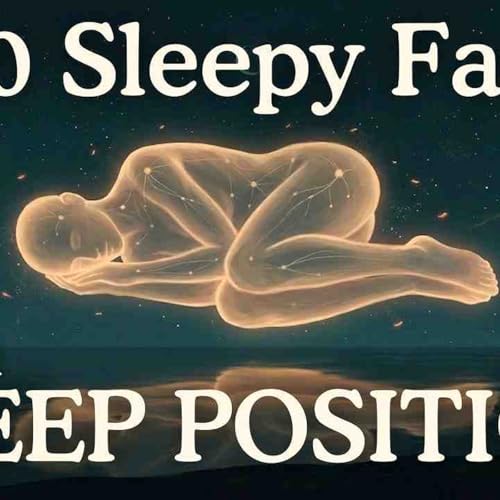
    You curl into a fetal ball every night, clutching a pillow. Your partner sleeps spread-eagle on their back, snoring without a care. These positions are not random. They are windows into your personality, your health, and your emotional state.

    In this episode, I explore what sleep science has discovered about the positions we choose. The fetal position, the most common among women, is associated with sensitivity and anxiety. The log position, sleeping on your side with arms down, is common among social and trusting people. The yearner position, on your side with arms outstretched, suggests an open but suspicious nature. The soldier position, flat on your back with arms at your sides, is associated with quiet reservation and high standards. The freefall position, on your stomach with arms wrapped around a pillow, is common among outgoing people who may be hiding sensitivity.

    Sleep position also affects health. Side sleeping improves digestion and reduces snoring but can cause shoulder pain. Back sleeping prevents wrinkles but can worsen sleep apnea. Stomach sleeping helps with snoring but strains the neck and spine.

    Turn down the lights, put on your headphones, and press play because the way you sleep says more about you than you might think.
    Show More Show Less
    1 hr and 38 mins
  • Subconscious Mind Facts to Fall Asleep To _ Sleep Science
    May 8 2026
    Your subconscious mind never sleeps. While you rest, it processes 11 million bits of information per second, filters sensory input, maintains your heartbeat, and replays memories to strengthen them for the future. This episode offers fascinating facts about the part of you that never stops working.

    In this episode, I share research-backed insights about the subconscious designed to be interesting enough to listen to but calm enough to fall asleep to. Did you know that your subconscious makes decisions up to seven seconds before your conscious mind becomes aware of them? Or that you have approximately 60,000 thoughts per day, and 95 percent of them are the same ones you had yesterday? Or that your subconscious cannot process negatives, which is why telling yourself not to be anxious actually makes you more anxious?

    This episode is structured as a gentle bedtime companion. No sudden volume changes. No jarring sound effects. Just quiet narration and the slow drift into sleep while your subconscious does what it does best: keeping you alive while you dream.

    Turn down the lights, put on your headphones, and press play because the most interesting facts are the ones you learn while you sleep.
    Show More Show Less
    1 hr and 51 mins
  • What Your Sleep Struggle Says About You _ Sleep Science
    May 8 2026
    You lie awake replaying conversations from three years ago. Your brain is not broken. It is trying to protect you. The way you struggle to sleep reveals more about your psychology than you might imagine.

    In this episode, I explore the hidden meanings behind common sleep struggles. If you cannot fall asleep, your nervous system may be stuck in fight-or-flight mode, unable to downshift into rest. If you wake up at 3 AM every night, your cortisol levels may be spiking at the wrong time, a common sign of unprocessed stress. If you have terrifying nightmares, your brain may be trying to process trauma that your waking mind refuses to touch. If you sleep too much and still feel exhausted, you may be dealing with depression or sleep apnea.

    Sleep science has moved beyond counting sheep. Sleep is a window into your mental and physical health. The way you sleep is not random. It is a message.

    Turn down the lights, put on your headphones, and press play because your insomnia is not a failure. It is a symptom. And symptoms can be treated.
    Show More Show Less
    1 hr and 41 mins
  • How To Reprogram Your Subconscious Mind _ Sleep Science
    May 8 2026
    Your conscious mind sets goals. Your subconscious decides whether you achieve them. While you sleep, your brain replays memories, strengthens neural pathways, and processes emotions without your permission. This episode teaches you how to give it better instructions.

    Research in neuroplasticity shows that the brain reorganizes itself during sleep based on what you focused on during waking hours. The key is repetition before rest. By listening to affirmations, visualizations, or targeted audio as you drift off, you can influence which neural networks are strengthened overnight. This is not magic. It is the science of how memory consolidation works.

    This episode is designed to be played as you fall asleep. The narration is calm and repetitive. The pacing is slow. The content is structured to bypass your conscious resistance and speak directly to the part of you that never stops listening. You do not need to concentrate. You do not need to believe. You just need to press play and let your brain do what it does best: learn while you rest.

    Turn down the lights, put on your headphones, and press play because the best time to change your mind is when your mind is not paying attention.
    Show More Show Less
    1 hr and 55 mins