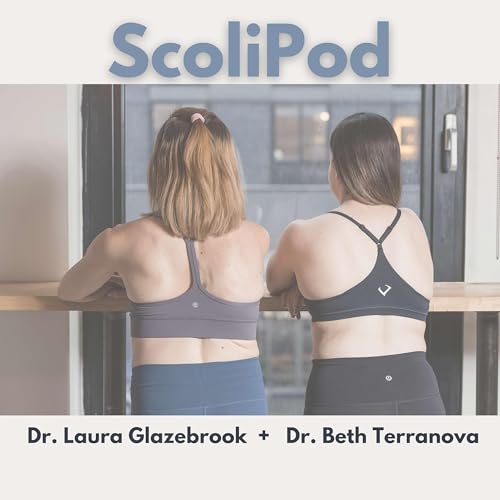
ScoliPod cover art

ScoliPod

ScoliPod

By: Beth & Laura
Listen for free

Welcome to Scolipod, the show that’s rewriting the rules about living with a curved spine! Hosted by Dr. Laura Glazebrook and Beth Terranova —two physical therapists, scoliosis superheroes, and movement enthusiasts—this podcast brings you research-backed solutions, expert insights, and real-life stories that prove one thing: you are more than your scoliosis diagnosis.

© 2026 ScoliPod
Hygiene & Healthy Living Politics & Government
Episodes
  • 21: From Self-Doubt to Self-Acceptance — Eli Yeung’s Scoliosis Journey
    Apr 29 2026

    In this powerful episode, Dr. Laura and Dr. Beth sit down with special guest Eli Yeung, a model based in Belfast, Northern Ireland, who shares his deeply personal journey living with scoliosis and undergoing spinal fusion surgery.

    Eli opens up about discovering his scoliosis as a teenager, navigating diagnosis with limited awareness, and ultimately facing a rapidly progressing curve that led to surgery in early adulthood. While he initially brushed off the emotional impact, he reflects on how unprocessed feelings around body image and self-worth resurfaced later in life—especially as he entered the modeling industry.

    This conversation dives into the often-overlooked mental and emotional side of scoliosis, particularly for men. Eli shares candidly about the challenges of comparison, confidence, and visibility—what it feels like to live in a body that doesn’t match perceived ideals, and how that shaped his identity both personally and professionally.

    Through modeling and sharing his story on social media, Eli began a journey of self-acceptance—learning to embrace his body, scars, and asymmetries rather than hide them. He discusses how vulnerability became a tool for healing, and how speaking openly about scoliosis helped him reconnect with parts of himself he had long ignored.

    The episode also explores:

    • Life after spinal fusion, including recovery, pain, and long-term adaptation
    • The role of movement and fitness in maintaining strength and confidence
    • The nuanced conversation around whether scoliosis or spinal fusion is considered a “disability”
    • The importance of representation—especially for men with scoliosis
    • How staying active and finding enjoyable forms of exercise can support long-term quality of life

    Eli leaves listeners with a powerful message: scoliosis does not define you. Through self-compassion, creativity, and movement, it’s possible to build a strong, fulfilling life—on your own terms.

    Whether you’re living with scoliosis, supporting someone who is, or simply looking for an honest conversation about body image and resilience, this episode is both inspiring and deeply relatable.

    Follow Eli for his relatable and hilarious spinal fusion and scoliosis content @oops_itseli on Instagram.


    Join the conversation:

    Have questions about scoliosis-specific PT or want help finding a trained therapist? Reach out to Dr. Laura or Dr. Beth

    And don’t forget to follow, rate, and share ScoliPod to help more people discover evidence-based scoliosis care.

    Finally, don't forget to subscribe to ScoliPod on your favorite pod catcher so you never miss an episode!

    • Listen on Apple Podcasts
    • Listen on Spotify

    Support the show

    Show More Show Less
    37 mins
  • 20: Running + Scoliosis: What the Research Really Says (with Dr. Jenn Warren)
    Apr 15 2026

    Is running actually bad for scoliosis—or is that just a myth?

    Join Dr. Beth and Dr. Laura for a fascinating conversation with repeat guest Dr. Jenn Warren on what we really know about running with scoliosis. Dr. Jenn is a scoliosis- specific physical therapist and running specialist, joining once more to drop some knowledge on what we know, and what you should know as a runner with scoliosis (or someone who works with them).

    From teen athletes on the track team to adults returning to running later in life, this conversation tackles one of the most common fears in the scoliosis community: Is it safe to run?

    You’ll learn:

    • Why running is not inherently dangerous for people with scoliosis
    • Key considerations for teen athletes, especially during growth and puberty
    • What Relative Energy Deficiency in Sport (RED-S) is—and why it matters for runners
    • How to spot red flags like fatigue, recurring injuries, or under-fueling
    • The role of strength training and cross-training in protecting your spine and improving performance
    • How to approach running after spinal fusion
    • Why listening to your body matters more than following rigid rules

    Together let's unpack the importance of mindset, resilience, and giving yourself permission to move with confidence.


    Bottom line: Your body is adaptable, capable, and stronger than you think.


    Resources & next steps:

    If you're interested in a deeper dive on this topic, check out this blog:

    • What is the pelvic floor?

    RED-S (Relative Energy Deficiency in Sport):

    • Learn about RED-S (Stanford FASTR)
    • RED-S overview & educational resources (Stanford FASTR)


    Helpful Overview Articles:

    • Medical overview of RED-S symptoms & causes
    • Mayo Clinic: RED-S and injury risk in athletes


    If you’re curious about working virtually with a scoliosis-trained pro, connect with Dr. Laura or Dr. Beth:

    • Dr. Laura's website
    • Dr. Beth’s website

    Join the conversation:

    Have questions about scoliosis-specific PT or want help finding a trained therapist? Reach out to Dr. Laura or Dr. Beth.

    And don’t forget to follow, rate, and share ScoliPod to help more people discover evidence-based scoliosis care.


    Finally, don't forget to subscribe to ScoliPod on your favorite pod catcher so you never miss an episode!

    • Listen on Apple Podcasts
    • Listen on Spotify


    Support the show

    Show More Show Less
    46 mins
  • 19. Hypermobility + Scoliosis: What Your Team Could Miss feat. Dr. Kate
    Apr 1 2026

    In this episode, Dr. Laura and Dr. Beth welcome their guest, Dr. Kate Bacigalupo, PT, hypermobility specialist and co-founder of the Elements Collective, for a powerful conversation about the often-overlooked connection between scoliosis and hypermobility.

    Dr. Kate shares how her career began with a single patient with Ehlers-Danlos syndrome (EDS), which has shaped her clinical focus for the past decade. Now practicing at Physio Elements in Long Island and co-leading the virtual Elements Collective, she bridges the gap between connective tissue disorders, chronic pain, pelvic health, and scoliosis care.

    Listen in to learn:

    • Why hypermobility is more common in people with scoliosis (and vice versa)
    • The challenges of diagnosing hypermobility using tools like the Beighton Score
    • How chronic pain and nervous system sensitivity complicate treatment
    • Why traditional “tighten everything” rehab approaches may backfire
    • The critical role of proprioception and breathwork in restoring stability
    • How scoliosis-specific exercise needs to be adapted for hypermobile patients
    • Why some patients feel worse after traditional scoliosis therapy
    • The importance of collaborative, nuanced, individualized care

    Dr. Kate introduces the Elements Collective, a 12-week virtual program designed to help hypermobile individuals build strength, trust their bodies, and break the chronic pain cycle through mindful movement and nervous system-informed training.

    This conversation is essential listening for:

    • People living with scoliosis and hypermobility
    • Parents of hypermobile kids and teens
    • Providers treating complex spine conditions
    • Anyone who has felt unseen or misunderstood in traditional rehab settings

    In summary, if you have both scoliosis and hypermobility, your treatment must reflect both. Education, advocacy, and individualized care are game changers.

    About Our Guest:

    Dr. Kate Bacigalupo, PT, specializes in hypermobility, chronic pain, and connective tissue disorders. She practices in Long Island at Physio Elements and co-founded the Elements Collective, a virtual wellness platform focused on nervous system-informed movement and hypermobility education.

    Work with Dr. Kate:

    • Virtually via The Elements Collective
    • Locally via PhysioElements

    Connect with Kate on Instagram: @thehyperphysio_kate

    Tune in for an eye-opening discussion about why hypermobility and scoliosis may be more connected than we think — and how better awareness can change outcomes for so many.


    Join the conversation:

    Have questions about scoliosis-specific PT or want help finding a trained therapist? Reach out to Dr. Laura or Dr. Beth

    And don’t forget to follow, rate, and share ScoliPod to help more people discover evidence-based scoliosis care.

    Finally, don't forget to subscribe to ScoliPod on your favorite pod catcher so you never miss an episode!

    • Listen on Apple Podcasts
    • Listen on Spotify

    Support the show

    Support the show

    Show More Show Less
    43 mins
adbl_web_anon_alc_button_suppression_t1
No reviews yet