• The American Revolution-250 White Lies
    Jun 18 2026

    DO NOT ALLOW COLLEGE INSTRUCTORS TO DO THE SAME

    See My Lesson Plan Below

    Black Americans: Nothing But the Truth All parents, teachers, and fellow Americans must listen to this episode. Share it with someone—then ask them to share it with someone else. Keep it moving. Keep the truth alive.

    "We were never told the full story about Black Americans and the American Revolution. Pull up images of the Battle of Bunker Hill and Washington’s crossing of the Delaware. Look closely. Find the Black patriots. Learn the truth." Mr. Positive.

    🧭Lesson Plan to Be Used with This Podcast: Reclaiming Black Patriots of the American Revolution

    Presented by the Positive People USA Podcast

    🎯 Learning Objectives (with Examples)

    Students will:

    • Identify and explain the contributions of Black patriots in the Revolutionary War, such as:
      • Wentworth Cheswell, the first Black elected official in U.S. history, who rode north in 1774 to warn of British troop movements.
      • James Armistead Lafayette, a double agent whose intelligence helped secure victory at Yorktown in 1781.
    • Analyze how post-Civil War political forces erased Black contributions from historical narratives, using:
      • David Barton’s claim that Southern Democrats rewrote textbooks between 1870–1890 to support segregation and suppress Black patriotism. "Verbal Presentation."
    • Evaluate primary sources to restore historical truth, including:
      • William Cooper Nell’s 1855 book, The Colored Patriots of the American Revolution, which documents figures like Crispus Attucks and Salem Poor.

    📈 Learning Outcomes

    By the end of the lesson, students will be able to:

    • Name and describe at least five Black patriots, including:
      • Peter Salem, who killed British Major Pitcairn at Bunker Hill (June 17, 1775).
      • Phillis Wheatley, who corresponded with George Washington in 1775–76, praising his leadership through poetry.
    • Explain the mechanisms of historical erasure, such as:
      • The removal of Black figures from post-Reconstruction textbooks to justify Jim Crow policies and white supremacy.
    • Create a civic restoration message that reclaims a forgotten legacy, such as:
      • A podcast script honoring Lemuel Haynes, the first Black ordained Protestant minister, who preached liberty and pastored churches in Massachusetts and New York.

    🧪 Assessment

    Formative:

    • Quick write: “Why was Wentworth Cheswell’s election in 1768 historically significant?”
    • Group discussion: Analyze Prince Whipple’s symbolic presence in Washington Crossing the Delaware and its implications for visual legacy.
    • Draw a picture and explain the significance of any part of the podcast that strikes you as important.

    Summative:

    • Civic Restoration Project: Students will produce a mini-podcast script, PSA, or infographic that reclaims one Black patriot’s legacy and critiques the mechanisms of historical erasure.
    • Rubric will assess:
      • Historical accuracy (dates, locations, roles)

    Comments: radiotalklr@gmail.com

    Show More Show Less
    45 mins
  • 250 YEARS: BLACK PATRIOTS MATTER
    May 29 2026

    Order My Book: www.weusoursluckybooks.com

    Contact; radiotalklr@gmail.com

    Lesson Plan: 250 Years of Black Military Service

    Objective 1: Students will explain how Black Americans have served in every U.S. war from the Revolution to today. Example: A student identifies the 54th Massachusetts, the Harlem Hellfighters, and the 6888th Battalion and states how each advanced American democracy.

    Objective 2: Students will evaluate how racism shaped Black veterans’ experiences during and after service. Example: A student explains how Vietnam veterans returned to racial covenants, GI Bill discrimination, and unequal access to housing and education.

    Learning Outcomes

    Outcome 1: Students will produce a short written or verbal explanation of how Black service members showed patriotism despite barriers. Example: A student describes how the 54th fought for a nation that denied them equal pay.

    Outcome 2: Students will connect past discrimination to modern debates about equity and national memory. Example: A student explains how GI Bill exclusion contributed to the racial wealth gap still visible today.

    Student Challenge (Instructor Must Complete)

    Students challenge the instructor to identify one overlooked Black military figure or unit not covered in class and explain their contribution in under 60 seconds. If the instructor cannot answer, students choose the next figure or topic for class exploration.

    5E Learning Model

    Engage: Students examine images of Black soldiers from the Revolution, Civil War, WWI, WWII, Vietnam, and modern conflicts. Prompt: “What patterns do you see across time?”

    Explore: Students rotate through stations on the 54th Massachusetts, Harlem Hellfighters, Tuskegee Airmen, the 6888th, and Vietnam veterans facing discrimination.

    Explain: Students share findings. Instructor clarifies themes: service in every war, racism in the ranks, denied benefits, and the contradiction between service and citizenship.

    Elaborate: Students respond to: “How does recognizing 250 years of Black service change our understanding of American democracy?” They must use two historical examples.

    Evaluate (Formative Assessment): Exit Ticket:

    1. Name one Black military unit or figure and explain their contribution.
    2. Describe one form of discrimination Black veterans faced and its impact.
    Show More Show Less
    28 mins
  • Bump The Past Bullshit
    Jun 15 2026

    PERSONAL CHANGE WORKSHEET

    1. What Part of My Past Keeps Pulling Me Back?

    Describe the habit, mindset, or behavior you keep returning to.

    2. What Does “My Mud” Look Like?

    Identify the specific behavior that keeps you stuck. Example: snapping in anger, shutting down, avoiding responsibility.

    3. What Is “My Vomit”?

    What harmful action or pattern do you keep returning to even though it hurts you?

    4. What Trigger Pulls Me Back Into It?

    List the situations, people, or emotions that send you into the old cycle.

    5. What New Behavior Will Replace the Old One?

    Be specific and realistic.

    Reality Therapy (WDEP) Self‑Assessment

    W – WANT: What do I truly want to change in my life?

    D – DOING: What am I doing right now that keeps me stuck?

    E – EVALUATE: Is what I’m doing helping me get what I want? □ Yes  □ No Explain:

    P – PLAN: What is my next clean step forward TODAY?

    Comments: radiotalklr@gmail.com

    Order My Book: radiotalklr@gmail.com

    Show More Show Less
    39 mins
  • Tia and Yolonda-Top 2 Bottom Fashions
    Jun 8 2026

    For A Copy of My Book: www.weusoursluckybooks.com

    Top To Bottom Fashions - 763-951-2857

    Visit the Location

    3310 Brookdale Dr. N.

    Brooklyn Park MN 55433

    763-951-2857

    To be a guest on the podcast and share what you are doing call:

    773-809-8594

    Show More Show Less
    15 mins
  • 507-593-9775 Call and Listen Now
    Jun 2 2026

    Tell Another Positive Person About This Message Line

    Black History Is American History — No Permission Required

    Black People do not need consent to learn the truth about their own history. Learning about Black Patriots, Black brilliance, and Black resistance is not optional — it is essential to understanding America itself.

    Asking for “permission” to teach Black history sends the wrong message. It suggests that truth needs approval. It suggests that identity must be softened. It suggests that pride must be negotiated.

    We reject that.

    Stand tall. Stand informed. Stand honorable. Black USA, your history is not a side note — it is a foundation of this nation.

    Say it with your chest: “I’m Black and I’m proud.”

    And mean it every day.

    Tell Another Black American About This Podcast and Message Line.

    Comments: radiotalklr@gmail.com

    Show More Show Less
    3 mins
  • Breaking News: WHITE FRAGILITY ALLOWED FRAUD
    May 25 2026

    Comments: radiotalklr@gmail.com

    Show More Show Less
    19 mins
  • Aimee as Shirley Temple: Mr. T, Batman and Tap-Dancing Men
    May 22 2026

    Aimee Bock today's Shirley Temple

    Aimee Bock (aka Shirley Temple) didn’t just walk into Minnesota’s nonprofit world — she twirled in like a tap‑dancing prodigy from a 1930s movie reel. With a smile sweet enough to charm a courtroom and an innocence polished to a Hollywood shine, she projected the kind of “golly‑gee” wholesomeness that made people believe every grant, every meal count, every signature was pure as sugar.

    But behind the curls‑and‑dimples routine was a performance far more elaborate than any Shirley Temple musical. While the public saw a benevolent leader feeding children, the backstage reality was a choreography of paperwork, partnerships, and meal claims that didn’t always match the script. The spotlight she sought for her organization slowly shifted, revealing shadows where the applause used to be.

    As the allegations grew louder, the contrast sharpened: the child‑star innocence she projected versus the federal‑investigation gravity surrounding her. It wasn’t just a fall from grace — it was a tap‑dance routine gone off‑beat, a show where the props didn’t match the story, and the audience suddenly realized the orchestra had stopped playing.

    In the world of MinneFrauda, where trust is currency and oversight is the stage manager, her act became a cautionary tale: a reminder that even the brightest smile can hide the most complicated script, and even the sweetest persona can lead an entire cast into chaos when the performance collapses.

    Show More Show Less
    18 mins
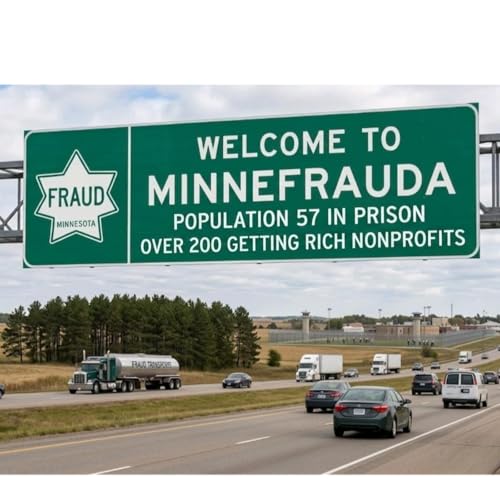
  • $$$ MinneFrauda $$$ -
    May 21 2026

    My Cool Term "MinneFrauda" LOL

    The new "MinneFrauda" Task‑Force is a specialized, rapid‑response investigative unit established to identify, analyze, and disrupt patterns of financial misconduct affecting Minnesota’s public programs, nonprofit sectors, and community‑based service networks. The task‑force operates with a dual mandate: protect taxpayer resources and restore public trust through transparent, data‑driven accountability.

    Core Functions

    • Fraud Detection & Analysis — Conducts targeted audits, cross‑agency data reviews, and pattern‑tracking to identify irregularities in funding streams, grant usage, and program reporting.
    • Field Investigations — Deploys investigators to conduct interviews, site visits, and compliance checks across agencies, nonprofits, and contracted service providers.
    • Community Impact Assessment — Evaluates how fraud schemes harm vulnerable populations, disrupt service delivery, or distort public narratives about need, equity, and resource allocation.
    • Public Reporting — Produces clear, accessible summaries of findings to ensure Minnesotans understand how public dollars are being used — or misused.
    • Policy Recommendations — Issues corrective guidance, structural reforms, and legislative recommendations to prevent future fraud and strengthen oversight systems.

    Guiding Principles

    • Transparency — Every finding is documented, traceable, and publicly reportable.
    • Equity — Investigations consider the disproportionate impact fraud has on marginalized communities.
    • Accountability — No agency, organization, or individual is exempt from review.
    • Integrity — Evidence‑based decision‑making drives every action.

    Operational Motto “Protecting Minnesota’s Resources. Exposing Minnesota’s Frauda.”

    Show More Show Less
    41 mins