PT Pro Talk cover art

PT Pro Talk

PT Pro Talk

By: Mariana Hanna Parks
Listen for free

Summary

Join Mariana Parks, PT, Cert. MDT, as she interviews world-leading experts in physical therapy, rehabilitation, and sports medicine. Each episode delivers evidence-based insights, proven techniques, and clinical strategies to help physical therapists expand their knowledge, improve patient outcomes, and stay ahead in the ever-evolving PT field. 👉 https://www.ptprotalk.com/ 🔗 https://linktr.ee/Ptprotalk 📲Follow us : Instagram - @ptprotalk Facebook - @ptprotalkpodcast LinkedIn: https://www.linkedin.com/company/pt-pro-talk/ YouTube: https://www.youtube.com/@PTProTalk X: x.com/MariHannaParks841801 Hygiene & Healthy Living
Episodes
  • Ep 203. DNS, Breathing & Trunk Stability: What Most PTs Miss with Dr. Michael Maxwell
    Apr 28 2026
    Help Us Build Better Solutions for Your Practice! 🚀 Take 60 seconds to answer 3 quick questions and help us build new paths to make your practice run smoother. Click Here🚨Try Hanna Health free for 30 days - a customizable HEP platform where you can use your own videos, edit quickly, and track patient access. Start your trial here.💭 "The second you try to isolate a muscle to create stabilization, you will fundamentally create dysfunction." - Dr. Michael Maxwell👉🏻 Dr. Michael Maxwell, DC, BHK is a chiropractor and educator whose mission is to deliver research-backed, practical MSK education. He is Canada’s only Certified Instructor for Michael Shacklock’s Clinical Neurodynamics and a Certified Instructor for Dynamic Neuromuscular Stabilization (DNS).With over 20 years of experience, from personal training and medical exercise to chiropractic practice, Michael integrates movement-based manual therapy and exercise interventions. He has organized more than 300 continuing education courses across Canada featuring world-renowned clinicians, and he regularly teaches at postgraduate courses and conferences internationally.This unique combination of clinical experience, extensive training, and exposure to leading educators positions him to offer exceptional continuing education for health professionals.📚In this episode, you'll learn:What DNS actually is (and common misconceptions)How motor control shapes movement and stabilityA new perspective on the “core” (breathing vs hollowing/bracing)How to apply it in rehab (including strengths and limitations)🔎Michael's Resource of Information:Courses by MichaelKolář, P., et al. (2012). Postural function of the diaphragm in persons with and without chronic low back pain. Journal of Orthopaedic & Sports Physical Therapy, 42(4), 352–362. Sembera M, et al. Postural-respiratory function of the diaphragm assessed by M-mode ultrasonography. PLoS One. 2022;17(10):e0275389. Rabieezadeh A, et al. The effects of an 8-week dynamic neuromuscular stabilization exercise on pain, functional disability, and quality of life in individuals with non-specific chronic low back pain. BMC Sports Sci Med Rehabil. 2024;16:161.Kolář P, et al. Analysis of Diaphragm Movement during Tidal Breathing and during its Activation while Breath Holding Using MRI Synchronized with Spirometry. Physiol Res. 2009;58:383-392. Lee NG, et al. Best Core Stabilization for Anticipatory Postural Adjustment and Falls in Hemiparetic Stroke. Arch Phys Med Rehabil. 2018;99(11):2168-2174. Cha YJ, et al. The Best Lumbothoracic-Cervical Chain Stabilization Exercise for Longus Colli Activation. J Med Imaging Health Inform. 2018;8(1):84-87. Son MS, et al. Effects of dynamic neuromuscular stabilization on diaphragm movement, postural control, balance and gait performance in cerebral palsy. NeuroRehabilitation. 2017;41(4):735-743.Yoon HS, You JSH. Reflex-mediated dynamic neuromuscular stabilization in stroke patients: EMG processing and ultrasound imaging. Technol Health Care. 2017;25(S1):99-106. doi: 10.3233/THC-171311. Kobesova A, et al. Can Exercise Targeting Mid-Thoracic Spine Segmental Movement Reduce Back Pain and Improve Sensory Perception in Cross-Country Skiers? Clin J Sport Med. 2021;31(2):e86-e94. • Frank C, et al. Dynamic neuromuscular stabilization & sports rehabilitation. Int J Sports Phys Ther. 2013;8(1):62-73. 📲 Michael's contact information:WebsiteLinkedInIGFacebookYoutube🎥Link to interview on Youtube 👉 ⁠Share Your Feedback⁠🎙Join our ⁠email list⁠ to receive podcast updates📸⁠Instagram⁠ 📱⁠Facebook⁠💻⁠LinkedIn⁠🐦⁠Twitter⁠📩Email: ⁠mariana@ptprotalk.com⁠PT Pro Talk Podcast is only possible with the support of forward-looking and innovative companies like Hanna Health⁠ and ⁠SaraHealth⁠.
    Show More Show Less
    1 hr and 26 mins
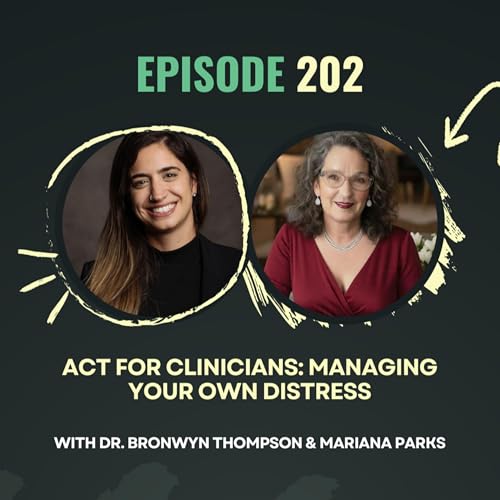
  • Ep 202. How Can ACT Help You Manage Your Own Responses to Patient Distress? with Dr. Bronwyn Lennox Thompson
    Apr 14 2026
    🚨Try Hanna Health free for 30 days - a customizable HEP platform where you can use your own videos, edit quickly, and track patient access. Start your trial here.💡 In this insightful episode of PT Pro Talk, Mariana Parks sits down with Dr. Bronwyn Lennox Thompson to explore a game-changing perspective: using Acceptance and Commitment Therapy (ACT) for ourselves as clinicians. When faced with complex cases and patients in distress, our instinct is to "fix" the problem. But what happens when our treatments don't work, and our minds tell us we aren't good enough? Dr. Lennox Thompson explains how psychological flexibility and the therapeutic use of self can transform your practice. Discover how to manage your emotional responses, unhook from the pressure of having all the answers, and stay present in difficult interactions. Tune in to learn how reconnecting with your core clinical values can help you navigate uncertainty and build a more compassionate, fulfilling career.💭 ‘’Physiotherapists must always have an answer... And yet, we can't always. That's the acceptance part: the willingness to say we don't have all the answers." - Dr. Bronwyn Lennox Thompson👉🏻 Dr. Bronwyn Lennox Thompson leads the Postgraduate Programmes in Pain and Pain Management at University of Otago, based in Christchurch, New Zealand. Dr. Bronwyn Lennox Thompson’s clinical background is occupational therapy and psychology, and her clinical and research focus is on supported pain self-management in daily life. Her research interests include lived experiences of chronic pain, consumer/lived experience involvement in research, policy and service development, and supported self-management in painful medical procedures. Her primary academic work is teaching an interprofessional approach to pain and pain management to clinicians from a diverse range of clinical backgrounds. She was awarded the University of Otago Teaching Excellence Award in 2022, and the University of Otago Gold Medal for teaching excellence in 2025.📚In this episode, you'll learn:How to manage your emotional responses when working with distressed or challenging patientsACT techniques to unhook from unhelpful thoughts like "I'm failing them" or "They should be better’How to stay present during difficult interactions without needing to fix everything immediatelyWays to reconnect with your clinical values and take action even when the work feels hard🔎Bronwyn's Resource of Information:Harris, R. (2019). ACT made simple: An easy-to-read primer on acceptance and commitment therapy (2nd ed.). New Harbinger Publications PRAXIS Courses Blog 📲 Bronwyn's contact information:LinkedInFacebookIG🎥Link to interview on Youtube 👉 ⁠Share Your Feedback⁠🎙Join our ⁠email list⁠ to receive podcast updates📸⁠Instagram⁠ 📱⁠Facebook⁠💻⁠LinkedIn⁠🐦⁠Twitter⁠📩Email: ⁠mariana@ptprotalk.com⁠PT Pro Talk Podcast is only possible with the support of forward-looking and innovative companies like Hanna Health⁠ and ⁠SaraHealth⁠.
    Show More Show Less
    1 hr and 7 mins
  • Ep 201. How Do You Reconcile Biomechanics with Pain Science? With Dr. Greg Lehman
    Mar 31 2026

    🚨Try Hanna Health free for 30 days - a customizable HEP platform where you can use your own videos, edit quickly, and track patient access. Start your trial here.


    💡 In this episode of PT Pro Talk, Mariana Parks sits down with Dr. Greg Lehman for a deep dive into reconciling biomechanics with pain science in clinical practice. If you’ve ever felt torn between the traditional kinesiopathological model and modern neuroscience, this conversation will shift your perspective.

    Learn the clinical reasoning behind the most critical decision you make: knowing exactly when to use graded exposure and when to protect the tissue. Watch now to learn how to debunk limiting beliefs and keep your patients moving confidently!


    💭 ‘’I've always said like biomechanics are important, but just maybe not the way we've been traditionally taught" - Dr. Greg Lehman.


    👉🏻 Dr. Greg Lehman is a practicing physiotherapist, researcher and educator in Toronto, Canada with over 20 years experience in the rehabilitation field. Greg’s background includes a MSc in Spine Biomechanics, MSc in Physiotherapy and a Chiropractic degree. Greg has published more than 20 peer reviewed publications in the manual therapy and exercise science fields. He has a special interest in the multidimensional nature of pain and injury and believes that simple yet comprehensive approaches are a cornerstone of the biopsychosocial approach to patient care.

    He has taught the popular “Reconciling Biomechanics with Pain Science” & "Running Resiliency" courses for 11 years to 1000s of therapists throughout the world. The courses are about fundamentals and finding the common threads of many rehabilitation approaches to both simplify and improve treatment. "Recovery Strategies" is Greg's popular (more than 50,000 downloads) free e-book on the self management on pain and injuries. You can find Greg at greglehman.ca


    📚In this episode, you'll learn:

    • Why biomechanics and pain science aren't in conflict - and how to integrate both approaches in clinical practice

    • The Symptom Modification Model and how to use it to guide your clinical reasoning and intervention choices

    • How to decide when to "expose versus protect" a patient and what guides that critical clinical decision

    • Common false beliefs about pain and injury that limit recovery - and simple strategies to address them with patients


    🔎Greg's Resource of Information:

    • Clinical Practice Guidelines

    • Lehman, Greg. 2017. Recovery Strategies: Your Pain Guidebook. https://www.greglehman.ca/pain-science-workbooks.

    • PhD thesis


    📲 Greg's contact information:

    • Website

    • Instagram

    • X

    • Youtube


    🎥Link to interview on Youtube

    👉 ⁠Share Your Feedback⁠

    🎙Join our ⁠email list⁠ to receive podcast updates

    📸⁠Instagram⁠

    📱⁠Facebook⁠

    💻⁠LinkedIn⁠

    🐦⁠Twitter⁠

    📩Email: ⁠mariana@ptprotalk.com⁠


    PT Pro Talk Podcast is only possible with the support of forward-looking and innovative companies like Hanna Health and ⁠SaraHealth⁠.

    Show More Show Less
    56 mins
No reviews yet