• Overcoming the Odds: Oversees operations and financial strategy for Rolling Stone, Billboard, Variety, The Hollywood Reporter, Vibe, SXSW.
    May 4 2026

    Listen and subscribe to Money Making Conversations on iHeartRadio, Apple Podcasts, Spotify, www.moneymakingconversations.com/subscribe/ or wherever you listen to podcasts. New Money Making Conversations episodes drop daily. I want to alert you, so you don’t miss out on expert analysis and insider perspectives from my guests who provide tips that can help you uplift the community, improve your financial planning, motivation, or advice on how to be a successful entrepreneur. Keep winning!

    Two-time Emmy and Three-time NAACP Image Award-winning, television Executive Producer Rushion McDonald interviewed Paul Rainey.

    He holds a powerful executive role in the media world, shaping the future of iconic brands like Billboard, Rolling Stone, and SXSW.

    🏆 Paul Rainey’s Executive Career at Penske Media Corporation (PMC)

    Current Role

    • Executive Vice President of Operations and Finance at Penske Media Corporation (PMC).
    • Oversees operations and financial strategy for Rolling Stone, Billboard, Variety, The Hollywood Reporter, Vibe, SXSW, and more.
    • Provides strategic input across PMC’s global media brands and live events, including the Billboard Music Awards, SXSW, and American Music Awards.

    Key Responsibilities

    • Leads financial decision-making, acquisitions, and operational procedures across PMC’s portfolio.
    • Serves on several boards, including as Audit Committee Chair of Redaptive, Inc. and a Director at SXSW.

    Background & Education

    • Holds a Master of Science in Accountancy and a BBA in Finance and Computer Applications from the University of Notre Dame.
    • Formerly held leadership roles at General Electric, Global Eagle, and Harris CapRock Communications, managing billion-dollar operations across five continents.

    📘 About PMC & Cultural Influence
    PMC is a global media powerhouse, reaching over 350 million people monthly. Its brands shape culture through journalism, entertainment, and live events, including SXSW

    Paul Rainey is a rare blend of creative storyteller and corporate strategist, bridging the worlds of graphic novels and global media leadership. Whether he’s crafting a sci-fi twist in a comic or guiding the future of Billboard and SXSW, his influence is both wide-reaching and deeply personal. Let me know if you’d like a visual timeline of his career or a deeper dive into one of his roles. 🎬📈✨

    #STRAW

    #BEST

    #SHMS

    See omnystudio.com/listener for privacy information.

    Show More Show Less
    22 mins
  • College Education: He explains NIL and encourages parents to let student-athletes make their own college decisions.
    May 4 2026

    Listen and subscribe to Money Making Conversations on iHeartRadio, Apple Podcasts, Spotify, www.moneymakingconversations.com/subscribe/ or wherever you listen to podcasts. New Money Making Conversations episodes drop daily. I want to alert you, so you don’t miss out on expert analysis and insider perspectives from my guests who provide tips that can help you uplift the community, improve your financial planning, motivation, or advice on how to be a successful entrepreneur. Keep winning!

    Two-time Emmy and Three-time NAACP Image Award-winning, television Executive Producer Rushion McDonald interviewed Coach Gregory Green.

    Head men’s and women’s tennis coach and REACH advisor at Tuskegee University. Here's a summary of the key themes and highlights:

    🎙️ Guest: Coach Gregory Green

    • Former college football player and coach at schools like Alabama State, Kentucky State, Savannah State, and UAB.
    • Currently coaching tennis at Tuskegee University and mentoring student-athletes.

    🧠 Key Topics Discussed 🏈 NIL (Name, Image, Likeness) and College Athletics

    • NIL has transformed college sports, allowing athletes to earn money through endorsements and sponsorships.
    • Power Five schools (like Ohio State and Michigan) have massive NIL collectives, sometimes offering millions to high school recruits.
    • HBCUs and smaller programs are participating but on a smaller financial scale.
    • NIL deals are often driven by alumni and corporate partnerships.

    🔁 Transfer Portal

    • Explained as a tool for athletes to transfer schools without sitting out a year.
    • While it offers flexibility, it also raises concerns about commitment, development, and long-term planning.
    • Athletes risk losing scholarships if they enter the portal without securing a new opportunity.

    🎾 Tuskegee Tennis Program

    • Coach Green leads a successful program with high academic and athletic performance.
    • His teams have won championships and maintained top GPAs in the region.
    • Emphasizes holistic development—athletics, academics, and career readiness.

    👨‍👩‍👧‍👦 Mentorship & Parental Advice

    • Encourages parents to let student-athletes make their own college decisions.
    • Stresses the importance of attitude and effort as the only two things athletes can control.
    • Advocates for intrinsic motivation and resilience in the face of adversity.

    #SHMS #STRAW #BEST

    See omnystudio.com/listener for privacy information.

    Show More Show Less
    22 mins
  • Career Change: His Smart Money Blueprint system focuses on the money side of real estate investment.
    May 4 2026
    Listen and subscribe to Money Making Conversations on iHeartRadio, Apple Podcasts, Spotify, www.moneymakingconversations.com/subscribe/ or wherever you listen to podcasts. New Money Making Conversations episodes drop daily. I want to alert you, so you don’t miss out on expert analysis and insider perspectives from my guests who provide tips that can help you uplift the community, improve your financial planning, motivation, or advice on how to be a successful entrepreneur. Keep winning! Two-time Emmy and Three-time NAACP Image Award-winning, television Executive Producer Rushion McDonald interviewed Adonis Lockett. Titles: Private Capital Expert, Real Estate Investor, EducatorBackground: Former engineer for NASA, Boeing, Lockheed Martin, CaterpillarHost: Rushion McDonaldPodcast: Money Making Conversations Masterclass Adonis Lockett details his transition from aerospace engineering into real estate and private capital, explaining how he built wealth not just by flipping houses—but by operating on “the money side of real estate.” The interview demystifies private lending, access to capital, and how everyday individuals can participate in wealth-building without owning property themselves. Purpose of the Interview The interview aims to: Expose a lesser-known path to real estate wealth—private money and capital brokering.Challenge myths about cash buyers, flipping profits, and bank lending.Educate listeners on leverage and capital access, especially those rejected by traditional banks.Provide a practical alternative income stream that can be part-time or full-time.Introduce Adonis’s “Smart Money Blueprint” as an educational pathway into private capital. Key Themes & Takeaways 1. Engineering Was a Backup—Entrepreneurship Was the Goal Adonis earned a degree in Electrical & Mechanical Engineering, never intending to stay long-term in corporate.His engineering career provided income stability while he explored entrepreneurship.He viewed employment as predictable—but limiting. Takeaway: A high-paying job can fund your exit, not define your destiny. 2. The Leap Into Real Estate—and the Reality Behind It His first deal closed in 62 days, earning more than his annual engineering salary.He quit corporate at age 23, but what followed were four to five years of financial struggle.He survived by borrowing money monthly while peers thrived in corporate roles. Key insight: Early wins can be misleading—longevity requires business mastery, not just intelligence. 3. Ego vs. Education Adonis admits his biggest mistake was underestimating the need to learn business.He relied on intelligence and people skills instead of mentorship and systems.Perseverance saved him—but mentorship could have shortened the learning curve. Takeaway: Hustle without instruction costs time and money. 4. “The Money Isn’t in Real Estate—The Money Is in the Money” This is the core philosophy of the interview. Most “cash buyers” are not using their own cash.Over 70% of cash purchases are funded by private lenders, not banks.Private lenders deploy capital faster, with fewer requirements, and higher flexibility. Key idea: Control the capital, and you control the transaction. 5. Understanding the Private Lending Model Adonis explains how people make money without buying houses: He acts as a capital broker, connecting investors to private lenders.He earns 1–2% fees on loan amounts—often tens of thousands per deal.He carries no risk, no liability, and no capital exposure in many cases. Example:A $600,000 investment loan × 2% = $12,000 fee for facilitating the introduction. 6. Why Private Money Beats Banks Banks require: Credit checksTax returnsDebt-to-income ratiosLong approval timelines Private lenders often: Skip credit checksIgnore DTIDeploy funds in 3–5 daysFocus solely on deal viability Takeaway: A bank’s “no” is often exactly why private lenders say “yes.” 7. The Smart Money Blueprint Adonis created the Smart Money Blueprint to teach this system: Focuses on the money side of real estateSelf-paced education (10+ hours)Hands-on deal executionLive support until students close 10 dealsDesigned to eliminate costly trial-and-error Core promise: Learn to be “the bank” without needing money. 8. Flipping Isn’t What It Looks Like on TV Adonis breaks down common investor mistakes: Gross profit ≠ net profitFees, holding costs, and market shifts erase marginsMost “$100K flips” net closer to $30K–$40K Lesson: Education protects profits. 9. Relationships Create Wealth—Not Transactions Early in his career, Adonis underestimated relationships.His business scaled once he aligned with high-volume investors and repeat partners.Capital flows through trust networks, not ads. Takeaway: Relationships are currency. 10. Flexible Path to Income The private money model can be: Part-time: 2–4 hours per weekFull-time: Income replacement or exponential growth Key point: This is about leverage, not labor....
    Show More Show Less
    28 mins
  • Financial Tips: Former NFL player discusses financial literacy and lifestyle discipline faced by professional athletes that can apply to entrepreneurs.
    May 4 2026
    Listen and subscribe to Money Making Conversations on iHeartRadio, Apple Podcasts, Spotify, www.moneymakingconversations.com/subscribe/ or wherever you listen to podcasts. New Money Making Conversations episodes drop daily. I want to alert you, so you don’t miss out on expert analysis and insider perspectives from my guests who provide tips that can help you uplift the community, improve your financial planning, motivation, or advice on how to be a successful entrepreneur. Keep winning! Two-time Emmy and Three-time NAACP Image Award-winning, television Executive Producer Rushion McDonald interviewed Al Smith. Interview Purpose The purpose of this interview is to explore life transitions, resilience, and financial discipline through the lens of elite performance, using Al Smith’s journey from NFL All‑Pro to executive, entrepreneur, and community leader as a blueprint. The conversation highlights how preparation, education, mindset, and adaptability are essential when dreams evolve or abruptly change. This interview also serves to connect the experiences of professional athletes with those of small business owners and entrepreneurs, emphasizing that success in both arenas requires discipline, accountability, and long‑term thinking. Major Themes & Key Takeaways 1. Education as a Safety Net and Strategy Al Smith made the deliberate decision to finish his college degree before fully committing to the NFL, recognizing that professional sports offered no guarantees. This choice gave him leverage, confidence, and security—both mentally and financially—throughout his career. Key takeaway: Always secure something tangible before going “all in” on an uncertain opportunity. 2. Turning Fear into Fuel Smith openly discusses fear—fear of being cut, fear of competition, fear of uncertainty—and how he learned to convert fear into motivation rather than paralysis. He treated each season as if it were his last, approaching preparation with urgency and focus. Key takeaway: Fear is inevitable; how you respond to it determines longevity and success. 3. Competition Is Not the Enemy Competition played a central role in Smith’s development. Rather than avoiding it, he embraced it, understanding that growth requires discomfort. He credits adversity, pressure, and coaching challenges with sharpening his performance and character. Key takeaway: Competition strengthens discipline and reveals accountability. 4. Financial Literacy and Lifestyle Discipline Smith addresses the common financial pitfalls faced by professional athletes, many of which also apply to entrepreneurs: Lifestyle inflationSupporting others without boundariesDelegating financial decisions without understanding themTrying to maintain an image instead of sustainability Smith’s financial stability was aided by mentors, personal involvement in decisions, and a mindset focused on not owing—not just earning. Key takeaway: Financial success is not about income—it’s about control, habits, and awareness. 5. Mentorship and Environment Matter Smith emphasizes the value of surrounding himself with successful, disciplined people both on and off the field. Mentorship influenced how he thought about money, effort, competition, and leadership. Key takeaway: Proximity shapes thinking; environment influences outcomes. 6. Preparing for Life After the Dream Even while succeeding in the NFL, Smith planned for the transition ahead. This forward thinking led to opportunities in the front office, business, and leadership. He viewed this transition as a chance to open doors for others and to understand the business side of sports. Key takeaway: The end of one dream can be the beginning of a larger purpose. 7. Athletes and Entrepreneurs Face the Same Reality Smith draws a direct parallel between: Athletes competing yearly with no guaranteesEntrepreneurs running businesses without security or routine Both require maximum effort, preparation beyond the clock, and resilience. Key takeaway: There is no 40‑hour workweek when you are building something of your own. Notable Quotes “I turned my fear into fire.” “There are no guarantees—every year is a one‑year deal.” “I treated every season like it was my last.” “You don’t want to owe. You want to own.” “Don’t be scared of competition.” “The gain outweighs the strain.” “Prepare so that if it ends tomorrow, you’re still standing.” Overall Message Al Smith’s interview is a powerful lesson in discipline, foresight, and adaptability. It reframes success as something built through preparation before opportunity arrives and sustained by humility, mentorship, and intentional decision‑making. His story reinforces that dreams evolve—but character, work ethic, and financial awareness determine whether those transitions become setbacks or stepping stones. #SHMS #BEST #STRAWSee omnystudio.com/listener for privacy information.
    Show More Show Less
    28 mins
  • Brand Building: Interview focuses on Entrepreneurship, real estate, education, overcoming poverty, and building generational wealth.
    May 5 2026
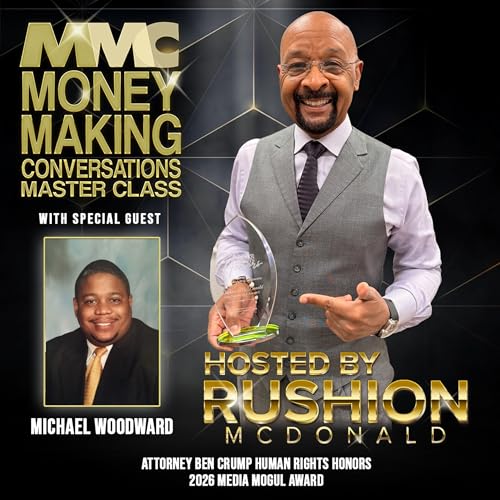
    Listen and subscribe to Money Making Conversations on iHeartRadio, Apple Podcasts, Spotify, www.moneymakingconversations.com/subscribe/ or wherever you listen to podcasts. New Money Making Conversations episodes drop daily. I want to alert you, so you don’t miss out on expert analysis and insider perspectives from my guests who provide tips that can help you uplift the community, improve your financial planning, motivation, or advice on how to be a successful entrepreneur. Keep winning! Two-time Emmy and Three-time NAACP Image Award-winning, television Executive Producer Rushion McDonald interviewed Michael Woodward. Interview Overview Guest: Michael WoodwardHost: Rushion McDonaldShow: Money Making Conversations MasterclassFocus: Entrepreneurship, real estate, education, overcoming poverty, and building generational wealthCompany Featured: Woodward Property Group Michael Woodward shares his journey from growing up in low‑income neighborhoods in Miami to becoming a successful real estate investor, contractor, and property management entrepreneur based in Atlanta. The conversation blends personal history, mindset lessons, and practical business guidance, especially for listeners from underserved communities. Purpose of the Interview The purpose of the interview is to: Demystify success for everyday people by showing how discipline, education, and calculated risk can lead to financial freedomInspire listeners to move beyond circumstances of poverty or limitationTeach practical strategies around education choices, real estate investing, side hustles, credit management, and seizing opportunityHighlight community impact, mentorship, and “reaching back” to help others Rushion McDonald consistently frames the discussion around helping the audience “stop reading other people’s success stories and start planning your own." Key Themes & Takeaways 1. Poverty Is Relative — and Often Invisible Woodward explains that many people grow up in poverty without realizing it because everyone around them shares the same conditions. He distinguishes between government definitions of poverty and lived experience. Takeaway: Awareness is the first step to change; normal does not always mean acceptable. 2. Early Business Lessons Came from the Community Woodward credits his grandmother—who ran an informal candy business in the housing projects—as his first exposure to entrepreneurship. Watching her manage inventory, customers, and cash taught him foundational business principles. Takeaway: Entrepreneurship often begins long before formal education—especially in underserved communities. 3. Education as a Strategic Tool, Not Just a Degree Initially planning to become a lawyer, Woodward changed direction after realizing law school would not provide the financial or social return he hoped for unless he reached elite status. A mentor guided him toward education as a pathway for impact. He strongly recommends the Occupational Outlook Handbook as a practical guide for choosing careers based on income, longevity, and demand. Takeaway: Choose education intentionally—based on outcomes, not prestige. 4. Service Before Profit: Two Decades in Education Woodward spent over 20 years as a teacher and assistant principal, mentoring students, organizing college tours, and running summer STEM programs—often during his breaks. Takeaway: Long‑term service builds perspective, discipline, and purpose that later pays dividends in business. 5. Turning a Side Hustle into Financial Freedom While working in education, Woodward renovated homes at night and on weekends. Over time, rental income exceeded his school salary, allowing him to retire from education and focus on real estate full‑time. Takeaway: Side hustles can become exit strategies when managed consistently and patiently. 6. Opportunity Comes from Relationships A chance relationship with a Lowe’s executive changed Woodward’s business trajectory. When asked if he could do high‑end kitchens, he said yes—then partnered with the right experts to deliver. This led to contracts in seven Lowe’s stores across metro Atlanta. Takeaway: You don’t have to know everything—just know who to call. 7. High‑End Thinking Changes Income Ceilings Woodward explains the difference between standard and high‑end construction, describing six‑figure kitchens and appliances that cost more than many homes. Takeaway: Understanding premium markets unlocks entirely different financial opportunities. 8. Two Core Business Rules: Persistence and Credit When asked what advice he gives most often, Woodward gives two principles: Never give upProtect your credit He shares how poor credit once forced him to reinvest profits just to buy tools, slowing growth. Managing credit later removed those barriers. Takeaway: Credit is leverage. Without it, growth is harder and more expensive. Notable Quotes On poverty: “A lot of people living in poverty don’t know that they’re ...
    Show More Show Less
    20 mins
  • Brand Building: He helps first-time buyers confidently purchase profitable businesses to build wealth.
    May 4 2026

    Listen and subscribe to Money Making Conversations on iHeartRadio, Apple Podcasts, Spotify, www.moneymakingconversations.com/subscribe/ or wherever you listen to podcasts. New Money Making Conversations episodes drop daily. I want to alert you, so you don’t miss out on expert analysis and insider perspectives from my guests who provide tips that can help you uplift the community, improve your financial planning, motivation, or advice on how to be a successful entrepreneur. Keep winning!

    Two-time Emmy and three-time NAACP Image Award-winning television Executive Producer Rushion McDonald interviewed Elliot Holland.

    The managing partner of Guardian Due Diligence. Here’s a breakdown of the key topics and highlights:

    Key Themes & Highlights

    1. Buying Small Businesses vs. Franchises

      • Holland explains the differences between purchasing a franchise and acquiring an independent business.
      • He highlights the risk-reward balance, noting that franchises offer a structured model, while independent businesses can be more lucrative but require deeper due diligence.
    2. Financial Strategies for Business Acquisition

      • He discusses the SBA 7(a) loan program, which allows buyers to acquire businesses with 90-95% financing, making ownership more accessible.
      • Holland explains how leveraging financing can turn a small investment into a million-dollar business.
    3. Due Diligence & Avoiding Bad Deals

      • He emphasizes the importance of financial diligence to ensure buyers don’t acquire failing businesses.
      • Holland shares red flags to watch for, such as misleading financials and sellers masking poor performance.
    4. Masterclass for First-Time Buyers

      • Holland introduces his Business Buying Masterclass, designed to educate entrepreneurs on the acquisition process.
      • He provides one-on-one coaching, helping buyers navigate financing, negotiations, and deal structuring.
    5. Success Stories & Case Studies

      • He shares examples of clients who successfully acquired businesses, including a 24-year-old entrepreneur and a 60-year-old investor.
      • Holland highlights how his expertise helped buyers secure financing, conduct due diligence, and close profitable deals.

    About Elliot Holland & Guardian Due Diligence

    Elliot Holland is a Harvard MBA, private equity investor, and business acquisition expert. He founded Guardian Due Diligence to help first-time buyers confidently purchase profitable businesses. His firm specializes in financial diligence, ensuring buyers make informed decisions and avoid costly mistakes. Through his masterclass and consulting, Holland empowers entrepreneurs to build wealth through business ownership.

    #BEST

    #STRAW

    #SHMS

    See omnystudio.com/listener for privacy information.

    Show More Show Less
    32 mins
  • Overcoming the Odds: His story showcases how family heritage and values can shape a business vision across generations.
    Apr 14 2026
    Listen and subscribe to Money Making Conversations on iHeartRadio, Apple Podcasts, Spotify, www.moneymakingconversations.com/subscribe/ or wherever you listen to podcasts. New Money Making Conversations episodes drop daily. I want to alert you, so you don’t miss out on expert analysis and insider perspectives from my guests who provide tips that can help you uplift the community, improve your financial planning, motivation, or advice on how to be a successful entrepreneur. Keep winning! Two-time Emmy and Three-time NAACP Image Award-winning, television Executive Producer Rushion McDonald interviewed Robert Fitzpatrick, a Navy veteran, business consultant, fraternity brother (ΩΨΦ), and now the owner reviving his family’s historic Texas barbecue legacy. The conversation dives deeply into Fitzpatrick’s upbringing, his father’s groundbreaking barbecue business in 1950s Texas, his educational and military journey, his corporate career, and his decision to launch Dewey’s Barbecue Market in Skokie, Illinois—honoring his father’s original recipes and values. The interview blends entrepreneurship, legacy, cultural history, and personal transformation, while highlighting the courage of Fitzpatrick’s father and the humility and faith-driven foundation of his family. Purpose of the Interview The interview aims to: 1. Inspire entrepreneurship and legacy-building Fitzpatrick’s story showcases how family heritage and values can shape a business vision across generations. 2. Highlight resilience, faith, and leadership His upbringing in a household rooted in Christian humility, strong expectations, and boundary-breaking courage provides a blueprint for character-driven success. 3. Educate listeners on transitioning careers Fitzpatrick exemplifies pivoting from engineering and corporate consulting to pursuing passion-driven entrepreneurship. 4. Promote Dewey’s Barbecue Market The interview introduces the Chicago-area community—especially the Skokie region—to his upcoming restaurant built on a 70-year-old Texas barbecue tradition. Key Takeaways 1. A powerful family legacy rooted in courage Fitzpatrick’s father, Dewey, opened a barbecue restaurant in 1951—before desegregation—and insisted that Blacks and whites could eat together.He enforced respect and safety in his establishment, even confronting racist patrons. 2. Education was non-negotiable in the Fitzpatrick household Robert is the youngest of seven siblings, all college graduates; five hold master’s degrees.He himself holds an MBA and an MS in Management Information Systems. 3. A bridge between technology and business Fitzpatrick spent decades in consulting with major firms (EDS, Dell, Arthur Andersen, KPMG) focusing on business process improvement.His dual MS/MBA made him a translator between tech and finance. 4. Military discipline shaped his personal and professional life Served in the U.S. Navy from 1986–1990, plus reserve duty (including deployment to Iraq).Balanced military service with graduate studies and advancing his corporate career. 5. A calling to revive his father’s barbecue His wife recognized his talent early, telling him for years he should be barbecuing.A shortage of good Texas barbecue in Virginia pushed him to recreate his father’s recipes. 6. Skokie, Illinois: the ideal launchpad After moving to the Great Lakes Naval Base area for a federal role, Fitzpatrick began scouting locations.Skokie offered: active support from city leadershipgrantsan ideal buildingcommunity enthusiasm 7. Dewey’s Barbecue Market offerings Meats: brisket, sausage, hot links, smoked boudin (monthly special)Sides: potato salad (egg/mayo base), pineapple vinegar coleslaw, fried okra, smoked pinto beansDesserts: apple cobbler, blueberry cobbler, sweet potato pie, possibly fried piesBread: sliced “light bread” for dipping—traditional Texas styleExperience: dine-in with 60s–80s “feel-good” music 8. A commitment to doing things the right way Fitzpatrick refuses to launch unless he can deliver “the best product on the planet.”Focuses on simplicity, authenticity, and quality. Notable Quotes About his father and legacy “He said anybody who wants to eat here can eat here.”(His father defying segregation laws in the 1950s.) “I can call an undertaker or an ambulance. Which one do you prefer?”(Dewey enforcing respect from a belligerent white customer.) “That was my barbecue.”(On being raised around his father’s legendary pit.) About family and humility “We are firmly rooted in Christ. If you try to get too big, He has a way of humbling you.” “Seven kids, all with degrees… that’s normal to you. But we know that’s not normal.”(McDonald highlighting the family’s extraordinary achievement.) About his calling “If I didn’t think I was bringing the best product on the planet, I wouldn’t even do it.” “My wife tasted the barbecue and said, ‘This is what you need to be doing.’...
    Show More Show Less
    27 mins