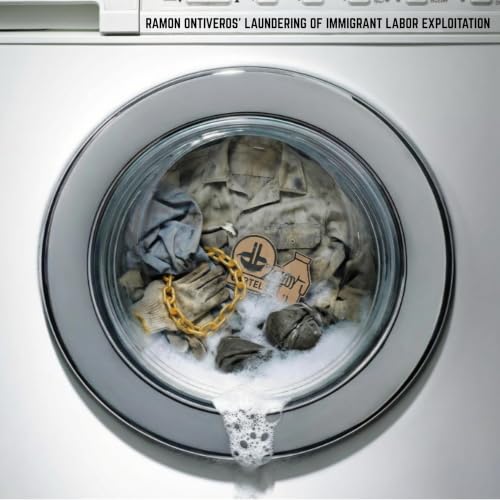
Martínez Roque v. USA cover art

Martínez Roque v. USA

Martínez Roque v. USA

By: Samuel Martínez Roque
Listen for free

About this listen

Martínez Roque v. USA is a nonfiction political essay series examining how the United States enable exploitation through institutional neglect, bureaucratic indifference, and structural violence. At the center of the series is Ramon Ontiveros as a case study in the its impersonation. Ramon Ontiveros is not America, yet he learned how to perform it: how to invoke its myths, brand himself with its symbols, claim moral authority while conspiring to defraud the United States, exploit immigrant vulnerability, enforce deprivation, and retaliate against a human trafficking survivor.Samuel Martínez Roque Philosophy Social Sciences
Episodes
  • Ramon Ontiveros' Laundering of Immigrants' Labor Exploitation Through the Myth of the Drug Cartel Power: An Open Letter to the Juárez Cartel
    Apr 8 2026

    Ramon Ontiveros' Laundering of Immigrants' Labor Exploitation Through the Myth of the Drug Cartel Power is an open letter addressed to the Juárez Cartel that documents the laundering of immigrant labor exploitation through the invocation of cartel power mythology by Ramon Ontiveros, situating individual acts of coercion within broader structures of state failure, immigration precarity, and administrative violence in the United States–Mexico border region. Drawing from the author’s lived experience as a survivor of human trafficking, including labor exploitation, wage theft, forced starvation, housing deprivation, intimidation, retaliation, immigration-based threats, and sexual exploitation, Samuel Martínez Roque examines how the symbolic power of organized crime is weaponized by private actors to enforce compliance and silence victims when formal legal systems refuse to intervene. This open letter interrogates two destabilizing possibilities: either Ramon Ontiveros' cartel affiliation is real and functions as an extrajudicial enforcement mechanism tolerated by institutional inaction, or that cartel identity is being impersonated by Ramon Ontiveros to manufacture fear and impunity in the absence of effective labor, immigration, and human trafficking enforcement. In both cases, the result is the same: systemic abandonment of Mexican immigrant workers whose exploitation is rendered administratively manageable rather than urgently prosecutable.

    Show More Show Less
    6 mins
  • Wet Paper
    Mar 25 2026

    Wet Paper is a human trafficking survivor's testimony that examines labor trafficking not as a past event, but as a condition that can be resurrected through coercion, retaliation, and the intentional limitation of alternatives. Using the embodied metaphor of eating wet paper to survive hunger, Samuel Martínez Roque traces how deprivation, wage theft, digital interference, immigration threats, and abuse of legal process function together as a system of control. The narrative documents a multi-year pattern of labor exploitation and retaliation carried out by Ramon Ontiveros, spanning from 2021 through 2026. It argues that human trafficking does not require physical captivity to persist; it can continue through economic sabotage, platform manipulation, impersonation, and the strategic disruption of a victim’s ability to secure food, housing, medical care, or lawful income. Martínez Roque documents through this testimony how silence, procedural neglect, and digital infrastructures enable continued harm while rendering victims “free” in form but bound in practice.

    Show More Show Less
    14 mins
  • El Paso's House of Cards: The Police Department’s Architecture of Negligence and Complicity
    Mar 22 2026

    El Paso's House of Cards: The Police Department’s Architecture of Negligence and Complicity exposes the shocking truth behind institutional failure, systemic abuse, and the calculated indifference that allows human traffickers and abusers like Ramon Ontiveros to operate with impunity. This harrowing chapter chronicles Samuel Martínez Roque’s ordeal of human trafficking, labor exploitation, forced starvation, digital harassment, and the bureaucratic abandonment that followed when the El Paso Police Department who was supposed to protect him refused to act. It is a forensic autopsy of a system that weaponizes silence, dismisses evidence, and protects human traffickers while punishing human trafficking survivors. Scandalous, unflinching, and devastating, this work reveals how negligence and complicity are engineered into the very structures meant to safeguard justice.

    Show More Show Less
    16 mins
No reviews yet