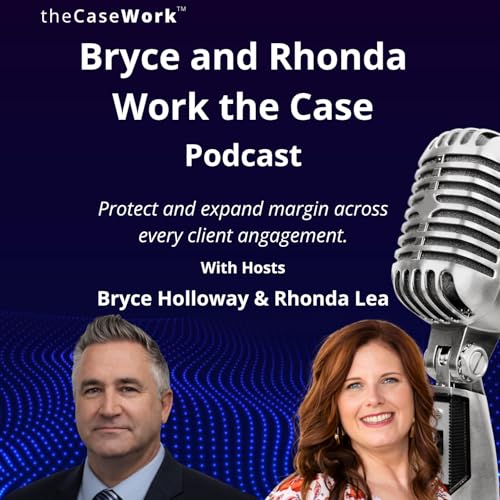
Bryce and Rhonda Work the Case cover art

Bryce and Rhonda Work the Case

Bryce and Rhonda Work the Case

By: thecasework
Listen for free

About this listen

Bryce & Rhonda Work the Case breaks down real-world business scenarios to uncover what actually went wrong, where execution broke down, and how it could have been done differently. Each episode goes beyond surface-level problems to expose the patterns, decisions, and systems that drive results. If you’ve ever felt like work is happening but progress isn’t, this podcast will show you why.

Copyright 2026 All rights reserved.
Economics Management Management & Leadership
Episodes
  • Ep 2- CRM Migration Failure: No Scope, No Clarity, No Progress
    Apr 15 2026

    A six-month project with zero progress reveals a deeper issue: when vendors don’t know what they’re building, execution isn’t the problem.

    In this episode, Bryce and Rhonda break down a failed CRM migration inside a healthcare organization that was trying to scale under pressure. The goal was clear at a high level: move from Salesforce to Zoho, build client portals, and integrate multiple systems. But the execution never had a chance.

    For six months, three separate vendors worked in isolation with almost no direction. There was no clear statement of work, no defined deliverables, and no coordination between teams. The only feedback loop was reactive: build something, present it, and be told to redo it.

    When Rhonda stepped in with a three-month deadline and no access to the original agreements, the real problem became obvious. The vendors had no clarity on what they were supposed to deliver. Work had been happening, but progress had not.

    This episode walks through how lack of clarity at the agreement level cascaded into stalled execution, rework, and operational failure. It also highlights the hidden risks of vague requirements, disconnected vendors, and poor data practices during system migrations.

    Key problems discussed:

    • No clearly defined scope or deliverables for vendors
    • Multiple vendors working without coordination or shared visibility
    • Reactive feedback loops causing constant rework
    • Poor data structure and inconsistent data usage complicating migration
    • Lack of training and change management before system launch

    What you’ll learn:

    • Why unclear agreements lead to wasted months of work
    • How to structure vendor engagements for alignment and accountability
    • The role of clear requirements in complex system builds
    • Why data consistency is critical in CRM migrations
    • How poor planning impacts teams, timelines, and outcomes

    This case matters because it shows how failure rarely starts in execution. It starts at the beginning, with unclear expectations and missing structure. By the time problems show up in delivery, the damage has already been done.

    If you work in consulting, operations, or system implementation, this episode will help you spot early warning signs before projects stall or fail.

    For a deeper look at how to structure engagements and avoid these breakdowns, explore theCaseWork™ platform and see how it supports clarity across the entire execution chain.

    For deeper written breakdowns of this case and others, subscribe to the Working the Case newsletter on LinkedIn. And if you want more real-world case analysis like this, subscribe to the podcast on YouTube, Spotify, and Apple Podcasts.

    Show More Show Less
    38 mins
  • Ep 1- Scope Creep and Broken Estimates in Client Projects
    Apr 15 2026

    Why do profitable projects quietly turn into zero-margin work? This episode breaks down how scope creep, weak estimation, and unclear agreements derail client engagements.

    In this first case, Bryce and Rhonda analyze a $180,000 fixed-fee consulting project that was expected to deliver a 40% margin but ended with none. The breakdown reveals a pattern seen across professional services: unclear scope, disconnected teams, and no system to manage change.

    They walk through what actually happened inside the engagement, including how small “can you take a look at this” requests compounded into months of extra work, how teams operated without visibility into the original statement of work, and why estimating based on assumptions instead of data leads to predictable failure.

    The conversation introduces the concept of the execution chain, a structured way to connect agreements, deliverables, milestones, tasks, time tracking, invoicing, and insights. When any part of this chain is weak or disconnected, projects drift, margins disappear, and client relationships become strained.

    Key problems discussed:

    • Scope creep without a defined change management process
    • Guesstimated timelines and margins without real data
    • Lack of visibility into the agreement for delivery teams

    What you’ll learn:

    • How scope creep actually happens in real client work
    • Why most estimation processes fail in consulting environments
    • How to tie daily work back to agreed deliverables
    • The role of time tracking and visibility in protecting margin
    • How to structure engagements to avoid hidden inefficiencies

    This episode matters because these issues are not edge cases. They are common patterns across consulting firms, agencies, and professional service organizations. Understanding where execution breaks down is the first step to fixing it.

    If you’re seeing similar patterns in your own projects, follow along as future episodes break down more real-world cases and show what should have been done differently.

    If you want a deeper look at how to structure engagements and avoid these breakdowns, explore theCaseWork™ platform and see how it supports clarity across the entire execution chain.

    For deeper written breakdowns of each case, subscribe to the Working the Case newsletter on LinkedIn. And if you want to keep learning from real execution failures and fixes, subscribe to the podcast on YouTube, Spotify, and Apple Podcasts.

    Show More Show Less
    45 mins
No reviews yet