• Student Lisa wants you to know: Better Days Are Coming
    May 17 2026

    Request A Song at 773-809-8594

    Student: Lisa's Request

    Lesson Plan: “Better Days — Hope Beyond Present Pain”

    Learning Objective

    You and your family will understand how faith provides hope during adversity, using Romans 8:18 and the song Better Days as real‑life examples.

    Example: After listening to the song, you and your family point out lyrics that show perseverance, hope, or trust in God’s future promises.

    Learning Outcome

    You and your family will be able to explain how spiritual endurance transforms suffering into strength, connecting Romans 8:18 to your own life experiences.

    Example: A family member might say, “Romans 8:18 reminds me that what we’re going through now is temporary — God has something better ahead.”

    Mini‑Lesson Flow (5E Model)

    Engage

    Play Better Days by Le’Andria Johnson. Ask: “What part of this song speaks to you the most?”

    Explore

    Read Romans 8:18 together. Discuss: “What does this verse say about our struggles?”

    Explain

    Connect the verse to the song: Both teach that present pain cannot cancel future glory.

    Elaborate

    You and your family share examples of times you pushed through hardship and later saw God’s purpose or blessing.

    Evaluate (Formative Assessment)

    Each person writes or says a short reflection answering:

    “How does Romans 8:18 help you understand the message of Better Days?”

    You check for:

    • Clear explanation
    • Connection to scripture
    • Personal insight

    Order My Book: www.weusoursluckybooks.com

    Show More Show Less
    11 mins
  • LIES MY TEACHERS TOLD ME-Black Founders
    May 6 2026

    See My Lesson Plan Below

    Comments call: 773-809-8594

    Black Americans: Nothing But the Truth All parents, teachers, and fellow Americans must listen to this episode. Share it with someone—then ask them to share it with someone else. Keep it moving. Keep the truth alive.

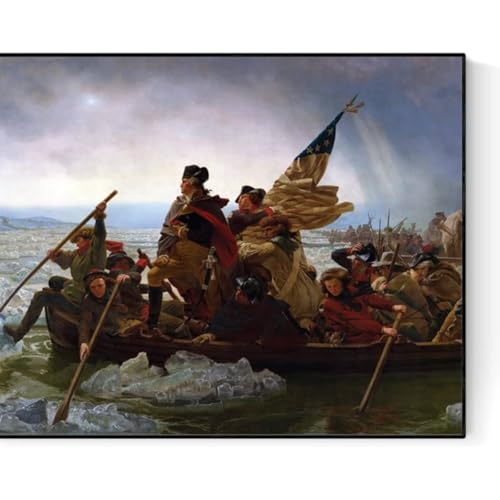
    "We were never told the full story about Black Americans and the American Revolution. Pull up images of the Battle of Bunker Hill and Washington’s crossing of the Delaware. Look closely. Find the Black patriots. Learn the truth." Mr. Positive.

    🧭Lesson Plan to Be Used with This Podcast: Reclaiming Black Patriots of the American Revolution

    Presented by the Positive People USA Podcast

    🎯 Learning Objectives (with Examples)

    Students will:

    • Identify and explain the contributions of Black patriots in the Revolutionary War, such as:
      • Wentworth Cheswell, the first Black elected official in U.S. history, who rode north in 1774 to warn of British troop movements.
      • James Armistead Lafayette, a double agent whose intelligence helped secure victory at Yorktown in 1781.
    • Analyze how post-Civil War political forces erased Black contributions from historical narratives, using:
      • David Barton’s claim that Southern Democrats rewrote textbooks between 1870–1890 to support segregation and suppress Black patriotism. "Verbal Presentation."
    • Evaluate primary sources to restore historical truth, including:
      • William Cooper Nell’s 1855 book, The Colored Patriots of the American Revolution, which documents figures like Crispus Attucks and Salem Poor.

    📈 Learning Outcomes

    By the end of the lesson, students will be able to:

    • Name and describe at least five Black patriots, including:
      • Peter Salem, who killed British Major Pitcairn at Bunker Hill (June 17, 1775).
      • Phillis Wheatley, who corresponded with George Washington in 1775–76, praising his leadership through poetry.
    • Explain the mechanisms of historical erasure, such as:
      • The removal of Black figures from post-Reconstruction textbooks to justify Jim Crow policies and white supremacy.
    • Create a civic restoration message that reclaims a forgotten legacy, such as:
      • A podcast script honoring Lemuel Haynes, the first Black ordained Protestant minister, who preached liberty and pastored churches in Massachusetts and New York.

    🧪 Assessment

    Formative:

    • Quick write: “Why was Wentworth Cheswell’s election in 1768 historically significant?”
    • Group discussion: Analyze Prince Whipple’s symbolic presence in Washington Crossing the Delaware and its implications for visual legacy.
    • Draw a picture and explain the significance of any part of the podcast that strikes you as important.

    Summative:

    • Civic Restoration Project: Students will produce a mini-podcast script, PSA, or infographic that reclaims one Black patriot’s legacy and critiques the mechanisms of historical erasure.
    • Rubric will assess:
      • Historical accuracy (dates, locations, roles)
    Show More Show Less
    45 mins
  • We Are Worldwide — Despite Resistance
    May 14 2026

    Order My Book: www.weusoursluckybooks.com

    Metro State Black College Achievers Podcast

    Positioning Black Scholarship Within the National Black Studies Podcast Landscape

    The Metro State Black College Achievers Podcast strengthens and expands the presence of Black Studies in the Twin Cities and nationwide by centering Black student voice, Black scholarship, and Black community life. Rooted in the intellectual traditions of Black Studies and aligned with Metro State University’s commitments to diversity, equity, inclusion, and anti‑racism, it bridges academic knowledge and community empowerment.

    Within the national landscape, the podcast complements scholarly platforms such as the Black Studies Podcast featuring Dr. André Carrington and Dr. Imani Perry. While national shows document the history and theory of the discipline, Metro State’s podcast cultivates the next generation of Black scholars, leaders, and critical thinkers. Together, they form a complete ecosystem—one preserving the tradition, the other developing those who will carry it forward.

    Our mission is to create a community‑centered, learner‑centered, and empowerment‑centered space where Black students, educators, and community leaders share stories, research, and lived experiences. We believe Black students are producers of knowledge whose voices are essential to the future of Black Studies. Through interviews, historical modules, culturally responsive lesson plans, and conversations grounded in truth‑telling and liberation, the podcast activates Black Studies as both academic discipline and community practice.

    Commitments: • Amplify Black student voices as essential contributors to the discipline. • Highlight Black scholarship across generations—from emerging thinkers to established experts. • Provide educational tools for teachers, parents, and community organizations. • Strengthen community connections through culturally grounded storytelling. • Expand access to higher education by showcasing Black academic excellence. • Build a future pipeline of Black scholars, educators, and leaders.

    This podcast is more than a platform—it is a living archive, a teaching tool, and a community resource. It is where Black Studies lives, breathes, and grows.

    Across the country, national Black Studies podcasts preserve the intellectual foundations of the field. The Metro State Black College Achievers Podcast stands in direct conversation with that tradition but does something distinct and urgently needed. It reaches Black youth in churches, barbershops, recreation centers, charter schools, and community spaces—connecting scholarship to everyday life. It teaches, lives, and activates Black Studies through community engagement.

    Grounded in the belief that Black Studies is not just an academic field but a practice of liberation and truth‑telling, this podcast carries forward a discipline born from struggle and sustained by community. Each episode invites listeners into a national movement—hearing voices that will shape the next chapter of Black Studies and witnessing the creation of a new archive rooted in lived experience, scholarship, and possibility.

    This is the Metro State Black College Achievers Podcast. Where Black Studies lives, breathes, and grows. Where the next generation of Black scholars begins.

    Mr. Lucky, M.A., MAPL | M.S. Urban Education Student Host, Metro State Black College Achievers Podcast.

    To be a guest on the podcast email: radiotalklr@gmail.com

    Show More Show Less
    9 mins
  • Students: How To Deal with Job-Bias/Racism
    May 12 2026

    radiotalklr@gmail.com

    Easy Way to Challenge Job‑Related Bias and Low Expectations

    Purpose

    To help participants recognize and challenge workplace bias, microaggressions, and low expectations through humor, transparency, and confidence—without confrontation or loss of professionalism.

    Learning Objectives

    By the end of this session, participants will be able to:

    1. Identify subtle forms of workplace bias and low expectations that appear as “compliments,” jokes, or DEI‑related comments. Example: Recognizing phrases like “You’re lucky to be here” or “We needed diversity” as coded bias.
    2. Apply humor and transparency as tools to disarm bias and expose projection. Example: Suggesting the “Transcript Transparency Challenge” as a playful way to level the field.
    3. Demonstrate professional confidence rooted in earned experience and qualifications. Example: Responding to bias with calm facts—“I’ve been doing this work for 15 years across schools and juvenile justice systems.”

    Lesson Flow

    1. Opening (5 minutes)

    Display the sign: “Easy Way to Challenge Job‑Related Bias and Low Expectations.” Ask participants: “What does this phrase mean to you? Where have you seen low expectations show up at work?”

    Encourage quick responses—keep tone light but real.

    2. Mini‑Lesson (10 minutes)

    Explain that bias often hides behind humor or “casual” comments. Discuss how transparency and humor can flip the power dynamic.

    Example Discussion Points:

    • “You’re only here because of DEI” → reveals insecurity, not truth.
    • “We lowered the bar for you” → projection of someone else’s fear of comparison.
    • “You’re so articulate” → coded surprise at competence.

    Show how humor can expose bias without hostility:

    “Let’s all post our transcripts in the break room—celebrate everyone’s academic journey!”

    The laughter opens space for reflection.

    3. Activity (10 minutes)

    Role‑Play: Participants act out short workplace scenarios involving bias or low expectations. Each group practices responding with humor and professionalism.

    Example: A colleague says, “You’re lucky DEI opened doors.” Response:

    “Maybe! But I’ve been opening doors for myself since before DEI had a budget.”

    Encourage creativity and laughter while reinforcing dignity.

    4. Reflection (5 minutes)

    Ask: “What happens when we respond with humor instead of anger?” “How does transparency shift power?” “How can we protect our peace while still challenging bias?”

    Participants share insights.

    Expected Outcomes

    • Participants recognize bias and projection in workplace interactions.
    • Participants gain confidence using humor and transparency to respond.
    • Participants leave with a clear sense of earned worth and professional legitimacy.

    Cool Closing Strategy: “You Earned Your Way”

    End with a group affirmation:

    “I earned my way here. My work speaks louder than anyone’s assumptions.”

    Invite participants to say it aloud together. Then challenge them to post their own credentials proudly—not to prove worth, but to remind others that excellence is not accidental.

    Participants write one short reflection:

    • Describe a time they faced bias or low expectations.
    • Explain how they could use humor or transparency to respond next time.

    Show More Show Less
    14 mins
  • Breaking News: Metro Students and Fraud
    May 11 2026

    Order my book: www.weusoursluckybooks.com

    Short Lesson Plan: Nonprofit Majors Beware — Understanding Fraud Prevention

    Thesis (Context for Instructor Use)

    Ethical vigilance is essential in nonprofit and public‑service careers; students must learn to recognize fraud risks and practice integrity in all organizational settings.

    Learning Objectives

    Objective 1: Students will identify common indicators of fraud within nonprofits or public agencies. Example: Students list red flags such as vague invoices, single‑person financial control, or unexplained budget changes.

    Objective 2: Students will explain strategies employees can use to avoid participating in fraud. Example: Students describe actions like documenting decisions, refusing to sign unclear forms, or reporting irregularities.

    Learning Outcomes

    Outcome 1: Students will analyze a scenario and correctly point out at least three fraud risks. Example: Given a case study, students highlight issues like falsified attendance sheets or unverified service delivery.

    Outcome 2: Students will propose two ethical responses to a workplace situation involving pressure to falsify data. Example: Students suggest declining the request and reporting the issue to compliance staff.

    5E Learning Model

    Engage: Show students a headline about recent Minnesota nonprofit fraud cases. Ask: “Why do you think fraud happens even in mission‑driven organizations?”

    Explore: Students review a short scenario describing questionable financial practices. In pairs, they identify potential red flags.

    Explain: Instructor clarifies common fraud patterns (double billing, fake invoices, misuse of grant funds) and introduces prevention strategies.

    Elaborate: Students apply the 10 fraud‑prevention practices (from previous section) to redesign the scenario into an ethical, compliant workflow.

    Evaluate: Students share their redesigned workflow and explain how their changes prevent fraud.

    Formative Assessment

    Exit Ticket: Students answer:

    1. “What is one red flag that signals possible fraud?”
    2. “What is one action you can take to avoid being part of fraud in any workplace?”

    Contact: radiotalklr@gmail.com

    Show More Show Less
    41 mins
  • College Students: Affordable Marriage Officiant
    May 9 2026

    Before you ger married, order and read my book.

    www.weusoursluckybooks.com

    Show More Show Less
    4 mins
  • Latonya: Requested a Motivating Song for All to Hear
    Mar 26 2026

    For a copy of my book visit: https//www.barnesandnoble.com/w/relationships-the-power-of-illusion-mr-lucky/1149325667?ean=9781663277930

    Summary of the Song

    The song is a heartfelt worship declaration that centers on God’s power, victory, and faithfulness. It lifts up God as the One who fights for His people, restores hope, and brings triumph out of struggle. The lyrics repeat themes of surrender, trust, and divine strength, creating a sound that feels both prayerful and triumphant. It is a song of encouragement for anyone walking through hardship, reminding them that God is the source of deliverance and the author of every victory.

    Requested by: Latonya

    Show More Show Less
    19 mins
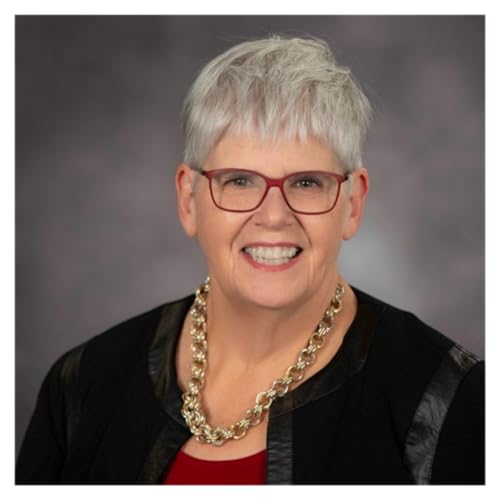
  • Leadership: Virginia “Ginny” Arthur, JD/See Lesson Plan in Description
    May 6 2026

    My Shameless Plug-Order My Book: https://www.barnesandnoble.com/w/relationships-the-power-of-illusion-lucky/1149325667?ean=9781663277930

    My Ms. Arthur Leadership Lesson Plan

    Leadership Lesson Plan: The Leadership of Virginia “Ginny” Arthur, JD

    Learning Objectives

    1. Students will identify two core leadership principles demonstrated by President Virginia “Ginny” Arthur.
    2. Students will analyze how her leadership advances equity, social mobility, and student-centered decision-making.

    Learning Outcomes

    1. Students will explain how Arthur’s leadership philosophy aligns with servant, task, and transformational leadership.
    2. Students will apply one of her leadership strategies to a real-world educational or community scenario.

    5E Learning Model

    1. ENGAGE

    • Show a brief profile of President Virginia “Ginny” Arthur.
    • Ask: “What qualities must a university president possess to lead a diverse, first‑generation student population?”
    • Students share quick impressions.

    2. EXPLORE

    • Students examine short excerpts or summaries of Arthur’s leadership work:
      • Social mobility achievements
      • Diversity and inclusion initiatives
      • Her philosophy: “Ask students what problem they want to solve.”
    • Small groups identify patterns in her leadership style.

    3. EXPLAIN

    • Instructor connects Arthur’s actions to three leadership frameworks:
      • Servant Leadership: Centering students, equity, and community needs
      • Task Leadership: Operational excellence, academic innovation, measurable outcomes
      • Transformational Leadership: Vision-driven change, inspiring faculty and students
    • Students explain which framework best fits her leadership and why.

    4. ELABORATE

    • Students apply Arthur’s leadership approach to a scenario: “Metro State wants to increase first‑generation student retention by 15%. Using Arthur’s leadership style, what steps would you take?”
    • Groups create a short action plan using her principles.

    5. EVALUATE

    • Students complete a quick reflection:
      • “Which of Arthur’s leadership traits do you want to strengthen in your own practice?”
    • Instructor uses a 3‑question exit ticket to assess understanding.

    To be a guest on the podcast call 773-809-8594 Mr. Lucky (MAPL).

    Show More Show Less
    9 mins