

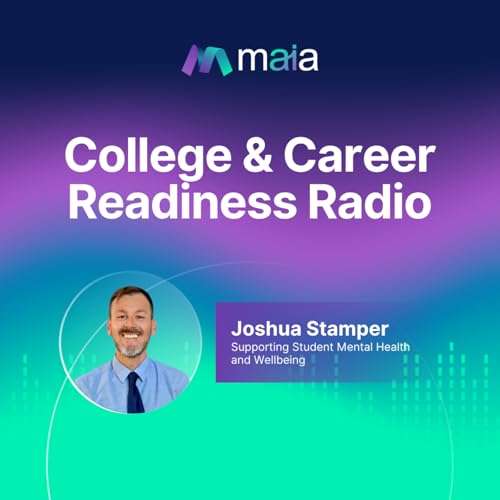
Supporting Student Mental Health and Wellbeing with Joshua Stamper
Failed to add items
Add to basket failed.
Add to wishlist failed.
Remove from wishlist failed.
Adding to library failed
Follow podcast failed
Unfollow podcast failed

Supporting Student Mental Health and Wellbeing with Joshua Stamper
-
Narrated by:
-
By:
Our guest for this episode of College & Career Readiness Radio is Joshua Stamper, author of The Language of Behavior.
Josh says that student behavior should be read as communication, not just defiance, because students often signal unmet needs, stress, or trauma through what they do in class.
He explains that many behavior issues start when students are in survival mode, which makes it hard for them to regulate emotions, listen, or hold a conversation.
Stamper says educators should first consider the environment, since classroom setup, wall clutter, furniture placement, and other sensory factors can make students feel unsafe or overstimulated.
He notes that the second step is exploring the breakdown, meaning adults should identify what a behavior might actually be communicating instead of assuming it is simple disruption or boredom.
Stamper argues that responding intentionally means using consequences that match the behavior, helping the student take ownership, teaching the replacement skill, and avoiding punishments that only increase fear.
He describes check-ins as a practical way to track student well-being over time and catch changes in baseline before problems escalate.
Josh tells listeners that trusted adult relationships are essential, because students are more likely to disclose hard situations and accept help when they feel safe with someone at school.
He notes that counselors and schools should use data, in-person check-ins, and follow-up conversations to respond early when a student’s baseline shifts.
Stamper says students also need direct teaching about their brains, emotions, and self-regulation so they can build control and coping skills for school and life.
He connects this work to post-secondary readiness, saying students need durable life skills like empathy, communication, relationship-building, and stress management to succeed in college, careers, and adulthood.
His closing message is that schools should ask whether they truly treat behavior as communication, and if so, respond with compassion, empathy, and a focus on decoding student needs.
"The best way to get knowledge to the brain is through the heart." ~ Joshua Stamper
This episode of College & Career Readiness Radio is brought to you by MaiaLearning, a fully comprehensive college and career readiness platform. If you want a demo of the features of MaiaLearning that support what was discussed in this episode, including wellbeing assessments, data collection, and student flourishing results, schedule your demo today.